Skip to content
WAnimals
  • Map
  • Species
  • Parks
  • Diving
Log inCreate account
WAnimals

The guide for travellers and animal lovers: discover, plan and share your wild adventures around the world.

Discover wildlife

  • Species
  • Ecosystems
  • Glossary
  • Tags

Explore places

  • Map
  • Countries
  • Parks
  • Diving

Plan experiences

  • Guides

Learn

  • Blog

Resources

  • Help centre
  • Contact
  • Install the app

Follow us

Account

  • Log in
  • Create account

© 2026 WAnimals. All rights reserved.

About usHow we build our profilesTerms of servicePrivacyLegal notice
MapSpeciesParksDiving
  1. Home
  2. Species
  3. Himalayan Goral

One of the 2 gorals on WAnimals

Mammals · Artiodactyla · Bovidae

Himalayan Goral

Naemorhedus goral

Near Threatened

It could become threatened in the near future if current threats go unchecked.

Spotted something wrong?

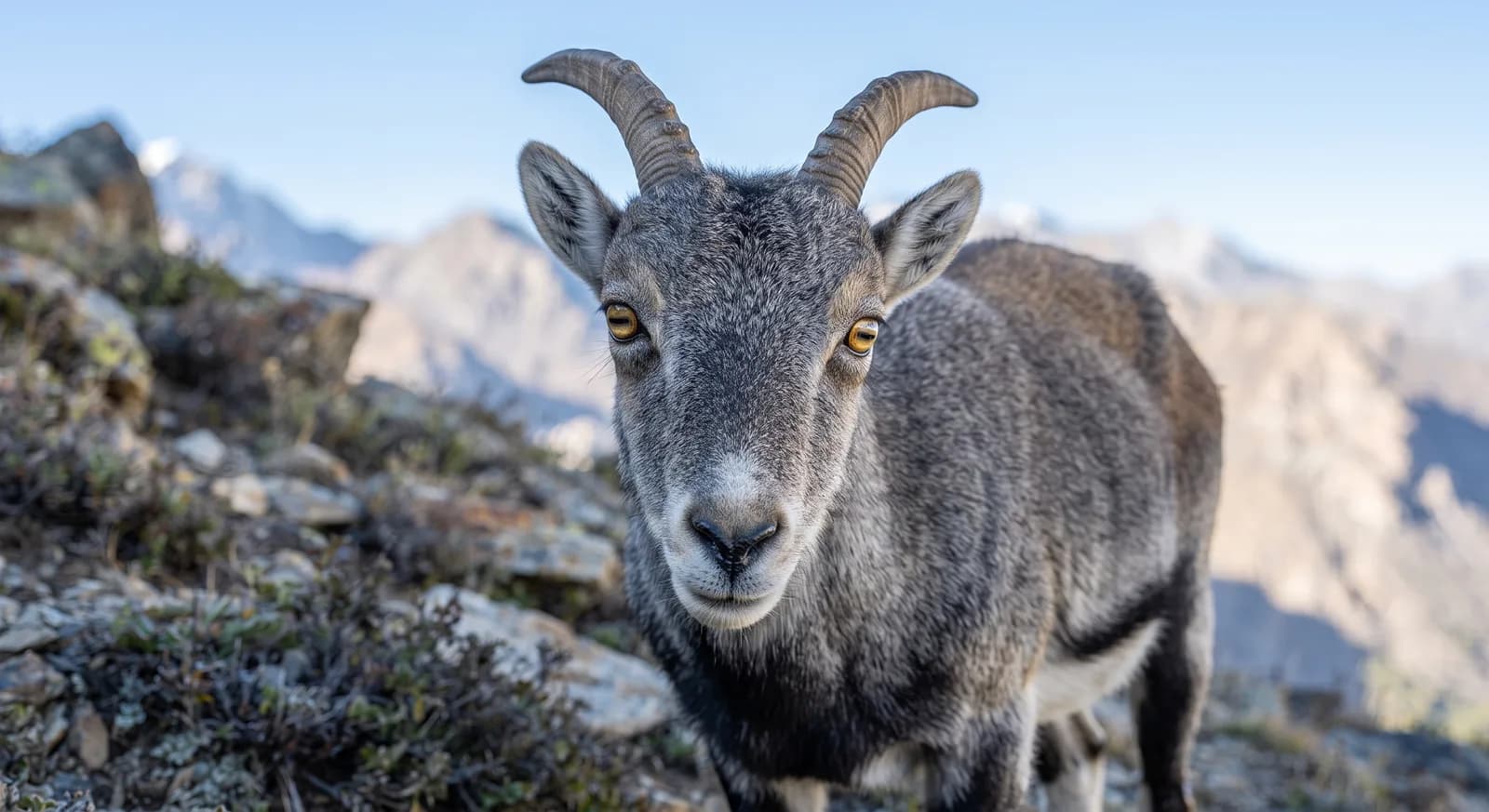
Its greyish-brown coat with a dark stripe along the back camouflages it so well on Himalayan crags that it is very hard to spot, since it spends much of the day completely still.

Weight

22 kg – 42 kg

Size

81 cm – 1.3 m

Life expectancy

14 years

Diet

Herbivore

Feeds mainly on plants.

Activity

Diurnal

Active mainly during the day.

Social structure

Solitary

Lives and hunts alone, joining others only to breed.

Sighting difficulty

Moderate

Mountain
8countries21parks86same family

Fun facts

  • locomociónIt is a small mountain grazer that moves nimbly across steep crags, filling much the same niche as the European ibex.

Life cycle and biology

Skeleton type
Vertebrate - internal bony skeleton (mammal)
Habitat and environment
Rocky slopes and scrubby woodland of the Himalayan mountains, between 1,000 and 4,000 metres
Birth weight
~2 kg
Size at birth
Able to follow its mother soon after birth, having spent several days hidden
Sexual maturity
~3 years (physiologically earlier, but it rarely breeds before this age)
Gestation / incubation
170-218 days (~6-7 months)
Litter / clutch size
1 young (twins rare)
Life expectancy in captivity
Documented record of up to 17-19 years in captivity

Sources consulted: Wikipedia; Animal Diversity Web; AnAge; Animalia.bio; A-Z Animals; IVIS; Earthpedia; Alchetron

Where to find it

Best time: All year round on the steep slopes of the Himalaya; it is easiest to see at dawn and dusk, when it comes out to graze in the rocky clearings.

Loading map…

The pins mark the parks where its presence is documented.

Where to see it

Parks and dive sites where this species has been documented — showing 10 of 21.

Related species

Other species in the catalogue with the most in common with Himalayan Goral — same habitat, park, country, tags or family.

Same taxonomic family

Keep exploring

Based on what we already know about himalayan goral.

Comments

Share an experience, a fun fact or a tip for seeing the himalayan goral.

Be the first to comment.
See full glossary
This page in other languages: Español · Deutsch · Français · Português · Italiano
See its range on the interactive map→
KazirangaIndia
Jim CorbettIndia
SagarmathaNepal
AnnapurnaNepal
Jigme DorjiBhutan
Royal ManasBhutan
Chitral GolPakistan
Nanda DeviIndia
LangtangNepal
Valley of FlowersIndia
See all 21 parks
Near Threatened

Himalayan Tahr

Hemitragus jemlahicus

MarkhorNear Threatened

Markhor

Capra falconeri

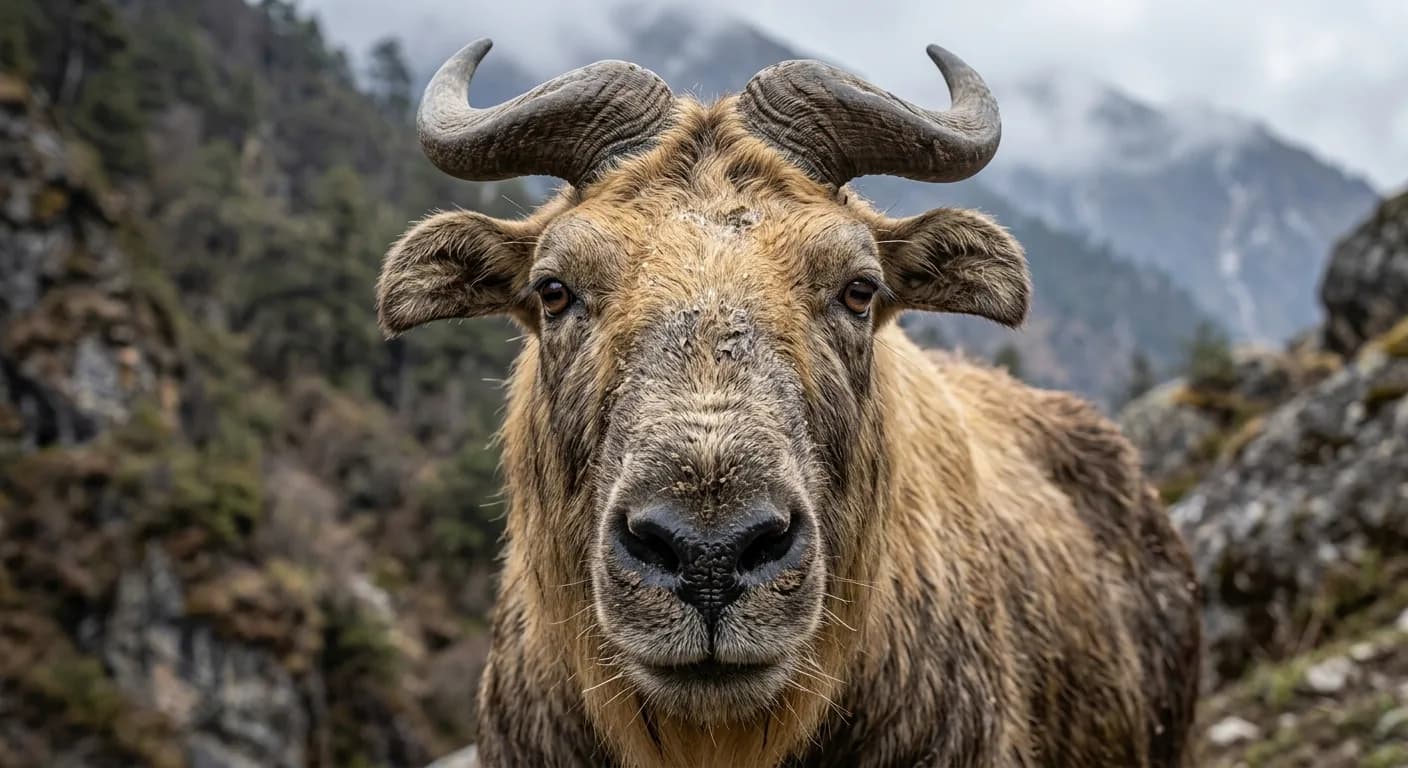
TakinVulnerable

Takin

Budorcas taxicolor

UrialVulnerable

Urial

Ovis vignei

Blue SheepLeast Concern

Blue Sheep

Pseudois nayaur

Near Threatened

Chiru

Pantholops hodgsonii

CountriesIndia
ParksKazirangaIndia
TagsHerbivore
Herbivore
Diurnal
Solitary
Near Threatened
Mountain
Mammal
India
Nepal
Bhutan
Pakistan
Afghanistan
China
Kyrgyzstan
Tajikistan