One of the 18 monkeys on WAnimals
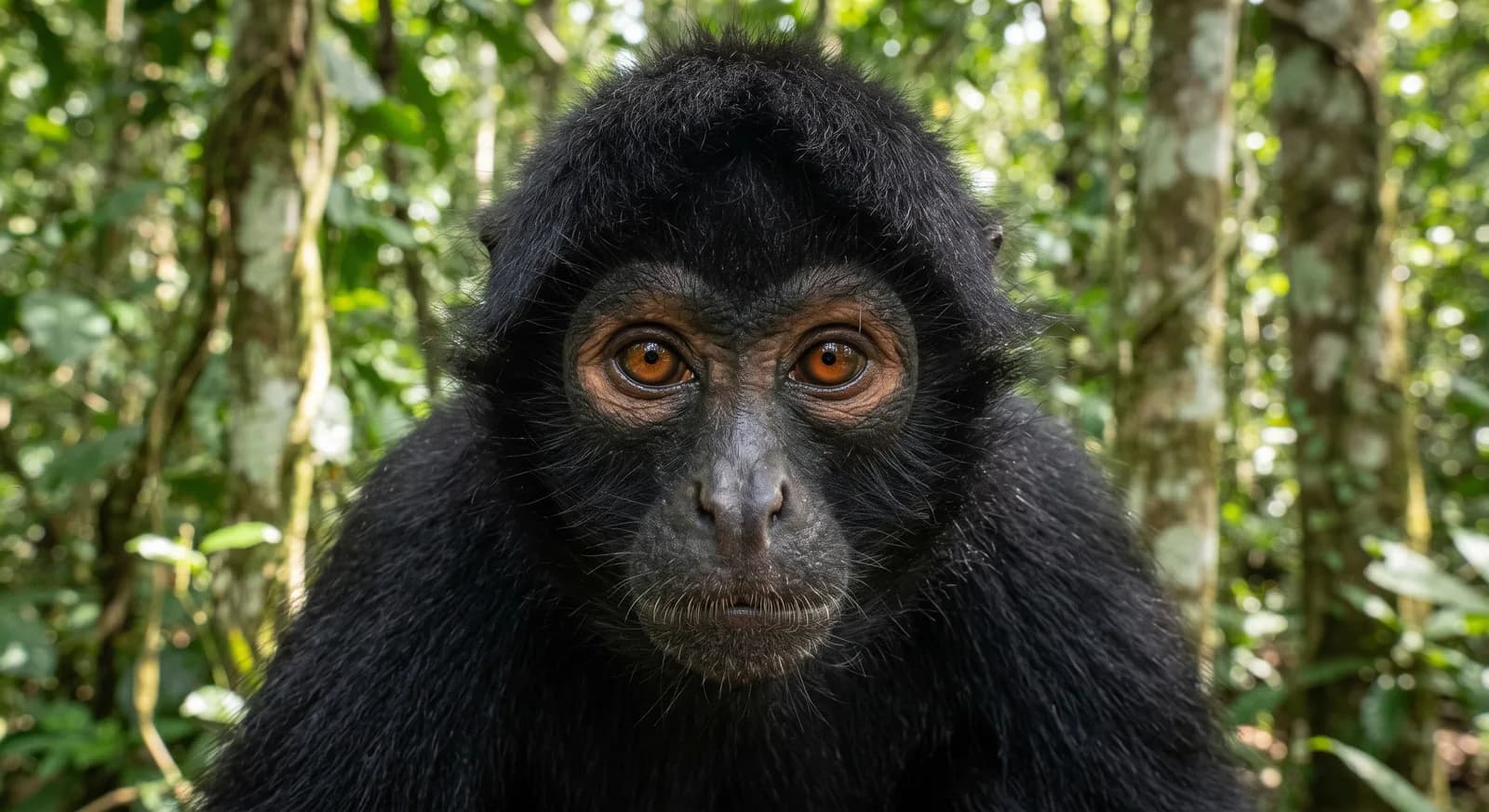
Mammals · Primates · Atelidae
Ateles paniscus
At high risk of extinction in the wild over the medium term.
It is one of the slowest-breeding primates in the world, with females giving birth only every three or four years. Its prehensile tail, longer than its own body, works as a fifth limb able to take its whole weight.
Weight
7 kg – 9 kg
Size
35 cm – 66 cm
Life expectancy
20 years
Diet
Frugivore
Feeds mainly on fruit.
Activity
Diurnal
Active mainly during the day.
Social structure
Family group
Lives in small family groups with close bonds.
AI-generated images: illustrations, not photographs.
Sources consulted: Animal Diversity Web · AnAge · New England Primate Conservancy · WWF · UCSD Placentation Database · Website of Everything · IFAW
The pins mark the parks where its presence is documented.
Parks and dive sites where this species has been documented.
Other species in the catalogue with the most in common with Red-faced Black Spider Monkey — same habitat, park, country, tags or family.
The red-faced black spider monkey is classified as vulnerable. Organisations such as the IUCN, WWF and the Wildlife Conservation Society work specifically on its conservation and that of its habitat; looking into their programmes is a good starting point if you want to get involved.
It's documented in 8 protected areas — one reason why protecting these places matters for its conservation.
Based on what we already know about red-faced black spider monkey.