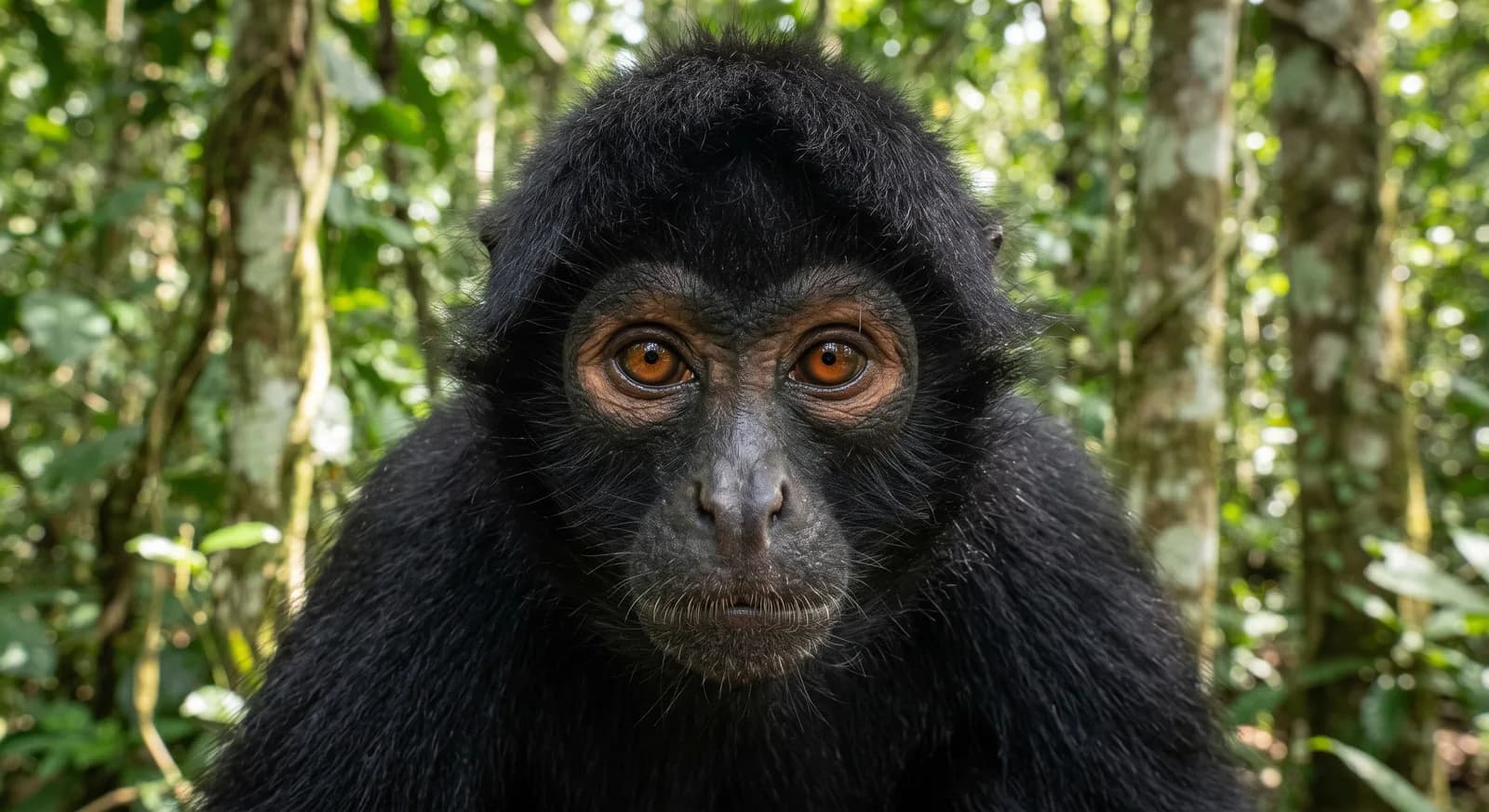
One of the 3 peccaries on WAnimals
Mammals · Artiodactyla · Tayassuidae
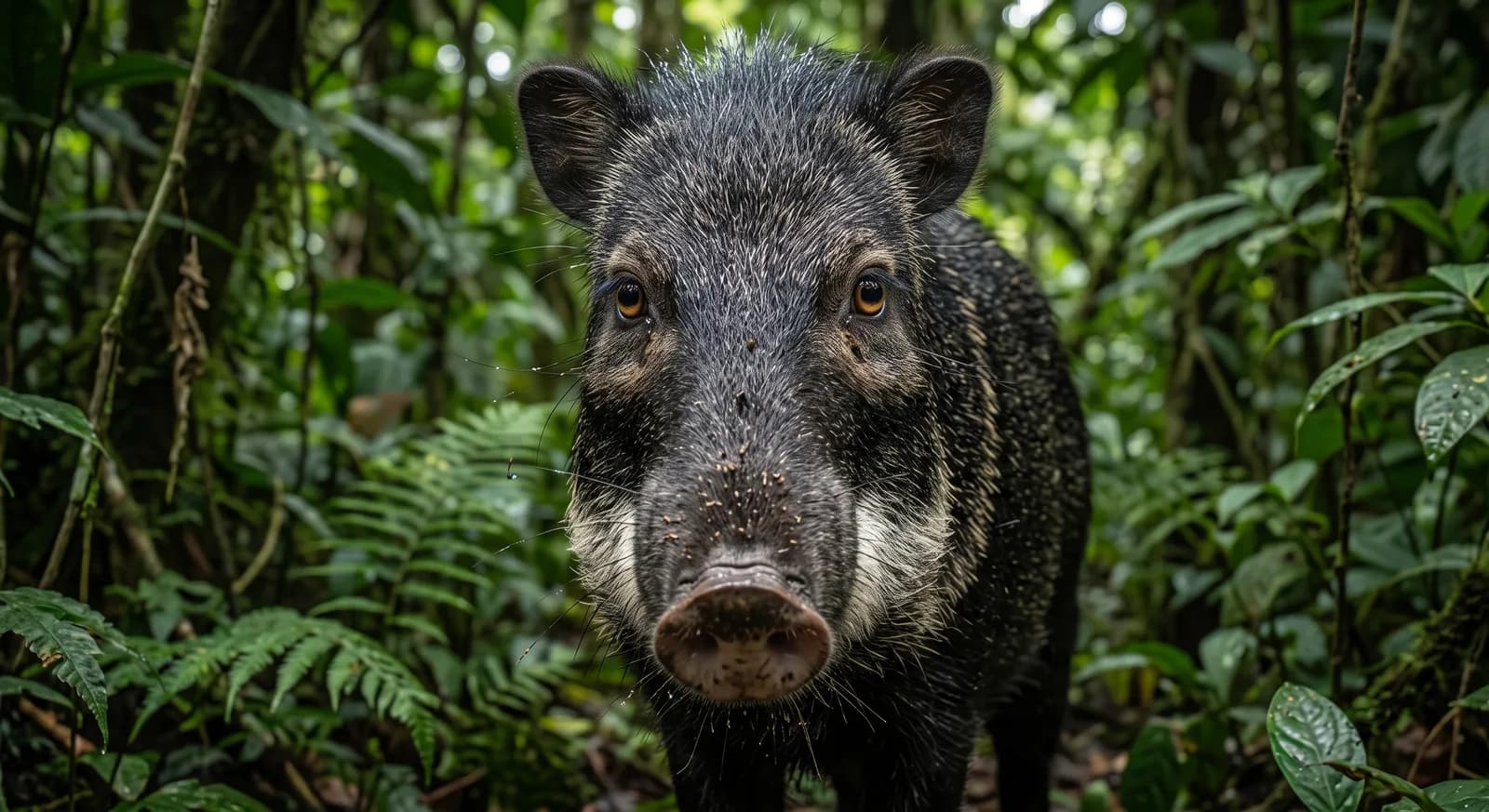
Tayassu pecari
At high risk of extinction in the wild over the medium term.
The white-lipped peccary forms the largest herds of any Neotropical ungulate: groups of fifty to several hundred animals that move through the forest together, turning over the leaf litter in search of fruit, roots and invertebrates. It owes its name to the white patch on its lips. Its passage leaves the ground churned and the pools wallowed, and those wallows are essential microhabitats for amphibians and reptiles. It needs large, continuous forests, and disappears as soon as they are fragmented.
Weight
25 kg – 40 kg
Size
90 cm – 1.4 m
Life expectancy
13 years
Diet
Omnivore
Combines animal and plant food depending on availability.
Activity
Diurnal
Active mainly during the day.
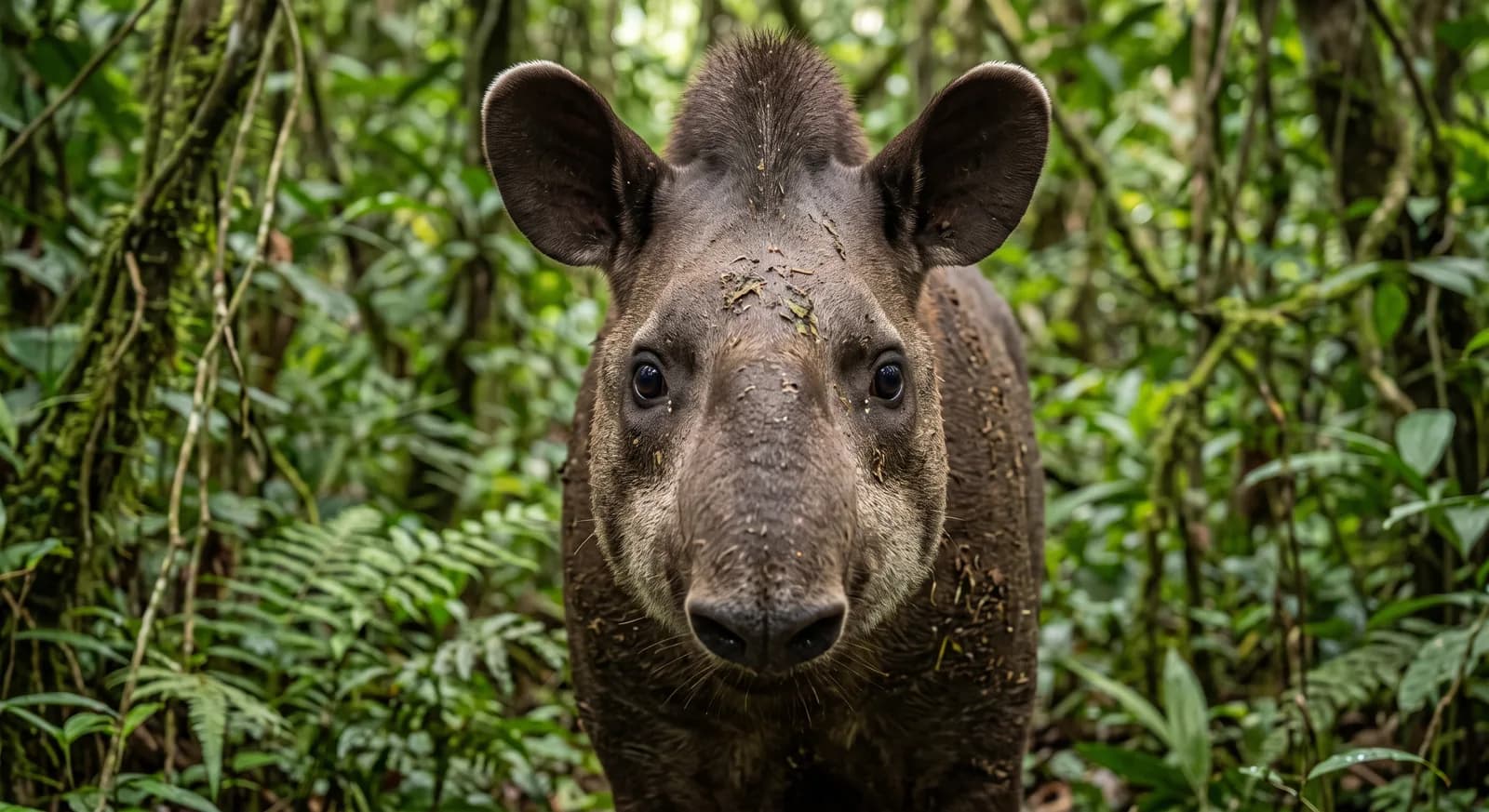
AI-generated images: illustrations, not photographs.
Sources consulted: Wikipedia (es): Tayassu pecari
The pins mark the parks where its presence is documented.
Parks and dive sites where this species has been documented — showing 10 of 15.
Other species in the catalogue with the most in common with White-Lipped Peccary — same habitat, park, country, tags or family.
The white-lipped peccary is classified as vulnerable. Organisations such as the IUCN, WWF and the Wildlife Conservation Society work specifically on its conservation and that of its habitat; looking into their programmes is a good starting point if you want to get involved.
It's documented in 10 protected areas — one reason why protecting these places matters for its conservation.
Based on what we already know about white-lipped peccary.