 Least Concern
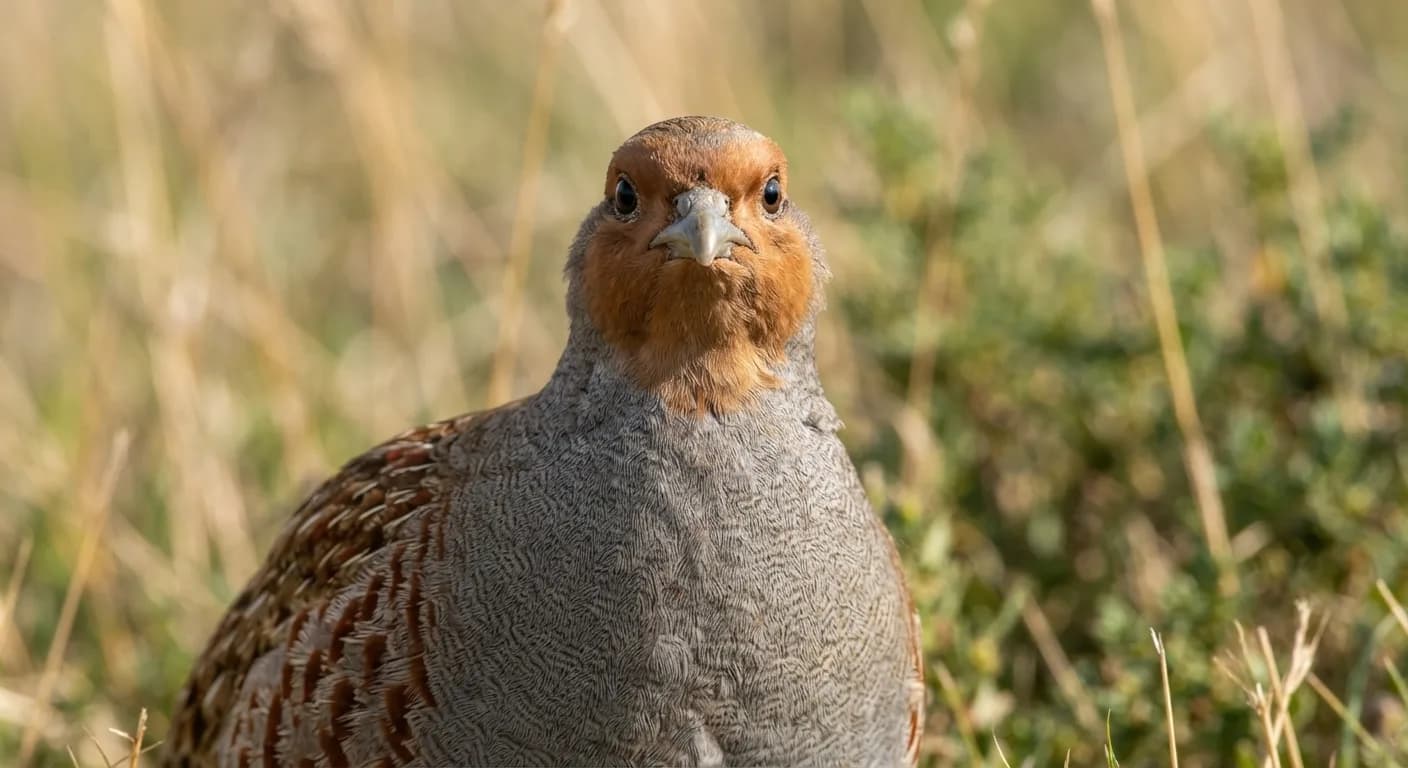
Grey Partridge
Perdix perdix
One of the 5 partridges on WAnimals
Birds · Galliformes · Phasianidae
Alectoris rufa
At high risk of extinction in the wild over the medium term.
Some pairs practise double clutching: the female may start two nests at once in separate scrapes, each incubated by one parent, doubling her potential breeding success.
Weight
390 g – 550 g
Size
33 cm – 36 cm
Life expectancy
3 years
Diet
Herbivore
Feeds mainly on plants.
Activity
Diurnal
Active mainly during the day.
Social structure
Herd
Lives in large groups as a strategy against predators.
Sighting difficulty
Moderate
Sources consulted: ResearchGate (egg characteristics study); Wildlife Trusts; EBSCO Research Starters; Bird Hunting Spain; Animalia.bio; Oxford Academic Poultry Science (age laying performance study); BirdLife DataZone
Best time: All year round in Mediterranean farmland and scrub; in spring the males call from stone piles and field banks and are far more conspicuous.
Parks and dive sites where this species has been documented — showing 10 of 53.
Other species in the catalogue with the most in common with Red-legged Partridge — same habitat, park, country, tags or family.
The red-legged partridge is classified as vulnerable. Organisations such as the IUCN, WWF and the Wildlife Conservation Society work specifically on its conservation and that of its habitat; looking into their programmes is a good starting point if you want to get involved.
It's documented in 10 protected areas — one reason why protecting these places matters for its conservation.
Based on what we already know about red-legged partridge.
Share an experience, a fun fact or a tip for seeing the red-legged partridge.
Be the first to comment.
The pins mark the parks where its presence is documented.