 Least Concern
European Nightjar
Caprimulgus europaeus
One of the 2 nightjars on WAnimals
Birds · Caprimulgiformes · Caprimulgidae
Caprimulgus ruficollis
The species is abundant and widely distributed; it faces no significant short-term risk.
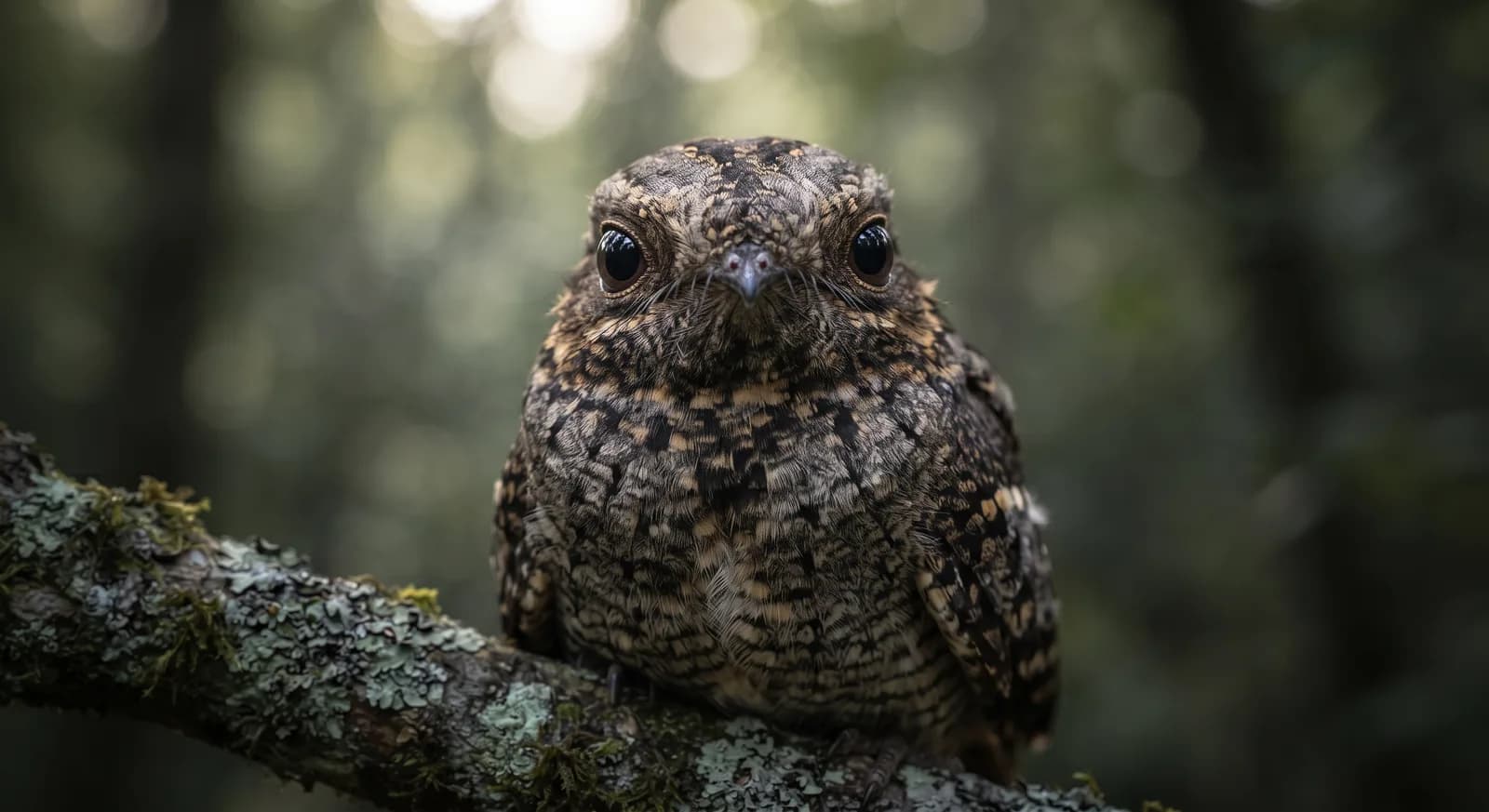
The largest representative of the genus Caprimulgus in Europe. Its plumage is among the most cryptic in the bird world: a mottled mixture of grey, rufous and brown with dense black streaking on the scapulars and crown. Its diagnostic feature is the golden-brown collar that encircles the whole neck, more visible below the nape than on the throat. It has very prominent tactile bristles between the bill and the eyes.
Weight
80 g – 100 g
Size
29 cm – 31 cm
Life expectancy
10 years
Diet
Insectivore
Feeds mainly on insects and other invertebrates.
Activity
Nocturnal
Active mainly at night.
Social structure
In pairs
Usually lives in pairs, sometimes for life.
Estimated population
The world population is estimated at between 130,000 and 1,500,000 individuals, with 25-49% in Europe. Portugal holds around 3% of the European population (1,000-10,000 pairs)
Sources consulted: IUCN Red List · SEO/BirdLife (ficha, III Atlas y Lista Oficial de las Aves de España 2012) · Sáez y Camacho 2016, Enciclopedia Virtual de los Vertebrados Españoles (MNCN-CSIC) · Zoobotánico de Jerez (proyecto de investigación, C.R.A.S.) · Alonso et al. 2003 · Cleere et al. 2013 · Temminck 1820
Best time: From May to October, at twilight, at low and middle altitudes
The pins mark the parks where its presence is documented.
Parks and dive sites where this species has been documented — showing 10 of 34.
Other species in the catalogue with the most in common with Red-necked Nightjar — same habitat, park, country, tags or family.
Based on what we already know about red-necked nightjar.