Species group · Birds
Nightjars
WAnimals has 2 species of nightjar, in the family Caprimulgidae.
- 2 species
- 1 family
- 49 countries
- 175 parks
- Weight
- 67 g – 100 g
- Length
- 24 cm – 31 cm
- Lifespan
- 4 – 10 years
Ranges calculated from the profiles that record the figure, not from all 2.
All 2 species of nightjars on WAnimals
Each one has its own full profile. This group does not replace them: it brings them together.
Conservation status
2 Least Concern
No species documented in this group is genuinely at risk according to the IUCN, with the data available today.
Where they live
Recorded in 49 countries. The ones with the most species in the group:
Where to see them
- Arrábida2 species
- Cabañeros2 species
- Douro Internacional2 species
- Duero Internacional2 species
- Monfrague2 species
- Montesinho2 species
- Peneda-Geres2 species
- Ria Formosa2 species
- Serra da Estrela2 species
- Serras de Aire e Candeeiros2 species
- Sierra de Guadarrama2 species
- Sudoeste Alentejano e Costa Vicentina2 species
Did you know…?
Its mouth is enormous for the size of its head, and it uses it as a net to catch flying insects on the wing at night.
From European Nightjar
Its scientific name and its common name in several European languages come from an ancient myth that had it suckling from goats: Caprimulgus means literally "goat-milker", from capra and mulgere.
From European Nightjar
Its song is a monotonous, continuous churring that recalls a car engine or a cat's purr.
From European Nightjar
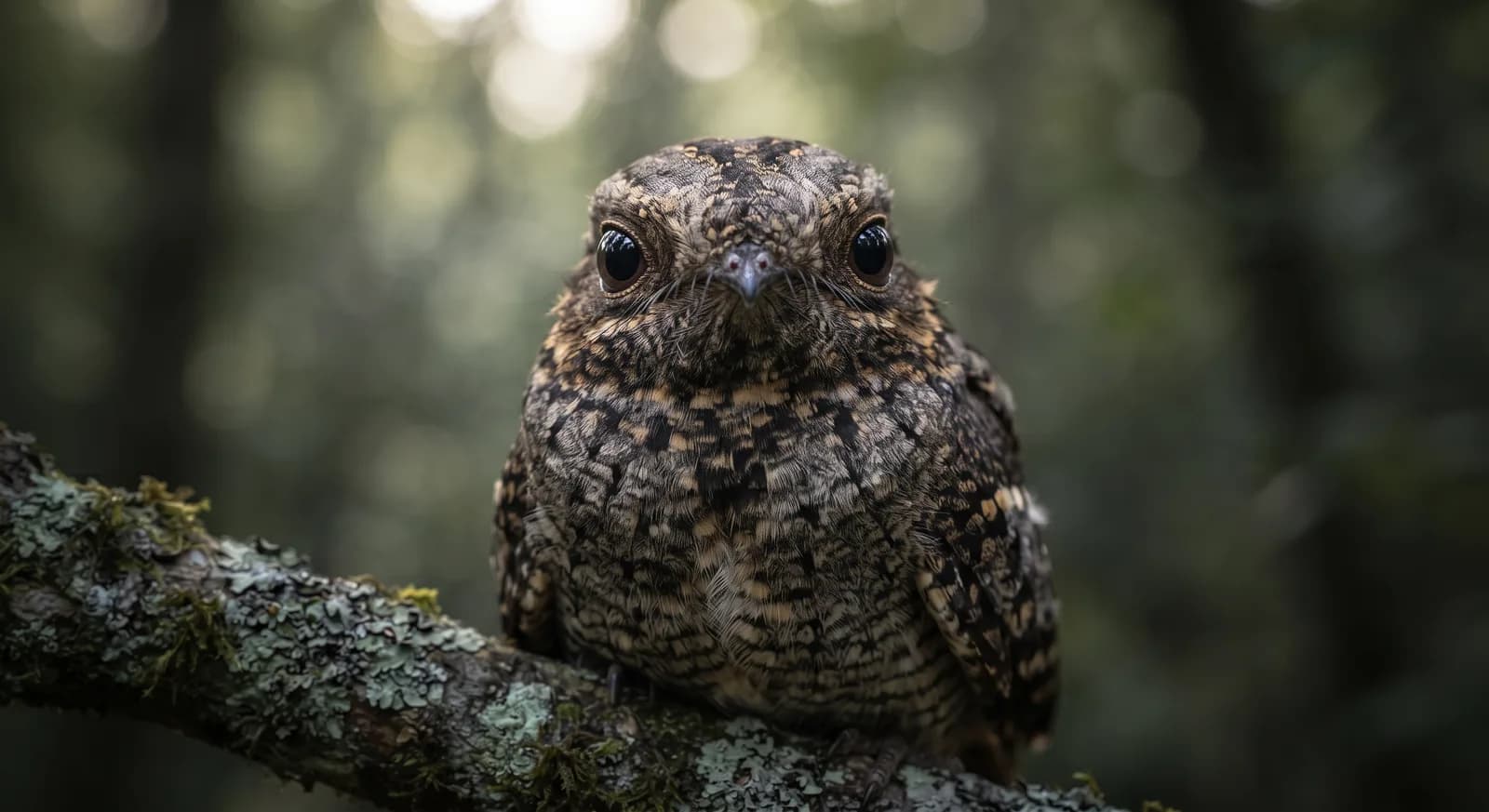
It settles on the ground or lengthways along a branch, and its plumage makes it all but invisible.
From Red-necked Nightjar
The Iberian Peninsula is the only place in Europe where it breeds.
From Red-necked Nightjar
Its main non-natural cause of death is being run over: it settles on tarmac and gravel tracks because they hold the heat, which saves it energy in thermoregulation but leaves it exposed to cars.
From Red-necked Nightjar