Skip to content
WAnimals
  • Map
  • Species
  • Parks
  • Diving
Log inCreate account
WAnimals

The guide for travellers and animal lovers: discover, plan and share your wild adventures around the world.

Discover wildlife

  • Species
  • Ecosystems
  • Glossary
  • Tags

Explore places

  • Map
  • Countries
  • Parks
  • Diving

Plan experiences

  • Guides

Learn

  • Blog

Resources

  • About us
  • How we build our profiles
  • Help centre
  • Contact
  • Install the app

Follow us

Account

  • Log in
  • Create account

© 2026 WAnimals. All rights reserved.

Terms of servicePrivacyCookiesLegal notice
MapSpeciesParksDiving
  1. Home
  2. Species
  3. Seoane's Viper

One of the 12 vipers on WAnimals
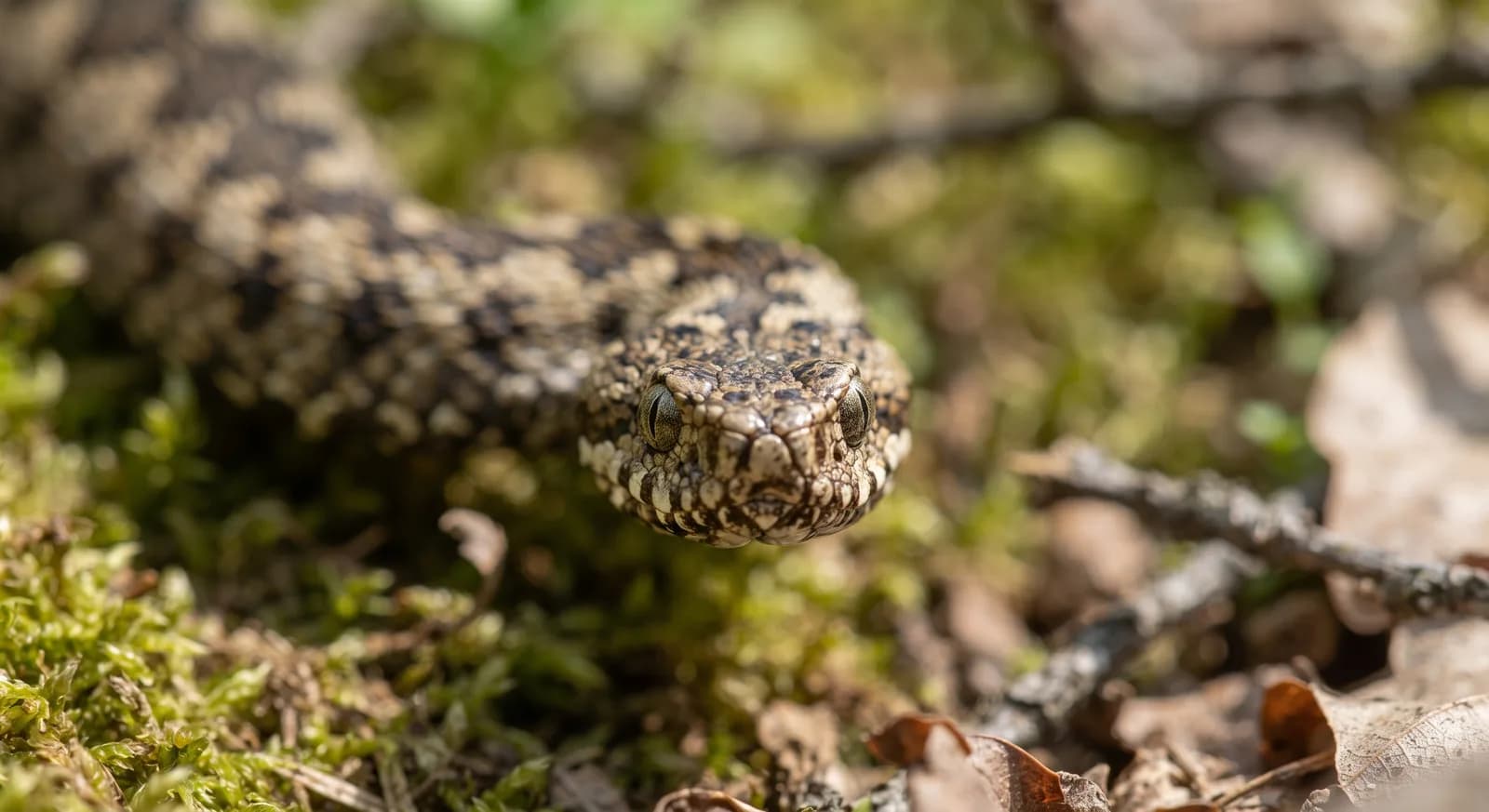
Seoane's Viper (Vipera seoanei)

Reptiles · Squamata · Viperidae

Seoane's Viper

Vipera seoanei

Near Threatened

It could become threatened in the near future if current threats go unchecked.

Spotted something wrong?

It is all but endemic to the Iberian Peninsula and remarkably polymorphic, with as many as five recognised colour patterns.

Weight

279 g on average

Size

60 cm – 80 cm

Life expectancy

10 years
Diet

Carnivore

Feeds mainly on other animals.

Activity

Diurnal

Active mainly during the day.

Social structure

Solitary

Lives and hunts alone, joining others only to breed.

Temperate forestMountain
3countries19parks22same family

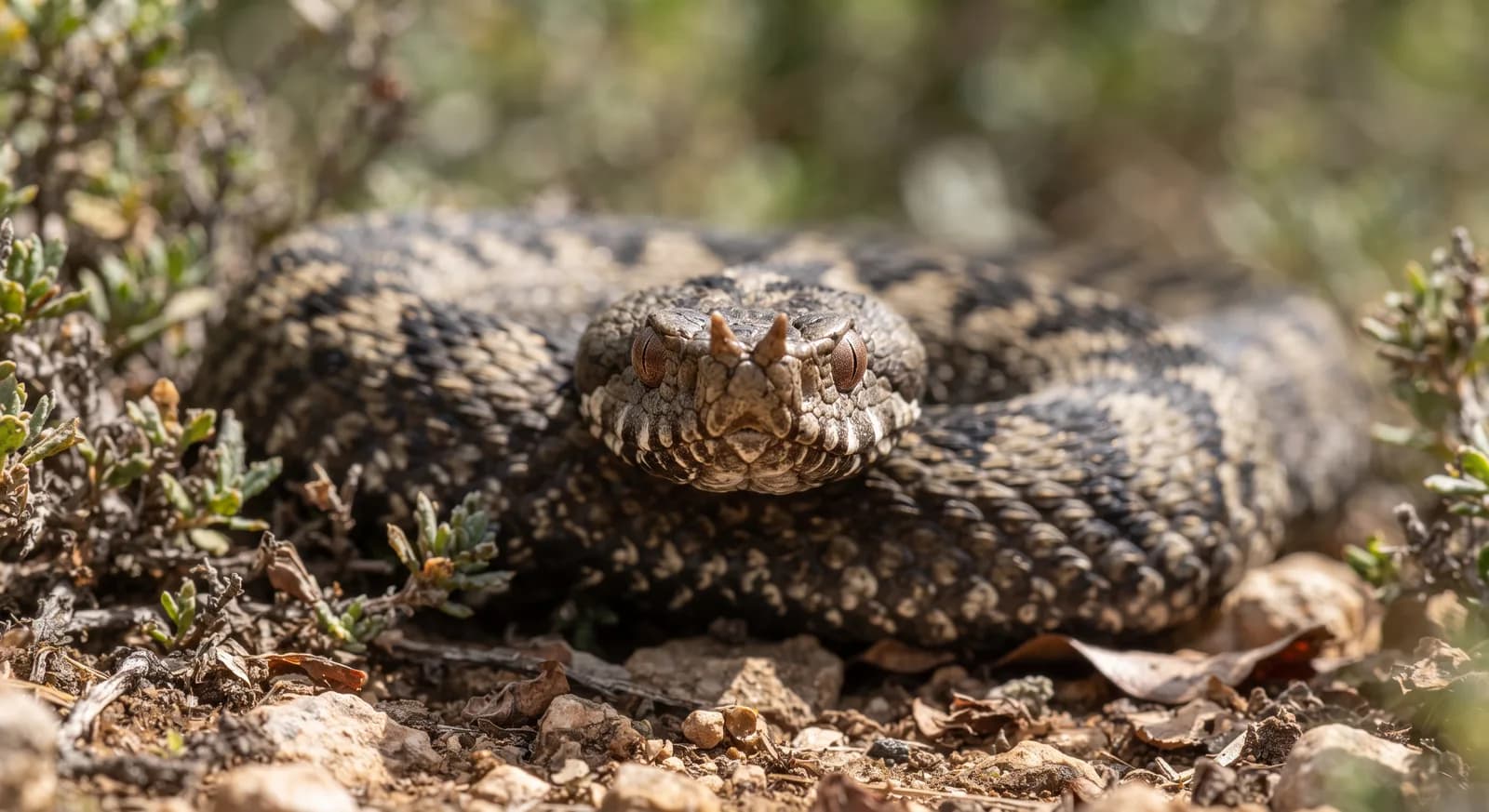
AI-generated images: illustrations, not photographs.

Fun facts

  • It is the only venomous snake across much of northern Spain, where it is also known as the Basque viper.
  • It eats small mammals, lizards and amphibians.
  • It lives along damp meadow-and-woodland edges in the Atlantic climate of northern Iberia.

Life cycle and biology

Skeleton type
Vertebrate - internal bony skeleton (reptile)
Habitat and environment
Damp meadow-and-woodland edges in the Atlantic climate of northern Iberia and south-western France, from sea level to 1,900 m
Birth weight
Born fully developed
Size at birth
Born fully developed
Sexual maturity
3-4 years
Gestation / incubation
Viviparous: about 3-4 months of gestation
Litter / clutch size
Up to 10 live young per litter (an ovoviviparous species)
Life expectancy in captivity
Documented record of up to 19 years

Sources consulted: World Species · Snakes and Lizards · IUCN Red List API · Animalia.bio (Seoane's Viper) · Citizendium · Parque de la Naturaleza de Cabárceno · PMC (venomics Iberian adder study)

Where to find it

Best time: From March to October, in mid-morning, on heaths, meadows and field edges of the Cantabrian coast and northern Portugal.

Loading map…

The pins mark the parks where its presence is documented.

Where to see it

Parks and dive sites where this species has been documented — showing 10 of 19.

Related species

Other species in the catalogue with the most in common with Seoane's Viper — same habitat, park, country, tags or family.

Same taxonomic family
Shares a park
Shares a park
Shares a park
Shares a park

Keep exploring

Based on what we already know about seoane's viper.

Share an experience, a fun fact or a tip for seeing the seoane's viper.
See full glossary
This page in other languages: Español · Deutsch · Français · Português · Italiano
See its range on the interactive map→
Picos de EuropaSpain
Ordesa y Monte PerdidoSpain
Peneda-GeresPortugal
Pyrenees National ParkFrance
SomiedoSpain
RedesSpain
Serra da EstrelaPortugal
Aiako HarriaSpain
Aizkorri-AratzSpain
AralarSpain
See all 19 parks
Lataste's ViperVulnerable

Lataste's Viper

Vipera latastei

Asp ViperLeast Concern

Asp Viper

Vipera aspis

Ocellated LizardNear Threatened

Ocellated Lizard

Timon lepidus

Near Threatened

Four-lined Snake

Elaphe quatuorlineata

Bearded VultureNear Threatened

Bearded Vulture

Gypaetus barbatus

Near Threatened

Iberian Emerald Lizard

Lacerta schreiberi

CountriesSpain
ParksPicos de EuropaSpain
TagsCarnivore
Carnivore
Diurnal
Solitary
Near Threatened
Reptile
Temperate forest
Mountain
Spain
Portugal
France