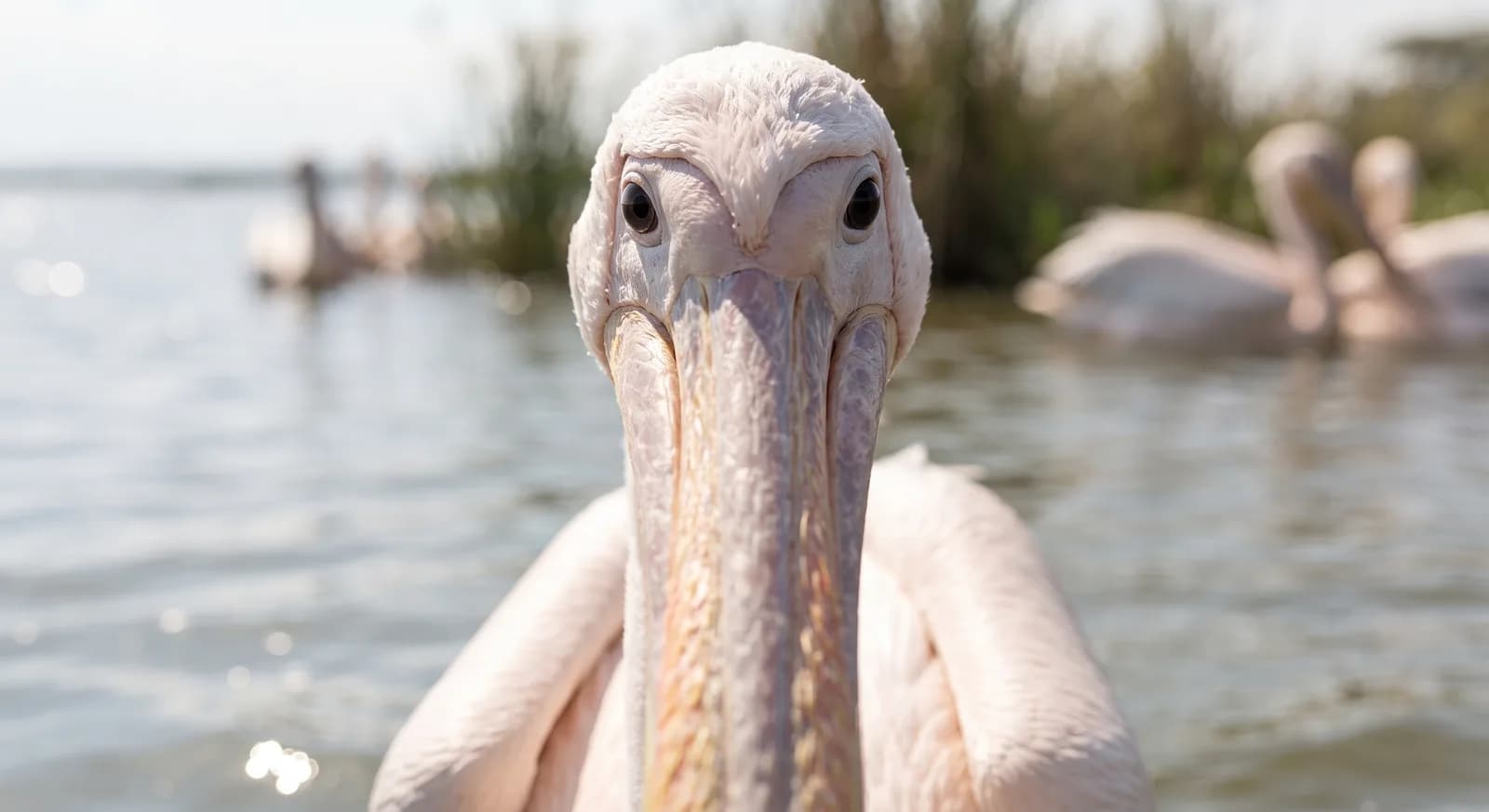
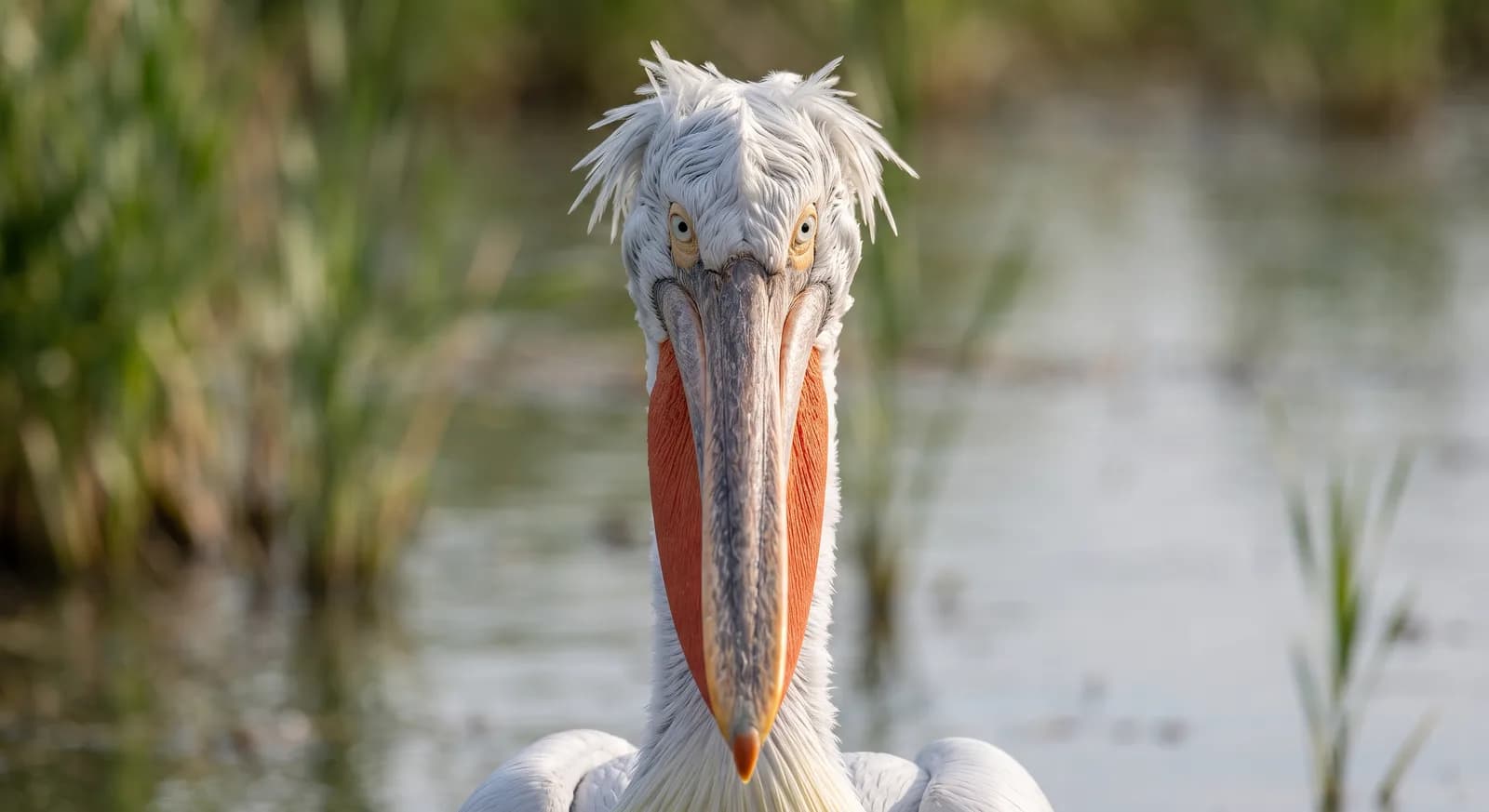
One of the 8 pelicans on WAnimals
Birds · Pelecaniformes · Pelecanidae
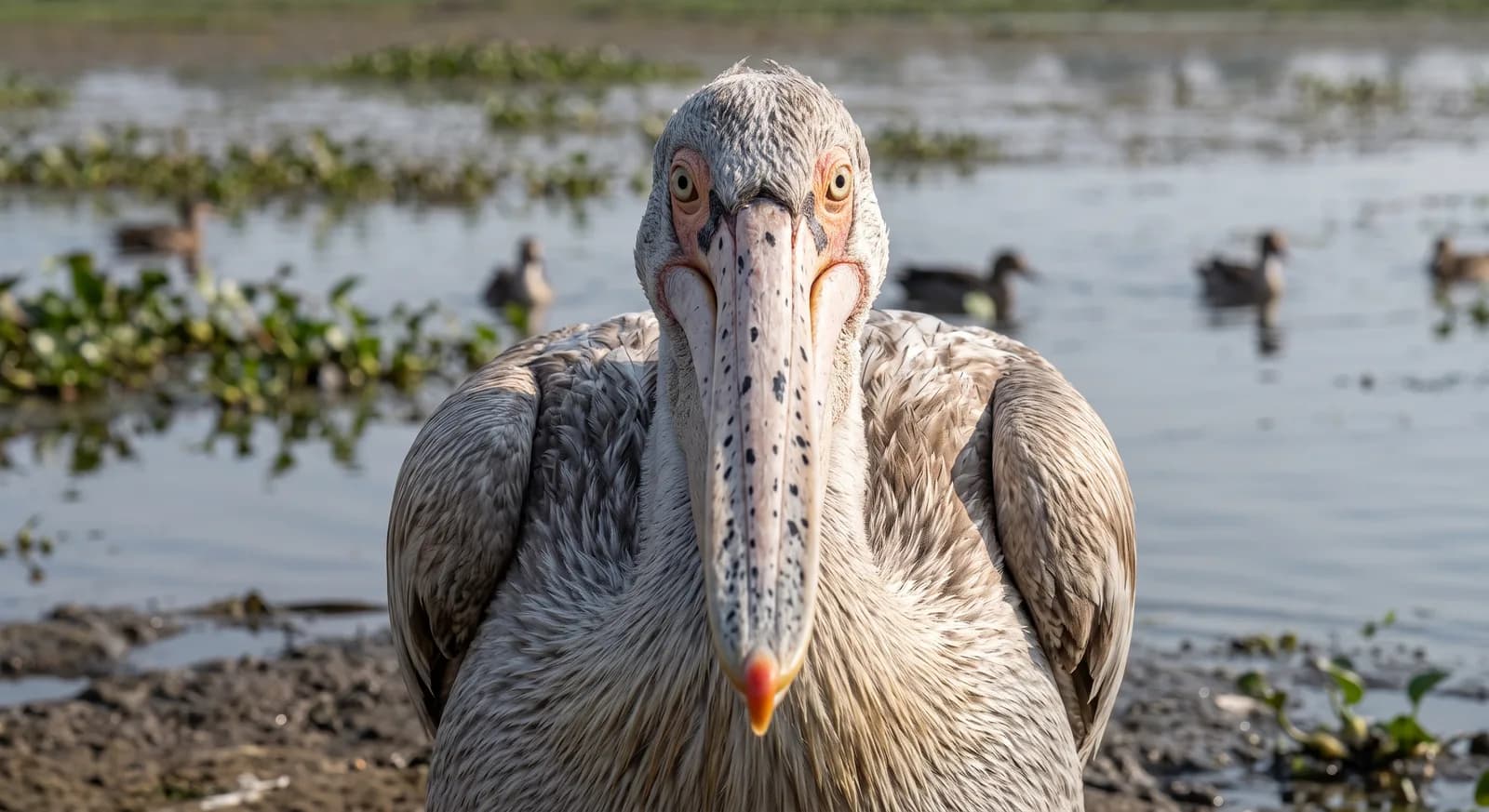
Pelecanus philippensis
It could become threatened in the near future if current threats go unchecked.
A medium-sized pelican within the genus, smaller and greyer than its congeners, and without bright colours. Its diagnostic feature is the dark spotting on the upper mandible, which gives it its name. At a distance it is hard to separate from the other pelicans of the region; only close up are the spotted bill and the overall greyish tone apparent.
Weight
4 kg – 6 kg
Diet
Piscivore
Feeds mainly on fish.
Activity
Diurnal
Active mainly during the day.
Social structure
Colony
Lives in large concentrations, often for breeding reasons.
Sighting difficulty
Moderate
Estimated population
Its range covers between 129,000 and 181,000 km²; the largest remaining populations are in India, Sri Lanka, southern Cambodia and Sumatra
AI-generated images: illustrations, not photographs.
Sources consulted: IUCN Red List; BirdLife DataZone; Animal Diversity Web (McCubbrey, Kalamazoo College); Wikipedia (Spot-billed pelican); Brisson 1760; Gmelin 1789
Best time: All year round on the great lakes and wetlands of southern Asia
The pins mark the parks where its presence is documented.
Parks and dive sites where this species has been documented.
Other species in the catalogue with the most in common with Spot-billed Pelican — same habitat, park, country, tags or family.
Based on what we already know about spot-billed pelican.
Share an experience, a fun fact or a tip for seeing the spot-billed pelican.
Be the first to comment.