 Least Concern
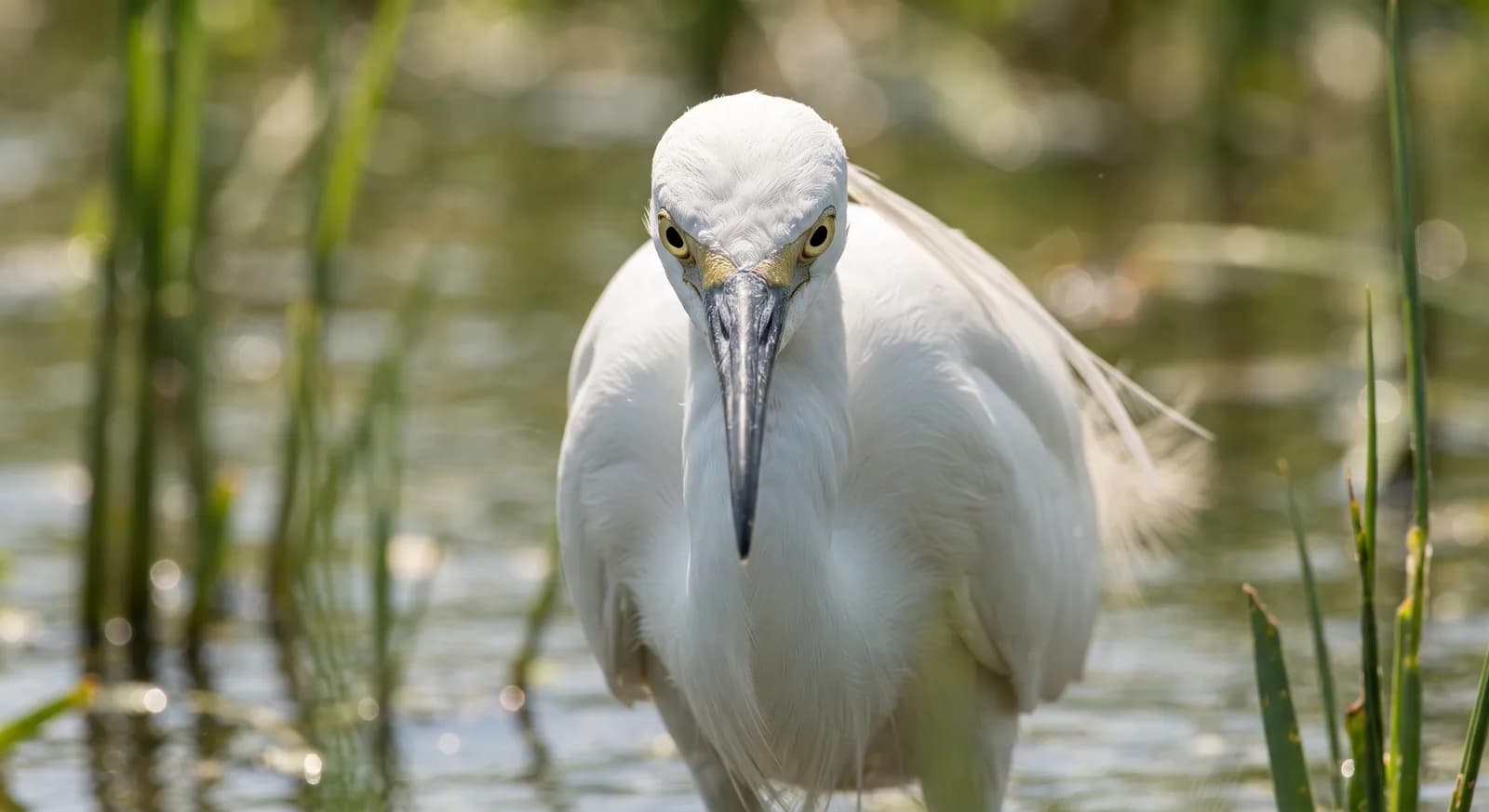
Little Egret
Egretta garzetta
Birds · Pelecaniformes · Ardeidae
Bubulcus ibis
The species is abundant and widely distributed; it faces no significant short-term risk.
A small, compact heron, with a shorter neck, legs and bill than other herons, and white plumage that in the breeding season takes on orange tones on the crown, breast and back. It is the heron least tied to water: it feeds in grassland and farmland.
Weight
300 g – 500 g
Size
45 cm – 52 cm
Diet
Insectivore
Feeds mainly on insects and other invertebrates.
Activity
Diurnal
Active mainly during the day.
Social structure
Colony
Lives in large concentrations, often for breeding reasons.
Estimated population
4,000,000-9,850,000 individuals worldwide; the European population is estimated at 76,100-92,300 pairs (152,000-185,000 mature individuals)
Sources consulted: SEO/BirdLife · IUCN Red List · MITECO - Inventario Español de Especies Terrestres · Asturnatura · Animalia.bio · Si Bachir et al. 2001, Ardeola 48(2)
Best time: All year round; the orange breeding plumage is seen between May and June
Parks and dive sites where this species has been documented — showing 10 of 90.
Other species in the catalogue with the most in common with Cattle Egret — same habitat, park, country, tags or family.
Based on what we already know about cattle egret.
The pins mark the parks where its presence is documented.