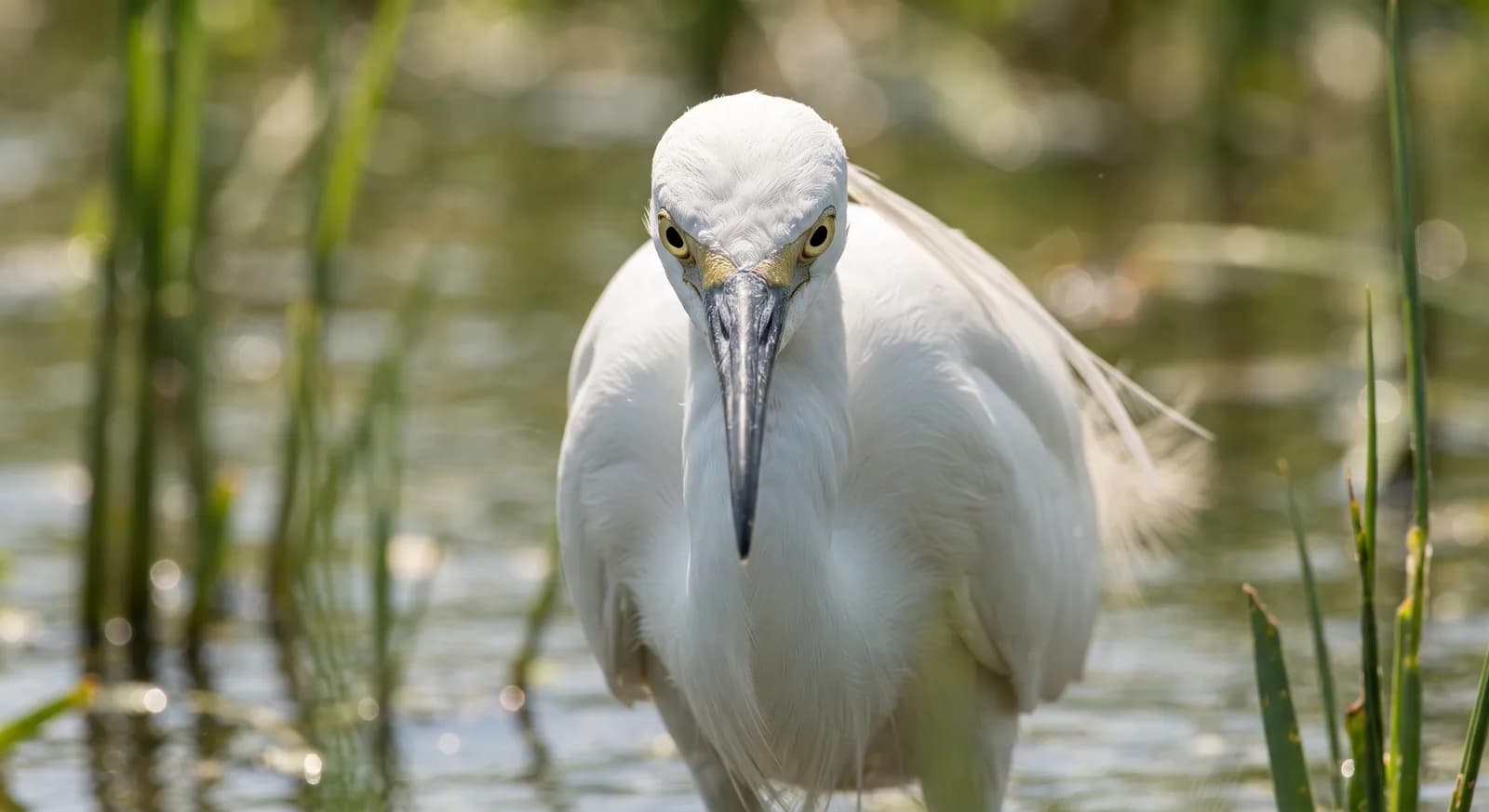
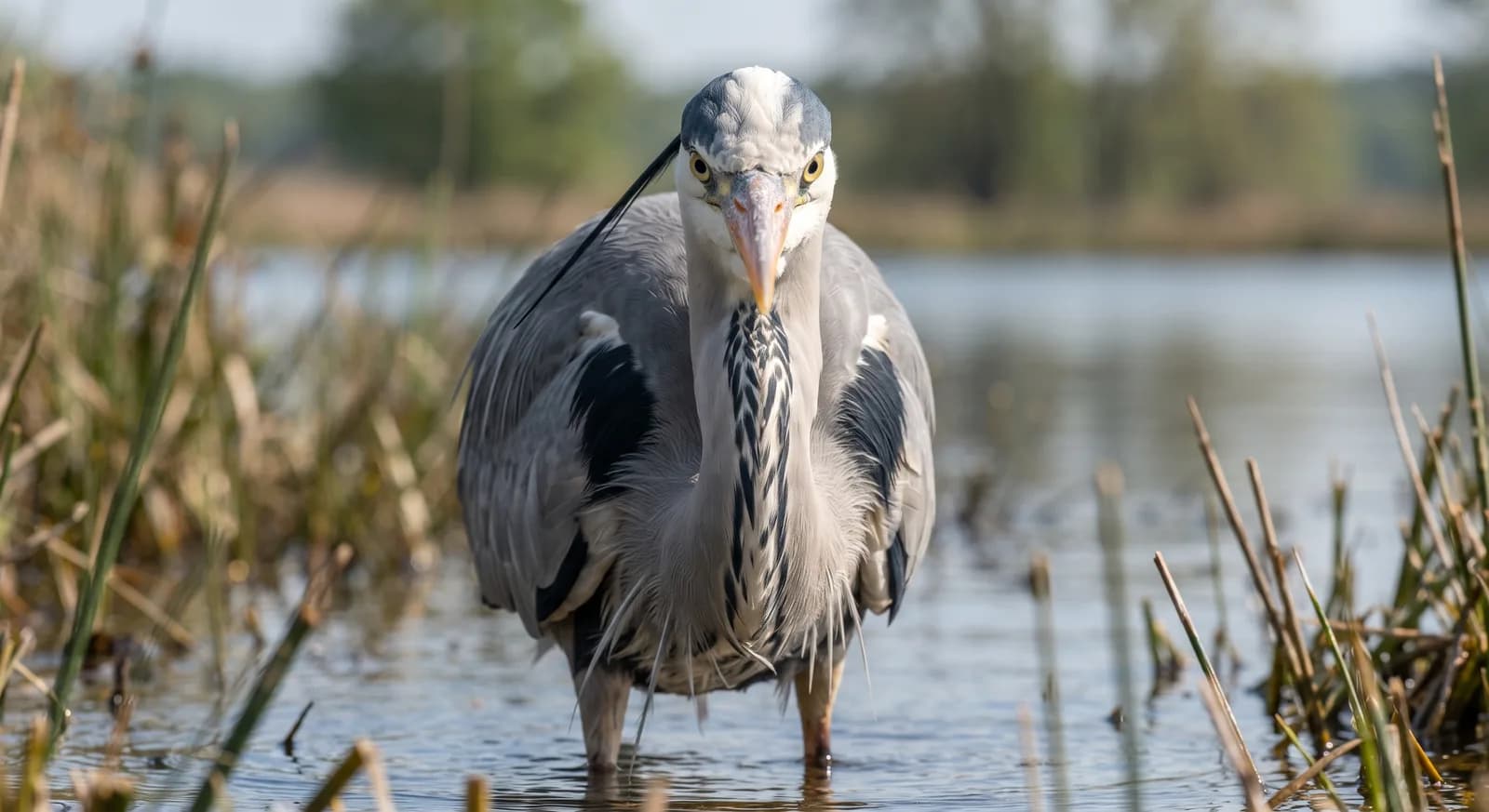
One of the 4 egrets on WAnimals
Birds · Pelecaniformes · Ardeidae
Egretta caerulea
The species is abundant and widely distributed; it faces no significant short-term risk.
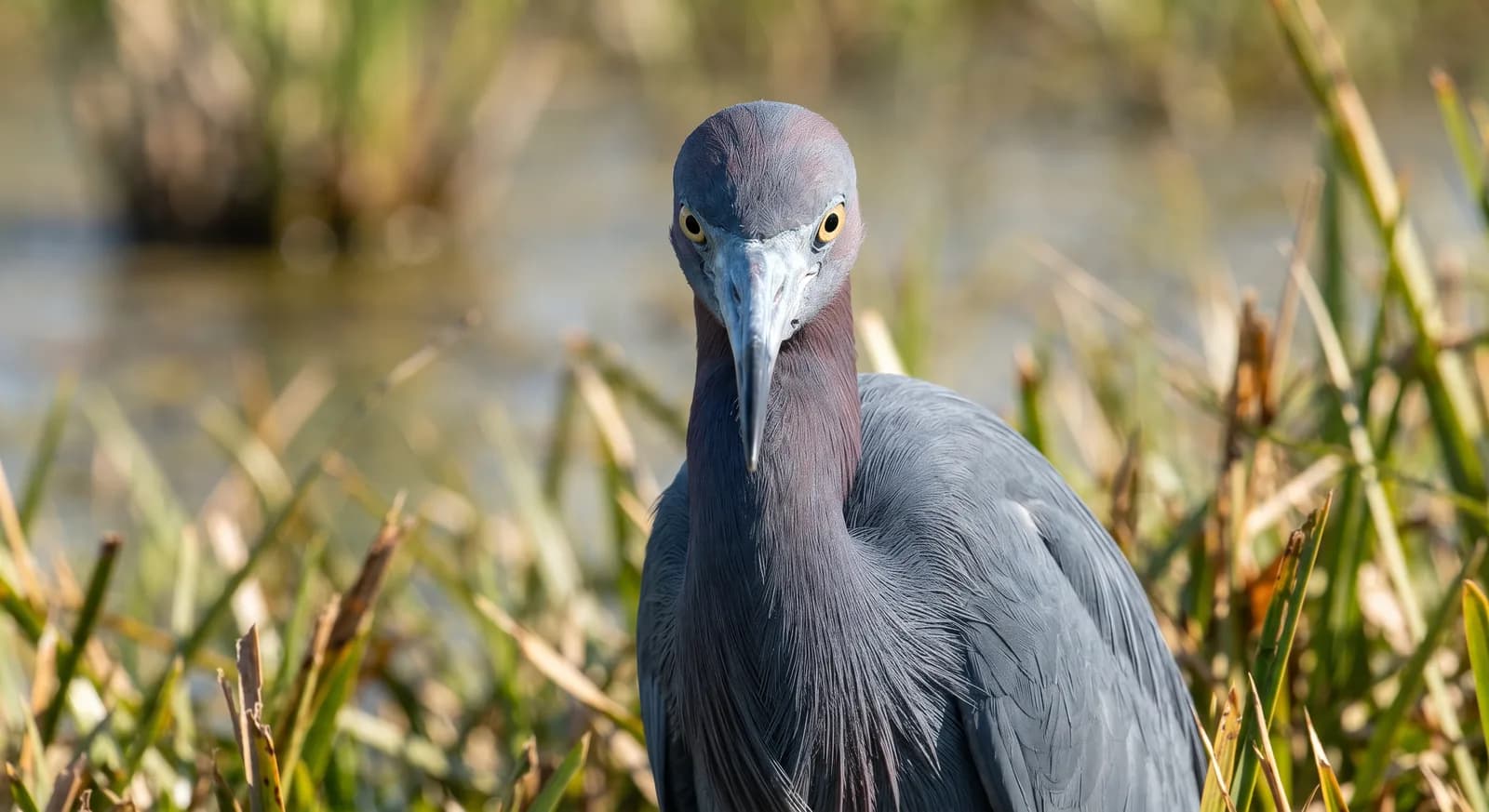
A small heron of uniform slate blue with reddish-violet tints on the head and neck, and a characteristic two-tone bill: bluish with a black tip. Juveniles are entirely white and are confused with the snowy egret, although they can be told apart by the dark tips to the primaries.
Weight
330 g – 410 g
Size
56 cm – 74 cm
Life expectancy
7 years
Diet
Carnivore
Feeds mainly on other animals.
Activity
Diurnal
Active mainly during the day.
Social structure
Colony
Lives in large concentrations, often for breeding reasons.
Sighting difficulty
Easy
AI-generated images: illustrations, not photographs.
Sources consulted: IUCN Red List; Audubon Field Guide; Florida Fish and Wildlife Conservation Commission; Florida Natural Areas Inventory; Rodgers y Smith 1995, The Birds of North America
Best time: All year round in the south-eastern United States and the American tropics
Parks and dive sites where this species has been documented — showing 10 of 23.
Other species in the catalogue with the most in common with Little Blue Heron — same habitat, park, country, tags or family.
Based on what we already know about little blue heron.
Share an experience, a fun fact or a tip for seeing the little blue heron.
Be the first to comment.
The pins mark the parks where its presence is documented.