Skip to content
WAnimals
  • Map
  • Species
  • Parks
  • Diving
Log inCreate account
WAnimals

The guide for travellers and animal lovers: discover, plan and share your wild adventures around the world.

Discover wildlife

  • Species
  • Ecosystems
  • Glossary
  • Tags

Explore places

  • Map
  • Countries
  • Parks
  • Diving

Plan experiences

  • Guides

Learn

  • Blog

Resources

  • About us
  • How we build our profiles
  • Help centre
  • Contact
  • Install the app

Follow us

Account

  • Log in
  • Create account

© 2026 WAnimals. All rights reserved.

Terms of servicePrivacyCookiesLegal notice
MapSpeciesParksDiving
  1. Home
  2. Species
  3. Truncate Donax

Bivalves · Cardiida · Donacidae

Truncate Donax

Donax trunculus

Not Evaluated

It has not yet been assessed against the IUCN criteria.

Spotted something wrong?

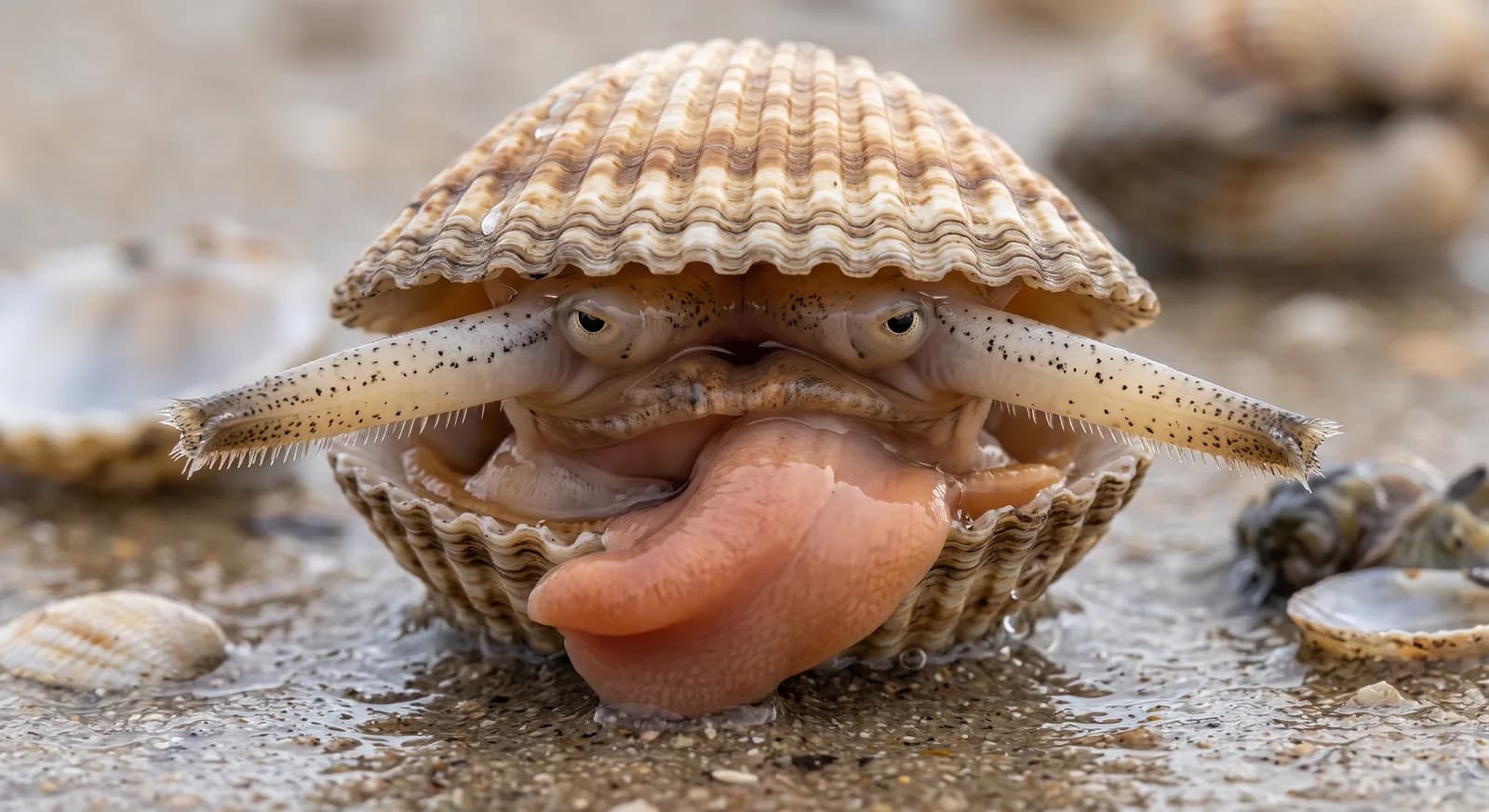
The truncate donax is an acephalous bivalve mollusc of the family Donacidae.

Size

up to 4.5 cm

Life expectancy

3 years

Diet

Omnivore

Combines animal and plant food depending on availability.

Social structure

Solitary

Lives and hunts alone, joining others only to breed.

Ocean
9countries26parks45dive sites

Fun facts

  • GeneralIt is gathered by hand with a rake in the surf itself.
  • It moves with the tides: it lets the wave carry it, reburies itself, and in that way follows the water level through the day.
  • Its shell varies so much in colour and pattern that two individuals from the same beach can look like different species.
  • It follows the tide. Coquinas let the wave carry them, rebury themselves within seconds and so move up and down the beach with the tide, a technique known as swash-riding.
  • That calls for extremely fast digging: it is among the quickest burrowing bivalves, and individuals between 0.5 and 2.5 cm are the fastest of all.
  • It senses wave vibrations to know when to emerge. Related species respond to pressure signals of barely 20 pascals.
  • In Spain it is the basis of the coquinas of Huelva and of the stew of the Cádiz coast.
  • As a filter feeder of the surf zone it accumulates viruses and toxins, and it has been implicated in outbreaks of hepatitis A.

Life cycle and biology

Skeleton type
Invertebrate - external calcareous bivalve shell (mollusc)
Habitat and environment
Shore sand in the surf zone
Sexual maturity
1 year

Sources consulted: Wikipedia (es): Donax trunculus · ScienceDirect (Hughes 1989) · Science Advances, How colonial animals evolve · Wikipedia, Zooid

Where to find it

Loading map…

Where to see it

Parks and dive sites where this species has been documented — showing 20 of 71.

Related species

Other species in the catalogue with the most in common with Truncate Donax — same habitat, park, country, tags or family.

Shares a park
Shares a park
Shares a park
Shares a park
Shares a park
Shares a park

Keep exploring

Based on what we already know about truncate donax.

Share an experience, a fun fact or a tip for seeing the truncate donax.
See full glossary
This page in other languages: Español · Deutsch · Français · Português · Italiano

The pins mark the parks and dive sites where its presence is documented.
See its range on the interactive map→
Doñana National ParkSpain
CalanquesFrance
Cinque TerreItaly
Alonissos and the Northern SporadesGreece
IchkeulTunisia
Port-CrosFrance
Cabrera ArchipelagoSpain
Ebro DeltaSpain
Cíes IslandsSpain
Ria FormosaPortugal
Medes IslandsSpain
Cap de CreusSpain
Zakynthos (loggerhead turtle)Greece
Kastellorizo (Blue Cave)Greece
Tavolara (Sardinia)Italy
Plemmirio Marine Reserve (Sicily)Italy
Calanques of MarseilleFrance
Scandola Reserve (Corsica)France
Portofino Marine ReserveItaly
Columbretes IslandsSpain
See all 26 parks
See all 45 dive sites
Mediterranean MusselNot Evaluated

Mediterranean Mussel

Mytilus galloprovincialis

Not Evaluated

Chequered Carpet Shell

Ruditapes decussatus

Not Evaluated

Pod Razor Shell

Ensis siliqua

Not Evaluated

Noah's Ark

Arca noae

Common CockleNot Evaluated

Common Cockle

Cerastoderma edule

Not Evaluated

Variegated Scallop

Mimachlamys varia

CountriesSpain
ParksDoñana National ParkSpain
TagsOmnivore
Omnivore
Colonial
Ocean
Mollusc

Europe7

Africa2

Spain
Italy
Greece
France
Portugal
Tunisia
France
Greece
Ireland
Italy
Portugal
Spain
United Kingdom
Morocco
Tunisia