 Least Concern
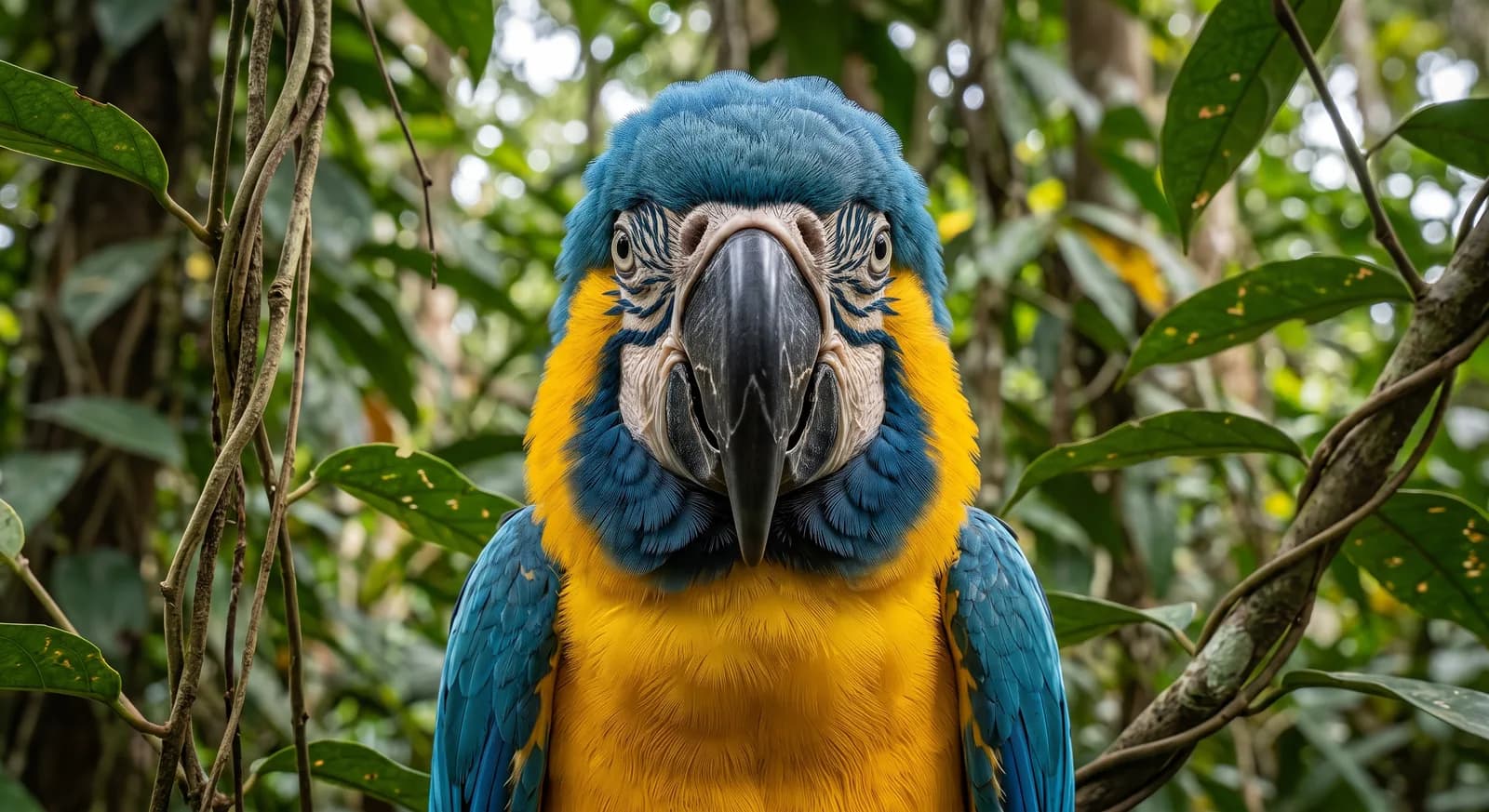
Blue-And-Yellow Macaw
Ara ararauna
Mammals · Primates · Pitheciidae
Pithecia pithecia
The species is abundant and widely distributed; it faces no significant short-term risk.
The white-faced saki is a small primate of north-eastern South America, with a long, dense coat that gives it a shaggy look and a thick, bushy tail that is not prehensile. It lives in small family groups in the middle storey of the forest. It is a seed specialist: with its canines and premolars it opens green, woody fruits that no other animal can use, which gives it access to a resource available when ripe fruit is scarce.
Weight
1.5 kg – 2.5 kg
Size
30 cm – 48 cm
Life expectancy
20 years
Diet
Herbivore
Feeds mainly on plants.
Activity
Diurnal
Active mainly during the day.
Social structure
In pairs
Usually lives in pairs, sometimes for life.
Sources consulted: IUCN Red List · Animal Diversity Web · Wikipedia (es)
The pins mark the parks where its presence is documented.
Parks and dive sites where this species has been documented.
Other species in the catalogue with the most in common with White-faced Saki — same habitat, park, country, tags or family.
Based on what we already know about white-faced saki.