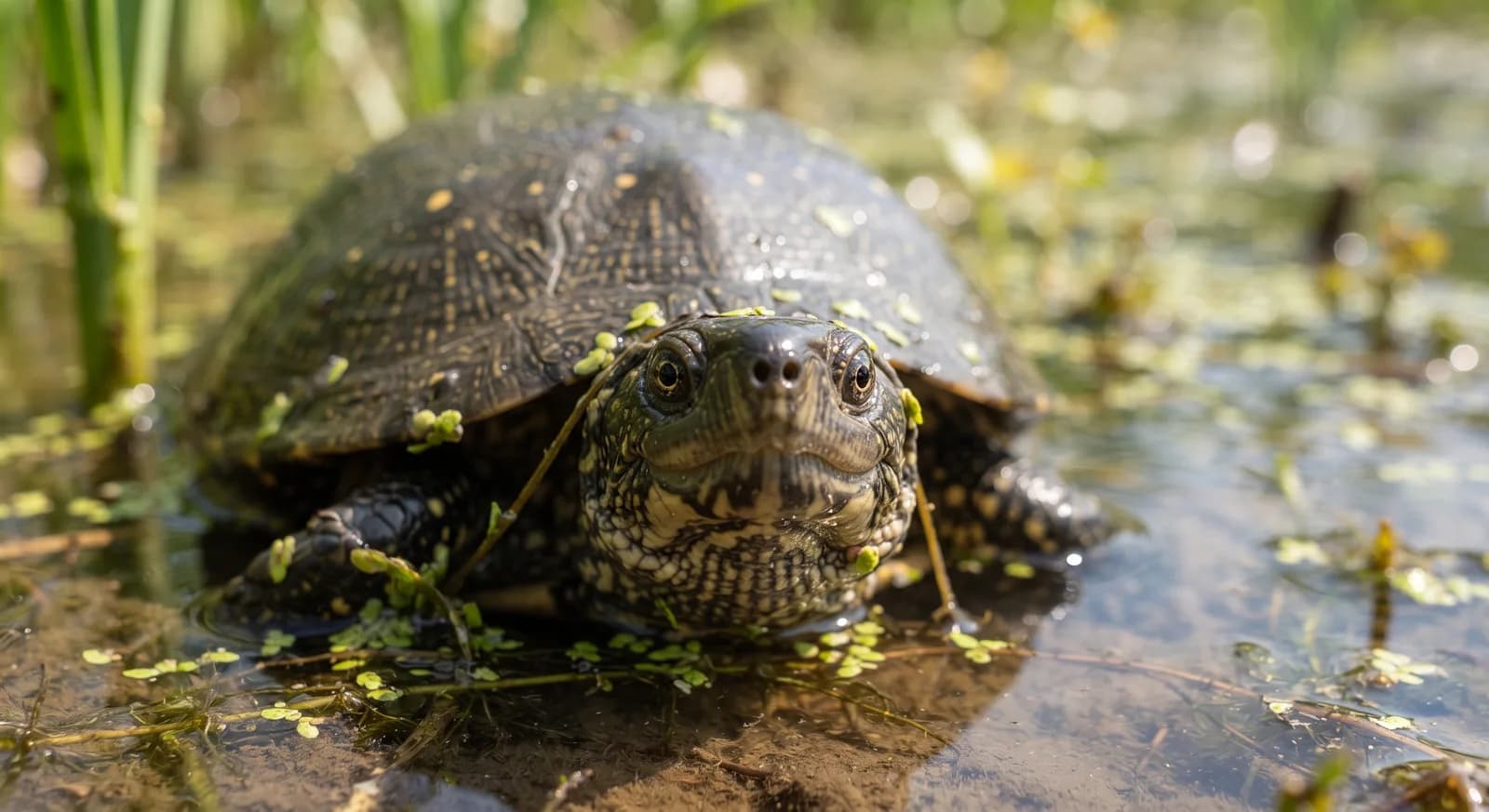
 Near Threatened
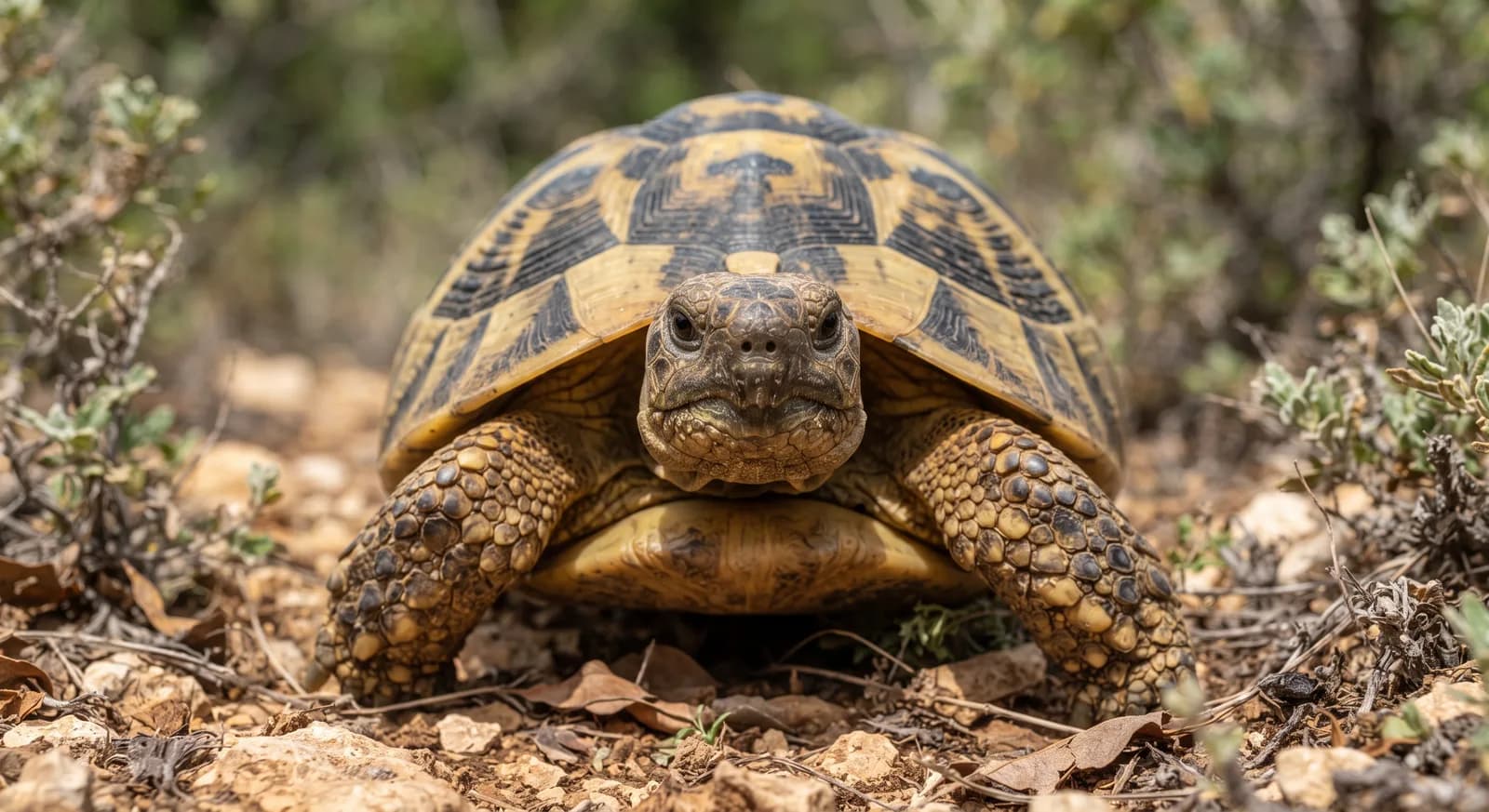
European Pond Turtle
Emys orbicularis
Europe
San Marino occupies the slopes and summit of Mount Titano, a limestone promontory that rises abruptly above the hills of the Romagnol Apennines, near the Adriatic. Its nature is that of the Apennine foothills: holm oak and marcescent oak on the sunny slopes, mixed woods of oak, hornbeam and ash on the shaded ones, and scrub and dry grassland on the summit rocks. The fauna is that of the northern Apennines, with wild boar, roe deer, foxes, badgers, beech martens and hedgehogs, and a community of cliff birds that makes use of the crags of the Titano, including the peregrine falcon and the crag martin. In spring, the territory works as a stopover for migrants crossing the peninsula from the Adriatic. The country's small artificial wetlands and streams sustain amphibians such as the Italian crested newt and the green frog.
National animal: No official national animal
Through the woods of this part of the Apennines moves the crested porcupine, the largest rodent in Europe after the beaver. It is not native to the continent: it was probably brought to southern Italy by humans from North Africa, and from there it has been spreading northwards. When it feels threatened it rattles its hollow quills to produce a loud clattering warning.
In a territory of barely sixty square kilometres, conservation comes down to maintaining vegetation corridors between the Titano and the surrounding Italian hills and to protecting the small wetlands for amphibians.
The wooded slopes of the Titano at dawn for roe deer and wild boar. The summit crags year-round for peregrine falcon and crag martins. Spring for the passage of migrants.
314 species found
Based on what we already know about San Marino.