Insects · Hymenoptera · Apidae
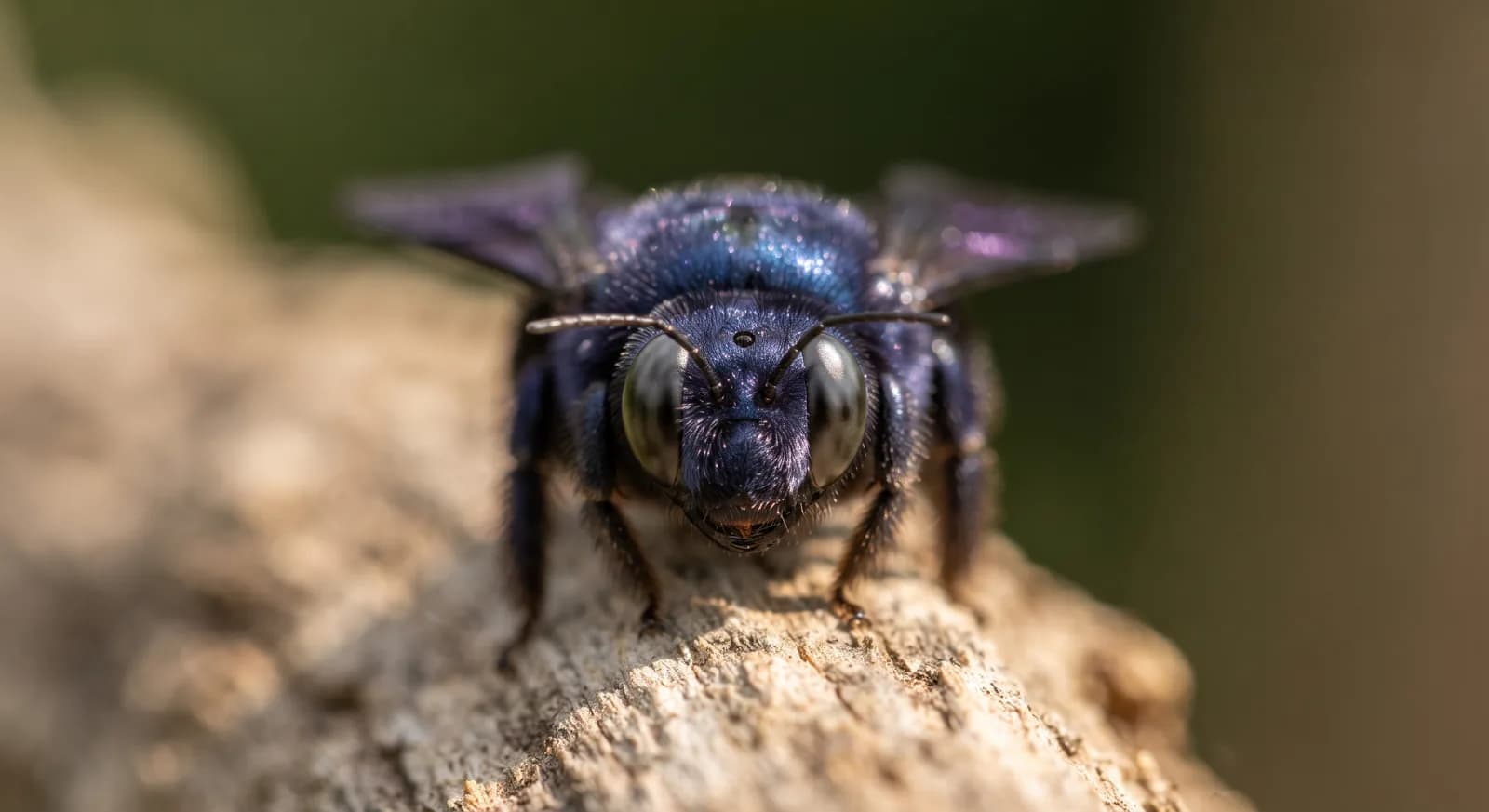
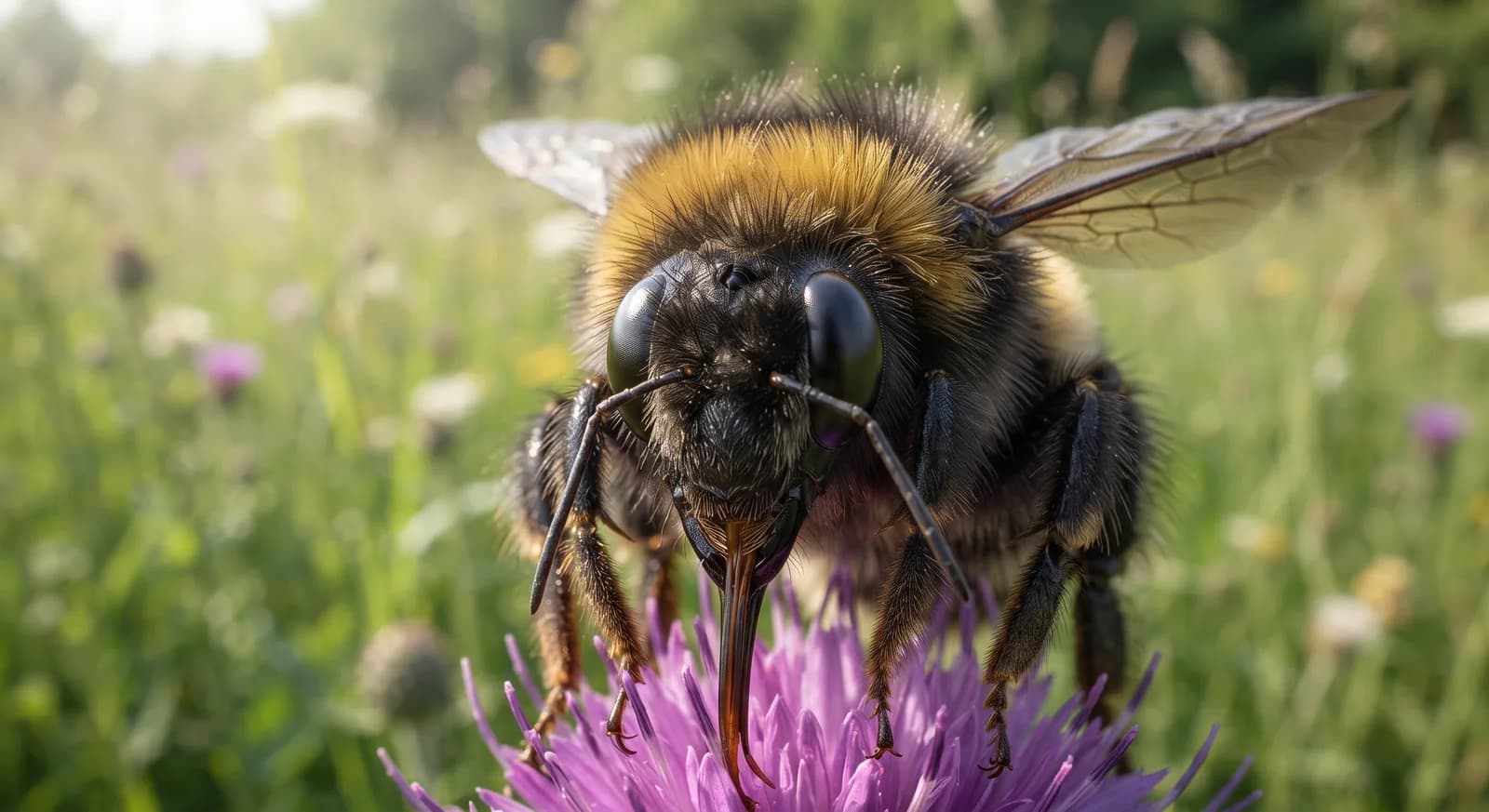
Xylocopa violacea
The species is abundant and widely distributed; it faces no significant short-term risk.
It is one of the few bees in which both males and females survive the winter as adults, sheltering in wood tunnels or stone crevices. It bores its own nesting tunnels in dead wood without ever eating it.
Size
2 cm – 2.5 cm
Life expectancy
1 year
Diet
Nectarivore
Feeds mainly on flower nectar.
Activity
Diurnal
Active mainly during the day.
Social structure
Solitary
Lives and hunts alone, joining others only to breed.
Sighting difficulty
Easy
AI-generated images: illustrations, not photographs.
Sources consulted: Buzzaboutbees; AcademicPath; Biology Insights; The Carpenter Bee (Penntybio); Ohioline; HubPages; Biocommunication Group; Wildlife Natural
Parks and dive sites where this species has been documented — showing 10 of 100.
Other species in the catalogue with the most in common with Violet Carpenter Bee — same habitat, park, country, tags or family.
Based on what we already know about violet carpenter bee.
Share an experience, a fun fact or a tip for seeing the violet carpenter bee.
Be the first to comment.
The pins mark the parks where its presence is documented.