Bony fish · Gymnotiformes · Gymnotidae
Electric Eel
Electrophorus electricus
The species is abundant and widely distributed; it faces no significant short-term risk. See full glossary
Despite its name and appearance it is not a true eel but a knifefish, more closely related to catfish and carp.
Weight
up to 20 kg
Size
up to 2.5 m
Lifespan
15 years
Diet
Carnivore
Feeds mainly on other animals.
Activity
Nocturnal
Active mainly at night.
Social structure
Solitary
Lives and hunts alone, joining others only to breed.
Sighting difficulty
Easy
Fun facts
- It can generate electric discharges of up to 650 volts through some 6,000 cells called electrocytes.
- It uses its electric discharges both to hunt and to navigate murky water where it can barely see.
- The male builds and guards a nest of saliva where as many as 3,000 young develop.
- fisiologíaIt can generate discharges of up to 860 volts, and is in fact more closely related to catfish than to true eels.
- defensaIt can lunge partly out of the water to deliver its charge directly onto a target above the surface, making the shock more effective.
Life cycle & biology
- Skeleton type
- Vertebrate - bony skeleton (fish), not closely related to true eels
- Habitat & environment
- Muddy bottoms of rivers, swamps and floodplains of the Amazon and Orinoco basins
- Birth weight
- A tiny fry on hatching inside a nest built from the male's saliva
- Gestation / incubation
- The egg develops inside a saliva nest built and guarded by the male
- Litter / clutch size
- Up to 3,000 young per nest
Sources consulted: National Geographic Kids; FishBase; Animal Diversity Web; AnimalHub; Animalia.bio; National Geographic
Where to find it
See its range on the interactive mapWhere to watch it
Parques y spots de buceo donde se ha documentado esta especie — se muestran 10 de 28 documentados.
Related species
Other species in the catalogue with the most in common with Electric Eel — same habitat, park, country, tags or family.
Water Opossum
Chironectes minimus
 Least Concern
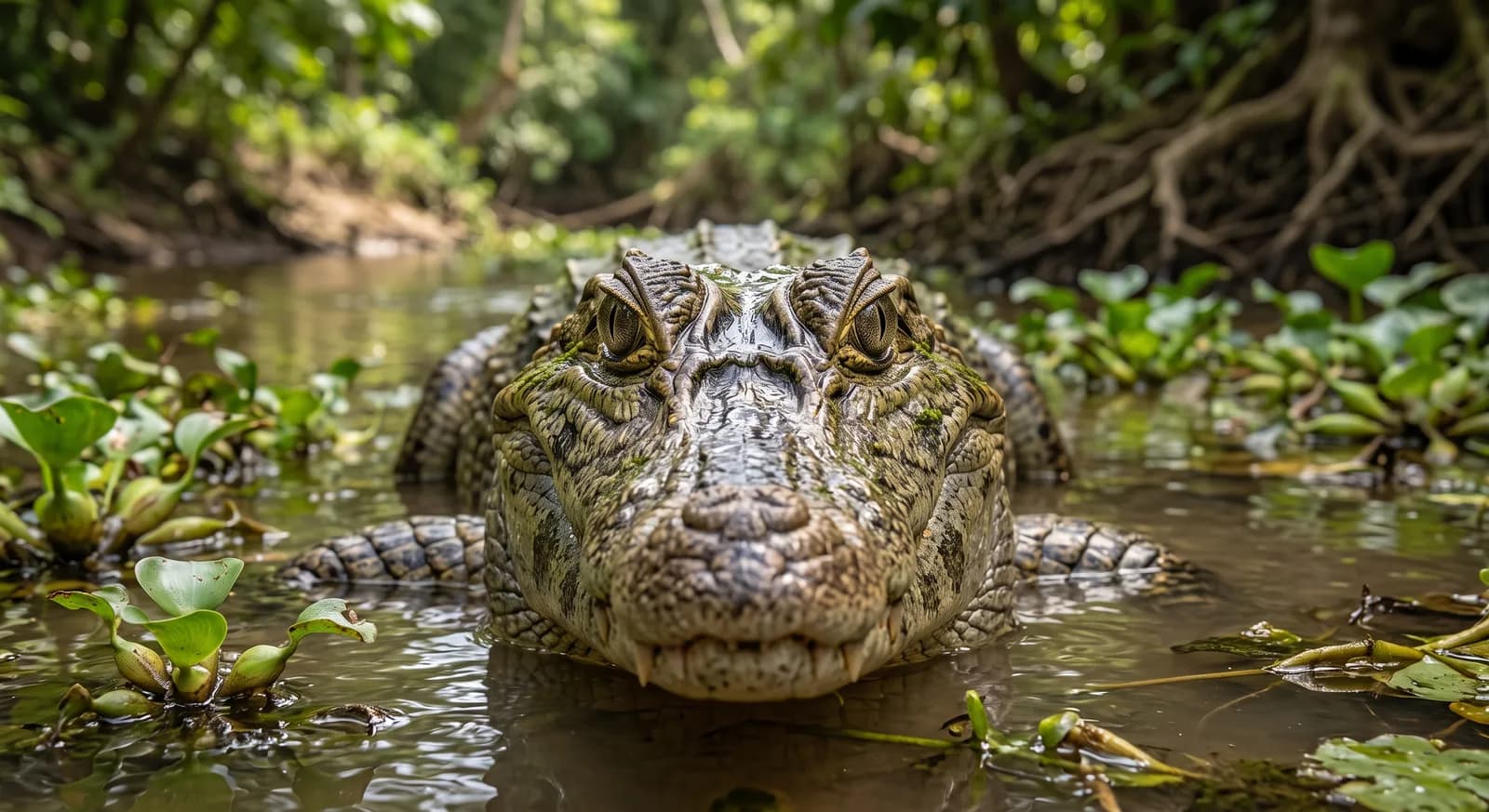
Spectacled Caiman
Caiman crocodilus
 Least Concern
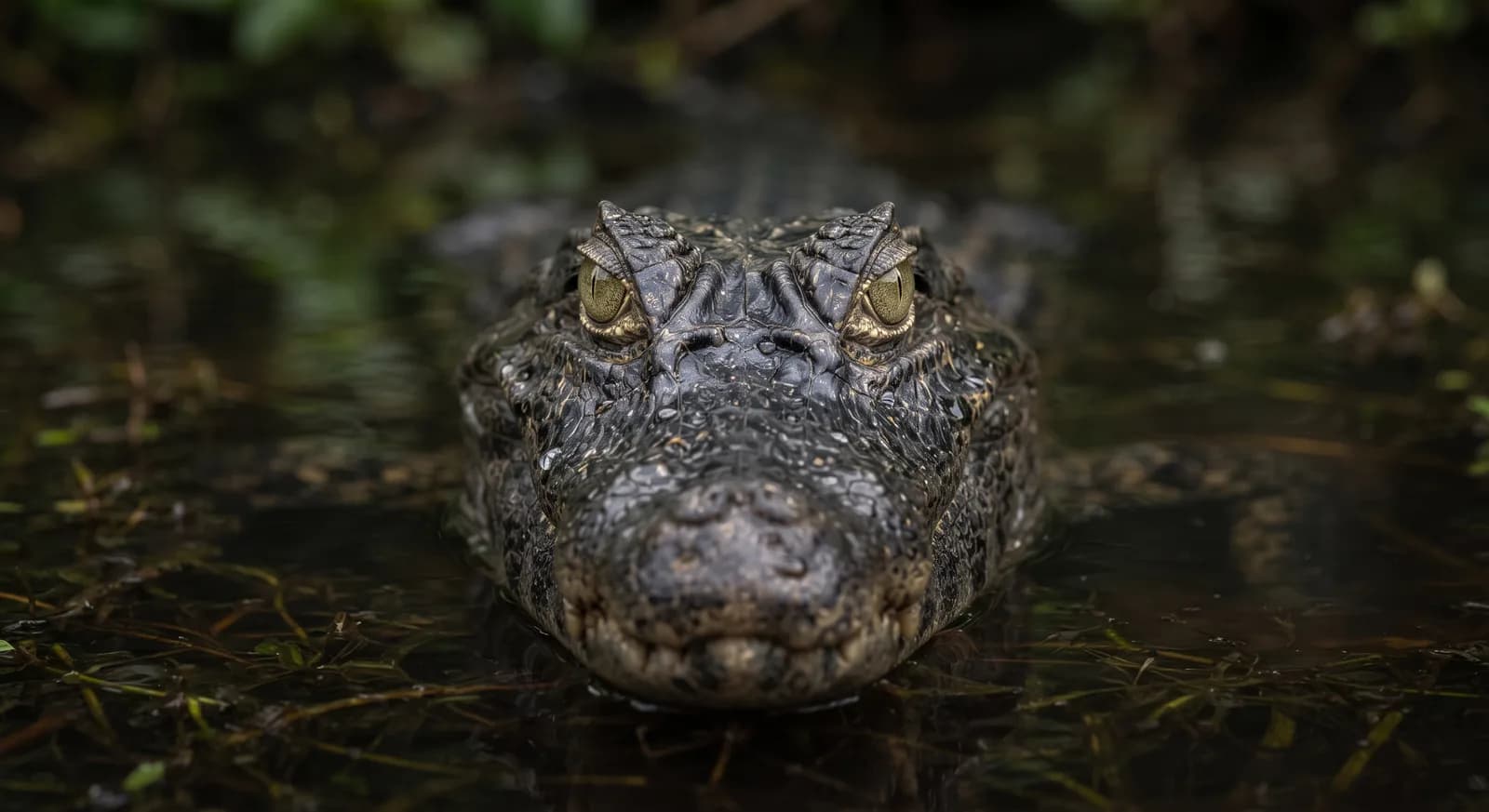
Black Caiman
Melanosuchus niger
Dwarf Caiman
Paleosuchus palpebrosus
 Least Concern
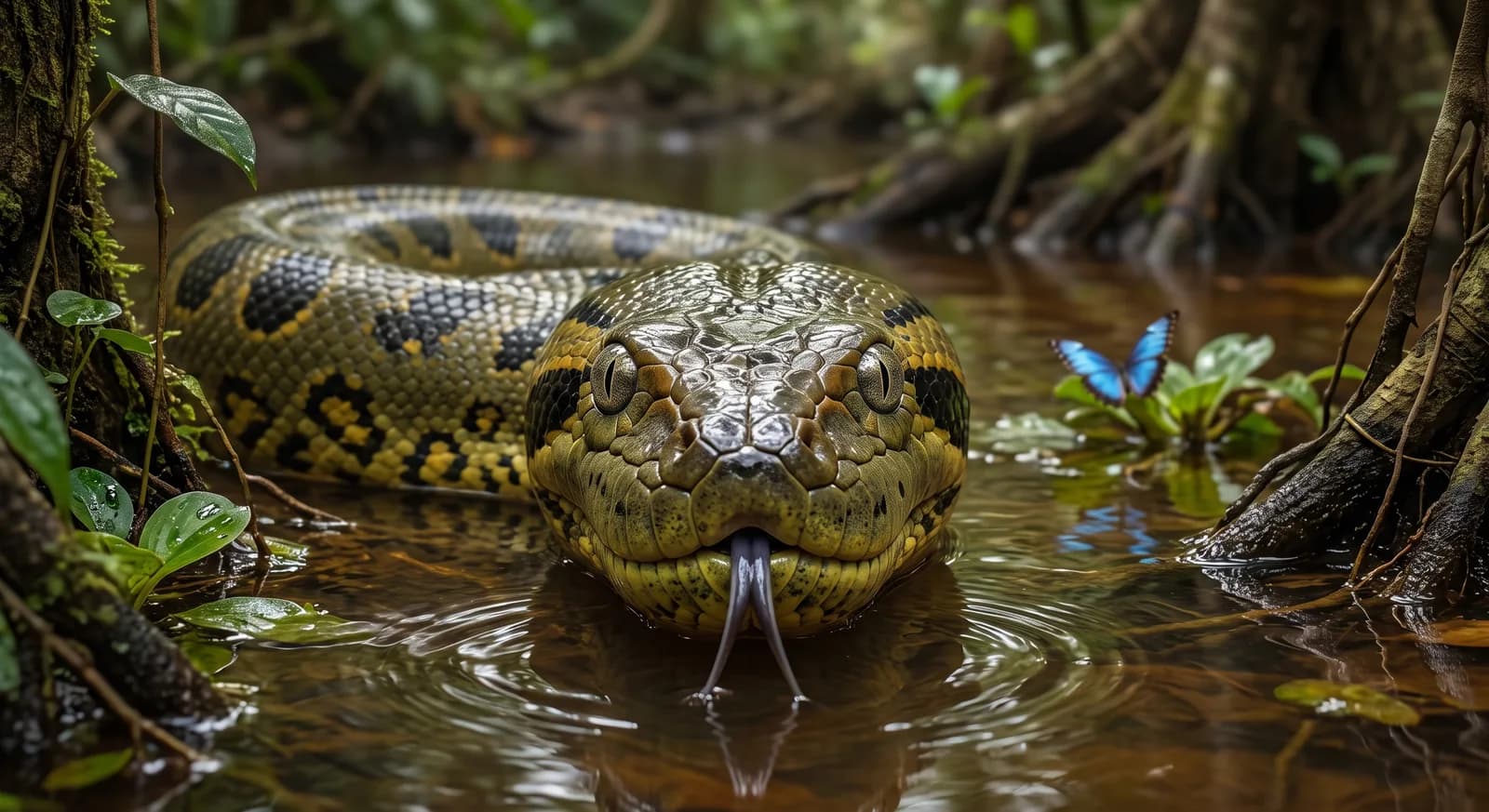
Green Anaconda
Eunectes murinus
Yellow Anaconda
Eunectes notaeus
Keep exploring
Based on what we already know about electric eel.
Comments
Share an experience, a fun fact or a tip for seeing the electric eel.
Be the first to comment.