One of the 26 spiders on WAnimals
Arachnids · Araneae · Araneidae
Banana Spider
Nephila clavipes
It has not yet been assessed against the IUCN criteria. See full glossary
A large American orb-weaver, with a cylindrical silvery abdomen and black legs adorned with tufts of hair. It weaves enormous orb webs of strikingly golden silk, which can be more than a metre across and stay in the same place for weeks.
Size
1 cm – 4 cm
Diet
Carnivore
Feeds mainly on other animals.
Activity
Diurnal
Active mainly during the day.
Social structure
Solitary
Lives and hunts alone, joining others only to breed.
Sighting difficulty
Unknown
Fun facts
- Its golden silk is among the strongest natural fibres known and has been studied for decades for making surgical sutures and high-strength materials.
- Silk from more than a million of these spiders was woven in Madagascar into a golden cape that was exhibited in London and New York, the only large-scale spider silk textile ever made.
- The males are minute and live at the edge of the female's web, feeding on her leftovers.
- Its golden silk is one of the most studied natural fibres: it combines strength comparable to steel with enormous elasticity, and that mix makes it a tough material with no synthetic equivalent.
- An exceptional textile was woven from the silk of spiders in this genus: a cape and a shawl exhibited in London and New York, for which silk was collected from more than a million spiders in Madagascar over eight years.
- Its web is permanent — it does not rebuild it every night — and can reach more than a metre across. The golden hue is thought to attract insects in full sun and to camouflage the web in the shade.
- Sexual dimorphism is extreme: the female can weigh more than a hundred times as much as the male, who lives at the edge of her web without being attacked.
- It often shares its web with tiny kleptoparasitic spiders of the genus Argyrodes, which steal small prey from it while it can do nothing about them.
- Its silk has been trialled as a guide for the regeneration of peripheral nerves.
Life cycle & biology
- Skeleton type
- Invertebrate - chitin exoskeleton (arachnid)
- Habitat & environment
- Rainforest and forest edges of tropical and subtropical America
Sources consulted: Vollrath y Knight (2001), Nature; Museo de Historia Natural de Londres, exposición Golden Spider Silk; Allmeling et al., regeneración nerviosa con seda de araña
Where to find it
See its range on the interactive mapWhere to watch it
Parks and dive sites where this species has been documented.
Related species
Other species in the catalogue with the most in common with Banana Spider — same habitat, park, country, tags or family.
Goliath Birdeater Tarantula
Theraphosa blondi
Margay
Leopardus wiedii
 Near Threatened
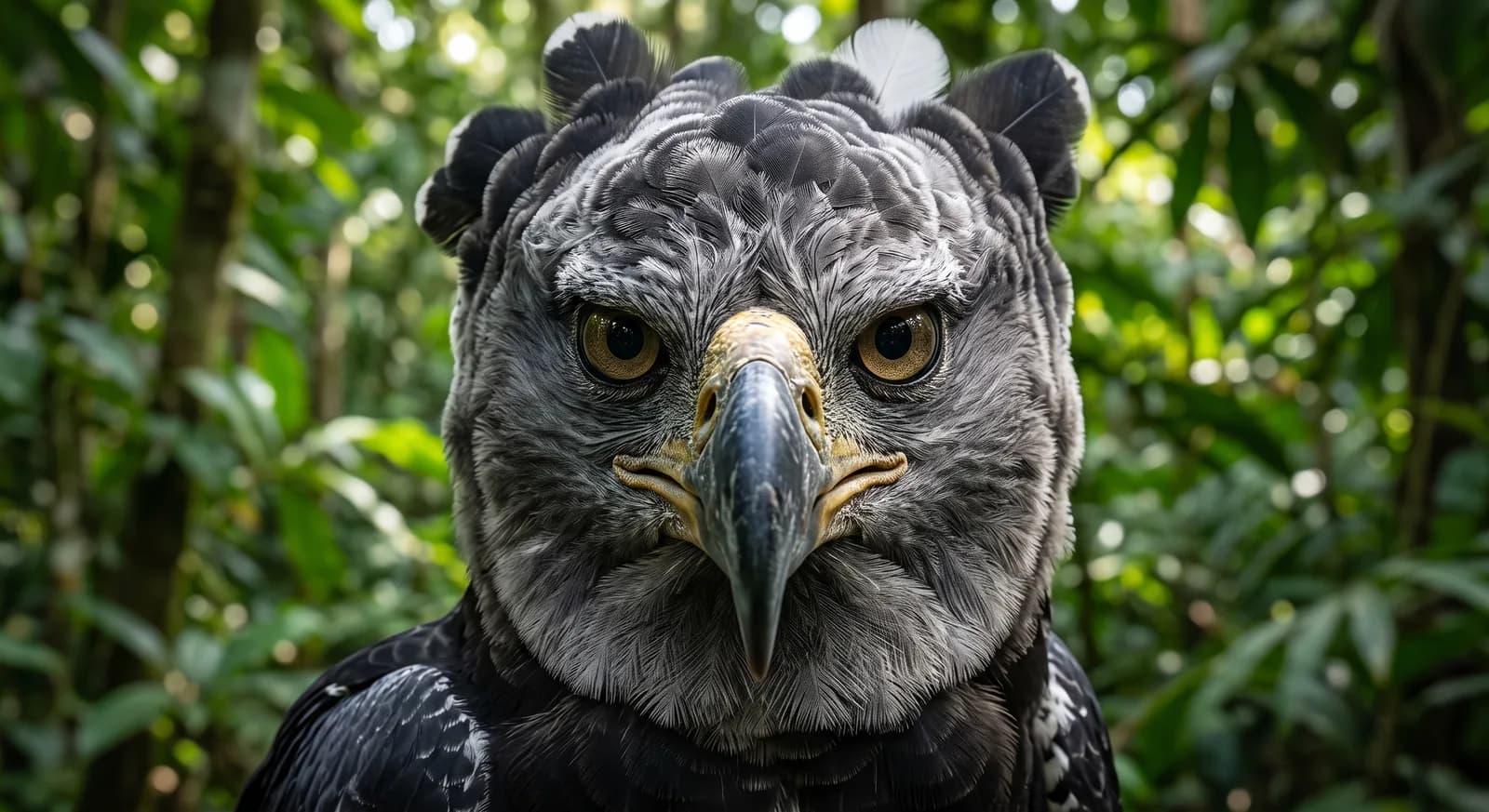
Harpy Eagle
Harpia harpyja
Amazonian Wandering Spider
Phoneutria fera
Huntsman Spider
Heteropoda venatoria
Ogrefaced Spider
Deinopis spinosa
Keep exploring
Based on what we already know about banana spider.
Comments
Share an experience, a fun fact or a tip for seeing the banana spider.
Be the first to comment.