Bony fish · Cypriniformes · Cyprinidae
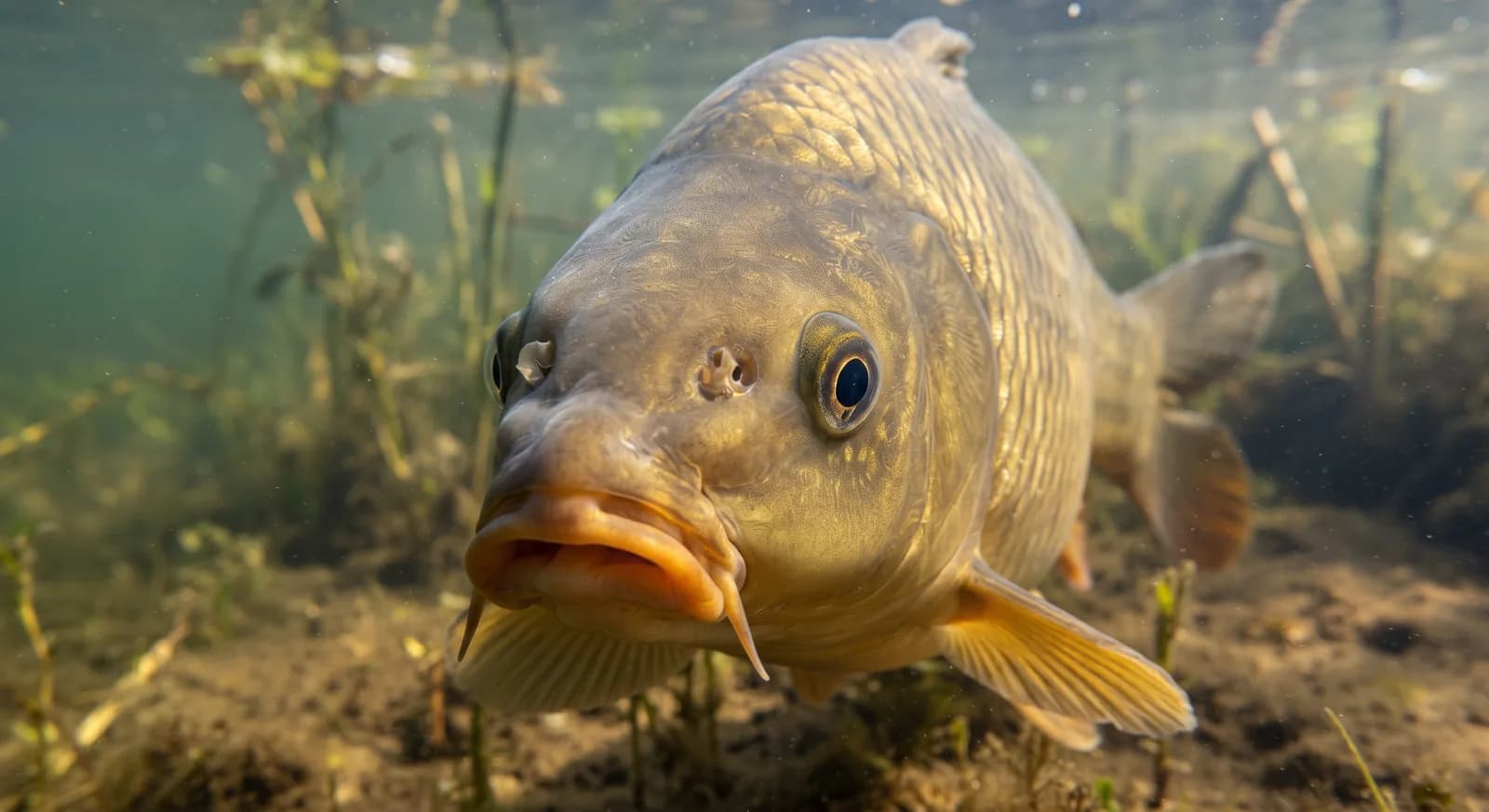
Roach
Rutilus rutilus
The species is abundant and widely distributed; it faces no significant short-term risk. See full glossary
It is one of the most adaptable fish in Europe, able to thrive in habitats ranging from fast-flowing rivers to brackish coastal lagoons.
Weight
63 g – 1.8 kg
Size
up to 50.2 cm
Lifespan
12 years
Diet
Omnivore
Combines animal and plant food depending on availability.
Activity
Irregular activity
Active at irregular times, by day or night depending on circumstances.
Social structure
School
Gathers in coordinated schools, typical of fish.
Sighting difficulty
Easy
Fun facts
- It eats bottom-living invertebrates, zooplankton, plant matter and detritus.
- It lives in nutrient-rich lakes, medium to large rivers and brackish coastal lagoons.
- It has been introduced to Australia and other regions outside its native range.
- It is one of the most abundant and adaptable freshwater fish in Europe, which is why it is used as a reference species in water-quality studies.
- It switches diet according to what is available: zooplankton, bottom-dwelling invertebrates, plants and detritus. That flexibility is the key to its success.
- In lakes where it is abundant it can trigger a cascading effect: by consuming the zooplankton that filters out the algae, it favours green, turbid water.
- It has been introduced into Ireland, Italy, Spain and Australia, among other places, almost always from live bait discarded by anglers.
Life cycle & biology
- Skeleton type
- Vertebrate - internal bony skeleton (fish)
- Habitat & environment
- Nutrient-rich lakes, medium to large rivers and brackish coastal lagoons across much of Europe and western Asia
- Birth weight
- A tiny, transparent larva on hatching
- Size at birth
- Tiny larva at hatching
- Sexual maturity
- 1-3 years (the male before the female)
- Gestation / incubation
- 1-2 weeks
- Litter / clutch size
- 2,000 to 200,000 eggs per female, depending on body size
Sources consulted: ResearchGate; FishBase; Academia.edu; MDB Fish Fact Sheet; Billouttes.eu; Grokipedia
Where to find it
See its range on the interactive mapWhere to watch it
Parques y spots de buceo donde se ha documentado esta especie — se muestran 10 de 21 documentados.
Related species
Other species in the catalogue with the most in common with Roach — same habitat, park, country, tags or family.
Dace
Leuciscus leuciscus
Goldfish
Carassius auratus
 Least Concern
Common Carp
Cyprinus carpio
Haarder
Mugil cephalus
Barbel
Barbus barbus
Koi
Cyprinus rubrofuscus
Keep exploring
Based on what we already know about roach.
Comments
Share an experience, a fun fact or a tip for seeing the roach.
Be the first to comment.