One of the 10 colubrid snakes on WAnimals
Reptiles · Squamata · Amphisbaenidae
Red Worm Lizard
Amphisbaena alba
The species is abundant and widely distributed; it faces no significant short-term risk. See full glossary
The red worm lizard, known in Spanish as culebra ciega blanca or anfisbena blanca, is neither a snake nor a lizard: it belongs to the amphisbaenians, a group of burrowing reptiles of their own with the body ringed like a giant earthworm. It lives underground, often inside the nests of leafcutter ants, and can move forwards and backwards with equal ease.
Weight
210 g on average
Size
35 cm – 75 cm
Lifespan
15 years
Diet
Carnivore
Feeds mainly on other animals.
Activity
Nocturnal
Active mainly at night.
Social structure
Solitary
Lives and hunts alone, joining others only to breed.
Sighting difficulty
Easy
Fun facts
- Its name comes from the amphisbaena of Greek mythology, a creature with a head at each end: the tail is as blunt as the head and the animal moves with equal ease in either direction, which makes it very hard to tell which way it will go.
- It often lives inside the nests of leafcutter ants, feeding on insects and on the nest's waste without the ants attacking it.
- It is neither snake nor lizard: the amphisbaenians form a group of squamate reptiles of their own, with the skull reinforced for digging and the body ringed, and with more than two hundred species worldwide.
Life cycle & biology
- Skeleton type
- Vertebrate - internal bony skeleton (reptile)
- Habitat & environment
- Floor of rainforest, leafcutter ant nests and secondary forest of South America
- Sexual maturity
- 2 years
- Gestation / incubation
- 90 days of incubation
- Litter / clutch size
- 12 eggs
Sources consulted: https://es.wikipedia.org/wiki/Amphisbaena_alba
Where to find it
See its range on the interactive mapRelated species
Other species in the catalogue with the most in common with Red Worm Lizard — same habitat, park, country, tags or family.
Water Opossum
Chironectes minimus
Southern Tamandua
Tamandua tetradactyla
 Least Concern
Ocelot
Leopardus pardalis
Dwarf Caiman
Paleosuchus palpebrosus
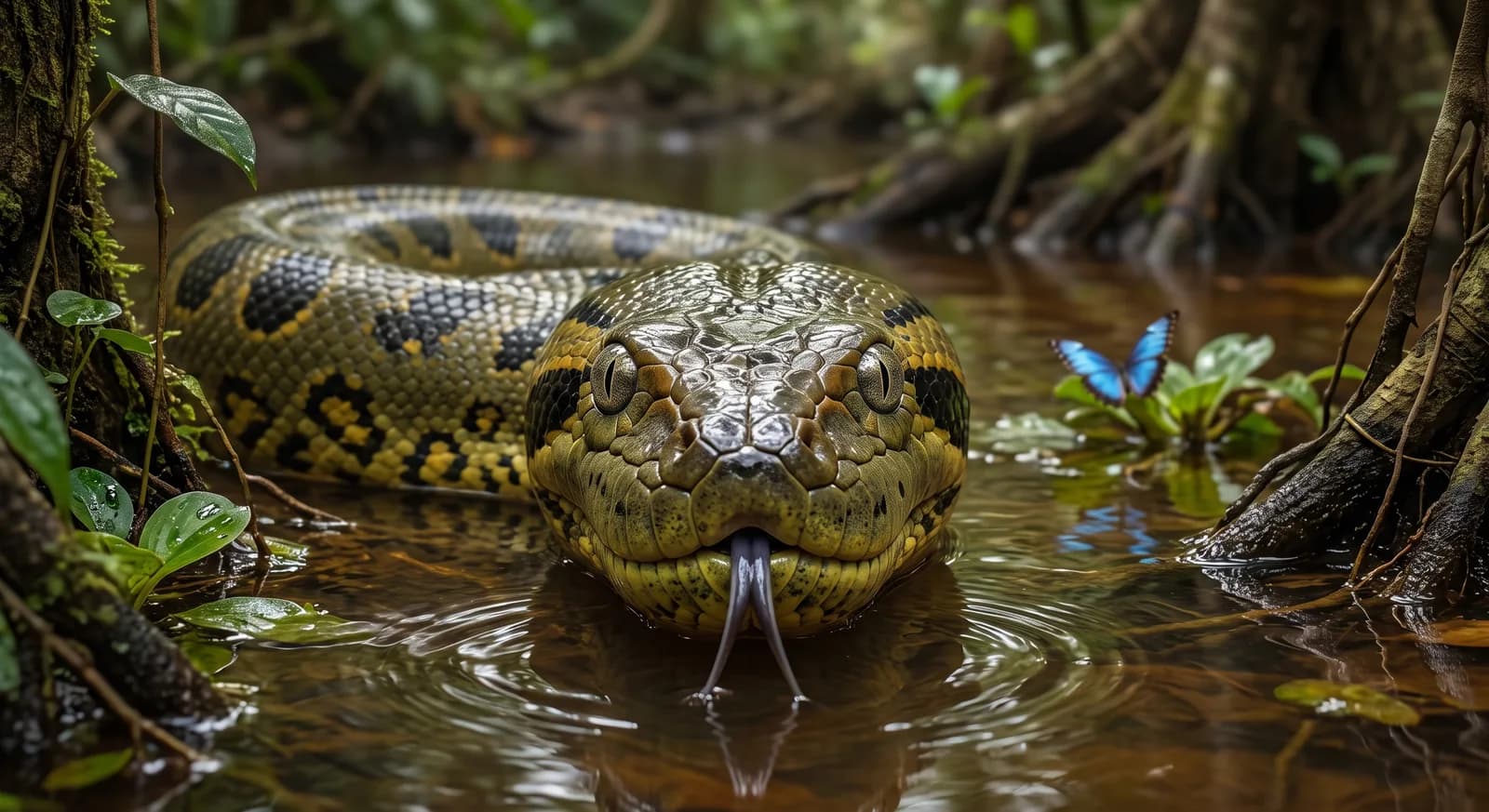 Least Concern
Green Anaconda
Eunectes murinus
Keep exploring
Based on what we already know about red worm lizard.
Comments
Share an experience, a fun fact or a tip for seeing the red worm lizard.
Be the first to comment.