One of the 3 tamanduas on WAnimals
Mammals · Pilosa · Myrmecophagidae
Southern Tamandua
Tamandua tetradactyla
The species is abundant and widely distributed; it faces no significant short-term risk. See full glossary
The southern tamandua is the medium-sized anteater of South America, with a prehensile tail bare along its final section and enormous front claws. It climbs with ease and looks for ant and termite nests both on the ground and in the trees. Its colour pattern varies greatly by region: in the south it usually carries a dark waistcoat-shaped marking on a pale ground, while in Amazonia there are entirely blond individuals. It is solitary and alternates between daytime and night-time activity.
Weight
3.5 kg – 8.4 kg
Size
53 cm – 88 cm
Lifespan
9 years
Diet
Insectivore
Feeds mainly on insects and other invertebrates.
Activity
Nocturnal
Active mainly at night.
Social structure
Solitary
Lives and hunts alone, joining others only to breed.
Sighting difficulty
Easy
Fun facts
- When it feels threatened it rears up on its hind legs and tail, spreads its arms and waits motionless with its claws ready, a very characteristic defensive posture.
- It is selective about its prey: it deliberately avoids the most aggressive ants, such as army ants, and prefers species with a less painful bite.
Life cycle & biology
- Skeleton type
- Vertebrate - internal bony skeleton (mammal)
- Habitat & environment
- Rainforest, dry forest, cerrado and gallery forest of South America
- Sexual maturity
- 12 months
- Gestation / incubation
- 5.3 months
- Litter / clutch size
- 1
Sources consulted: https://es.wikipedia.org/wiki/Tamandua_tetradactyla
Where to find it
See its range on the interactive mapWhere to watch it
Parques y spots de buceo donde se ha documentado esta especie — se muestran 10 de 67 documentados.
Related species
Other species in the catalogue with the most in common with Southern Tamandua — same habitat, park, country, tags or family.
Northern Tamandua
Tamandua mexicana
 Vulnerable
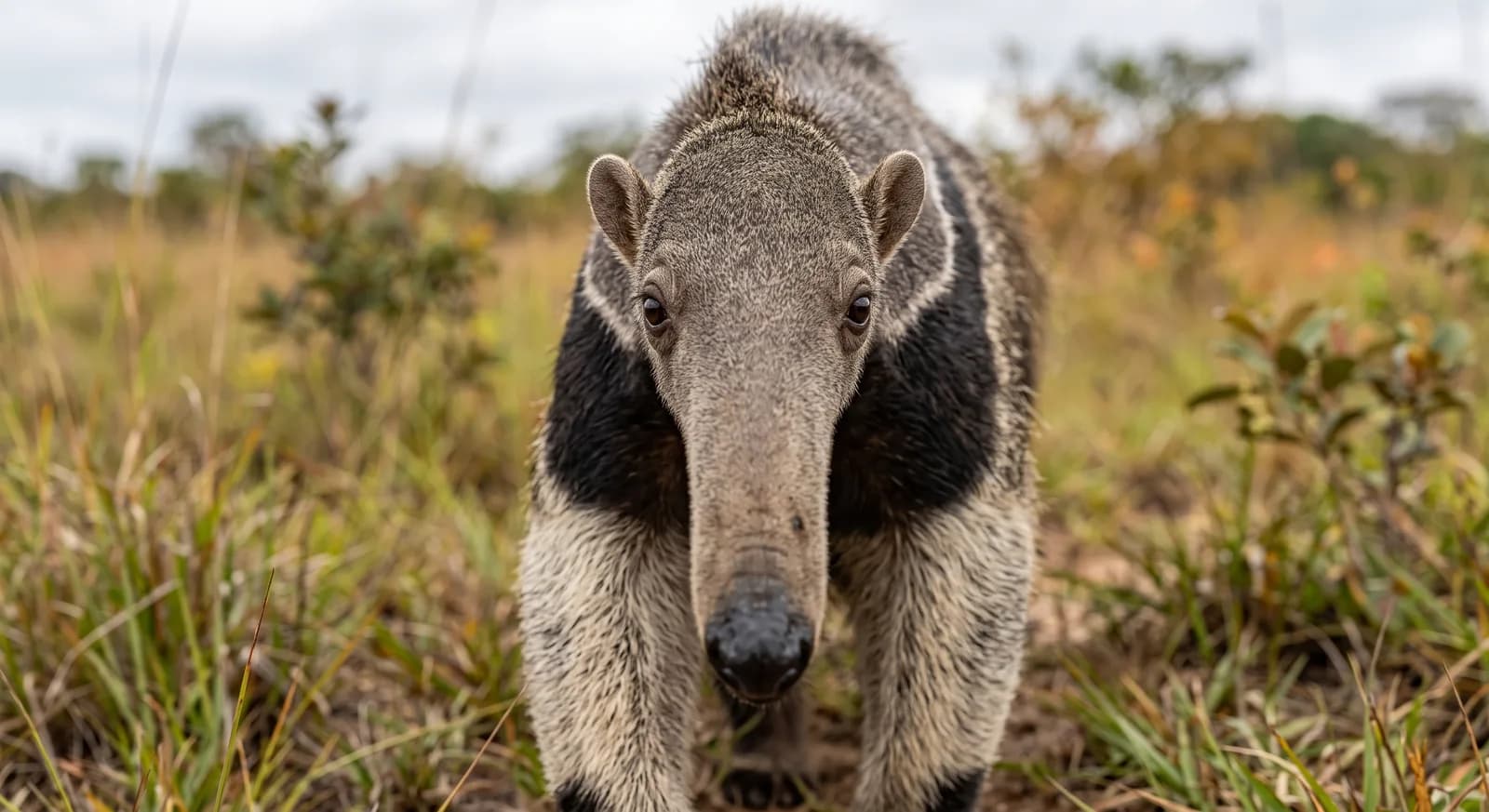
Giant Anteater
Myrmecophaga tridactyla
Common Opossum
Didelphis marsupialis
Water Opossum
Chironectes minimus
 Least Concern
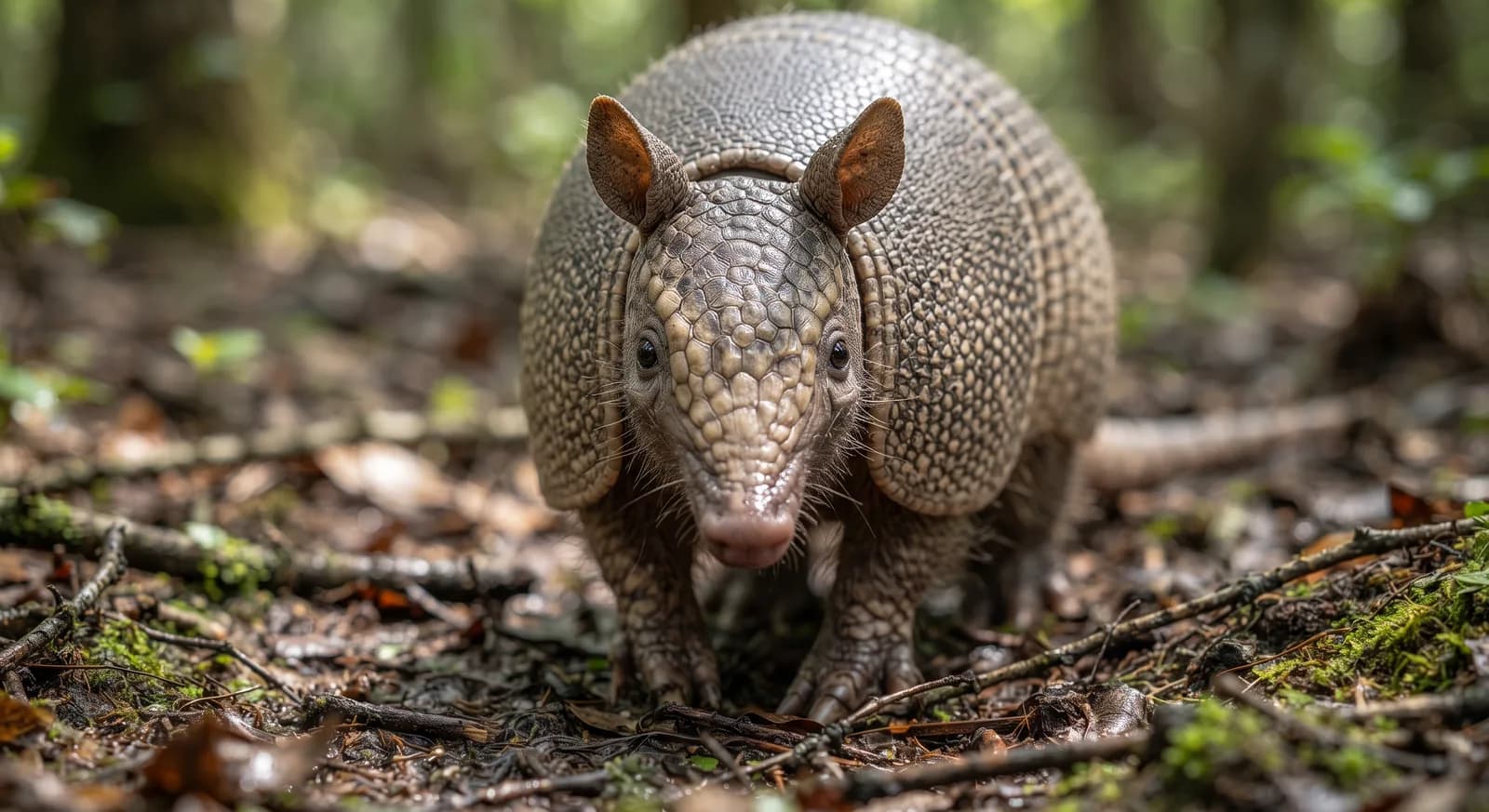
Nine-banded Armadillo
Dasypus novemcinctus
Large Hairy Armadillo
Chaetophractus villosus
Keep exploring
Based on what we already know about southern tamandua.
Comments
Share an experience, a fun fact or a tip for seeing the southern tamandua.
Be the first to comment.