One of the 3 tamanduas on WAnimals
Mammals · Pilosa · Myrmecophagidae
Northern Tamandua
Tamandua mexicana
The species is abundant and widely distributed; it faces no significant short-term risk. See full glossary
The northern tamandua — known in Spanish as tamanduá mexicano, tamanduá norteño or oso hormiguero — is a hairy mammal of the family Myrmecophagidae, one of the two existing tamandua species. It inhabits the humid and dry forests of Mexico, Central America and Colombia, Panama, Ecuador, and a small part of Venezuela. It measures up to 65 cm and can weigh up to 8.5 kilos. It is arboreal and a digger. It has long claws and a prehensile tail. It feeds on insects, as all anteater species do. In Mexico it is considered to be in danger of extinction.
Weight
3.2 kg – 5.4 kg
Size
47 cm – 77 cm
Lifespan
9 years
Diet
Insectivore
Feeds mainly on insects and other invertebrates.
Activity
Irregular activity
Active at irregular times, by day or night depending on circumstances.
Social structure
Solitary
Lives and hunts alone, joining others only to breed.
Sighting difficulty
Easy
Fun facts
- It can eat several thousand ants and termites a day, but visits each nest for only a few minutes: that way it does not exhaust the nest and avoids collecting too many bites from the soldiers.
- It has not a single tooth: it grinds insects in a muscular gizzard with the help of swallowed grains of sand, just as birds do.
Life cycle & biology
- Skeleton type
- Vertebrate - internal bony skeleton (mammal)
- Habitat & environment
- Rainforest, dry forest, mangroves and gallery forest of Central America and northern South America
- Sexual maturity
- 12 months
- Gestation / incubation
- 5.4 months
- Litter / clutch size
- 1
Sources consulted: https://es.wikipedia.org/wiki/Tamandua_mexicana
Where to find it
See its range on the interactive mapWhere to watch it
Parques y spots de buceo donde se ha documentado esta especie — se muestran 10 de 46 documentados.
Related species
Other species in the catalogue with the most in common with Northern Tamandua — same habitat, park, country, tags or family.
Southern Tamandua
Tamandua tetradactyla
Mexican Mouse Opossum
Marmosa mexicana
 Least Concern
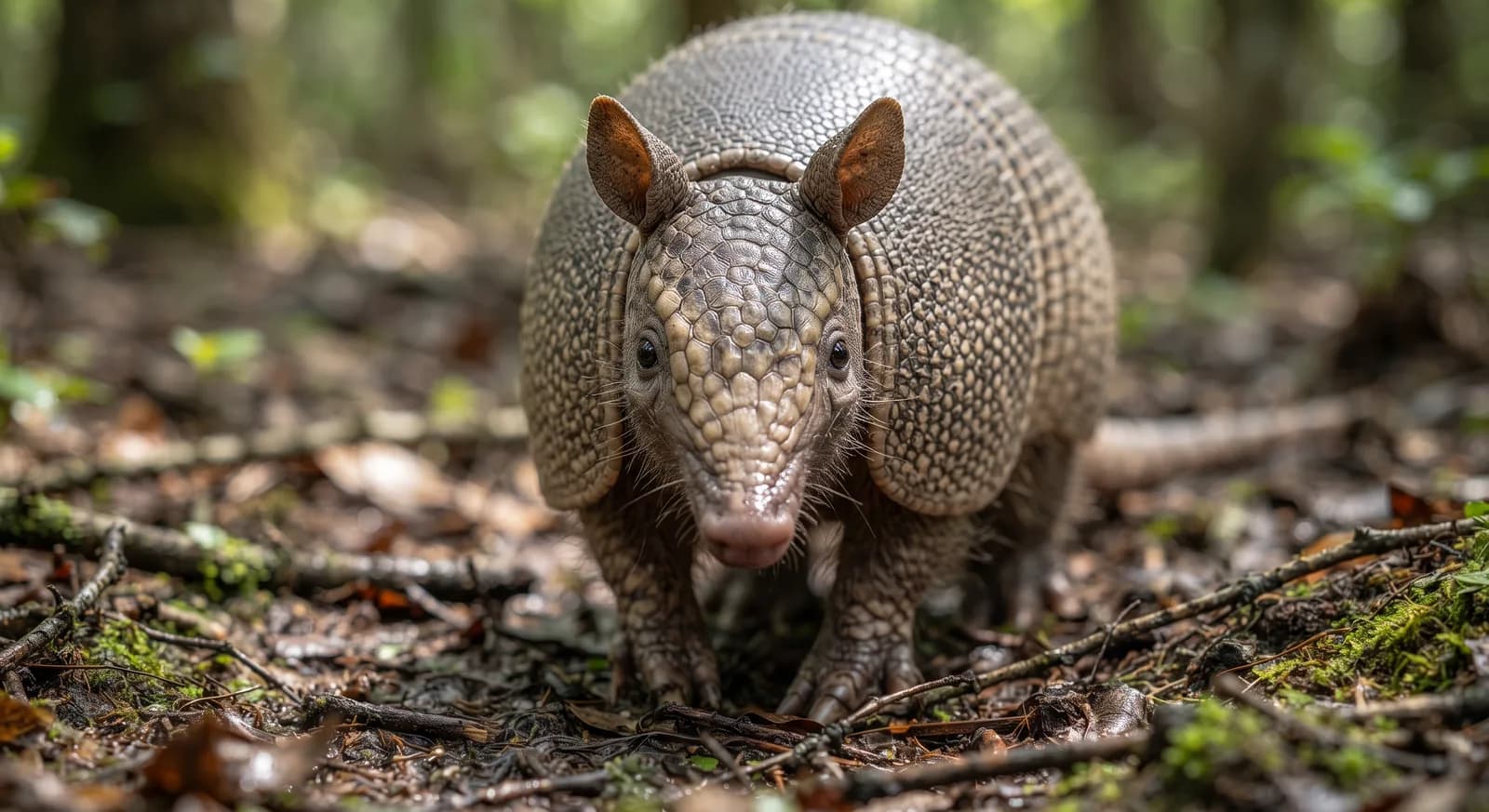
Nine-banded Armadillo
Dasypus novemcinctus
Common Silky Anteater
Cyclopes didactylus
Keep exploring
Based on what we already know about northern tamandua.
Comments
Share an experience, a fun fact or a tip for seeing the northern tamandua.
Be the first to comment.