Birds · Falconiformes · Falconidae
Gyrfalcon
Falco rusticolus
The species is abundant and widely distributed; it faces no significant short-term risk. See full glossary
It is the largest falcon in the world and was historically the most prized bird in falconry, reserved in the Middle Ages for royalty alone.
Weight
800 g – 2.1 kg
Size
53 cm – 56 cm
Lifespan
13 years
Diet
Carnivore
Feeds mainly on other animals.
Activity
Diurnal
Active mainly during the day.
Social structure
Solitary
Lives and hunts alone, joining others only to breed.
Sighting difficulty
Easy
Fun facts
- Unlike the peregrine, it hunts by active pursuit and brute force rather than high-speed stoops.
- It feeds mainly on birds such as ptarmigan and ducks, supplemented with small mammals.
- It lives on the Arctic and subarctic tundra of North America, Europe and Asia.
Life cycle & biology
- Skeleton type
- Vertebrate - internal bony skeleton (bird)
- Habitat & environment
- Arctic and subarctic tundra of North America, Europe and Asia
- Birth weight
- Born altricial, ~52 g at birth
- Size at birth
- ~52 g at birth
- Sexual maturity
- ~2 years
- Gestation / incubation
- 35 days
- Litter / clutch size
- 2 to 7 eggs per clutch (most commonly 3-4)
Sources consulted: Animal Diversity Web; AnAge (genomics.senescence.info); Animalia.bio
Where to find it
See its range on the interactive mapBest time: Winter, when part of the population moves down from the Arctic to more southerly coasts and steppes.
Where to watch it
Parques y spots de buceo donde se ha documentado esta especie — se muestran 10 de 17 documentados.
Related species
Other species in the catalogue with the most in common with Gyrfalcon — same habitat, park, country, tags or family.
 Least Concern
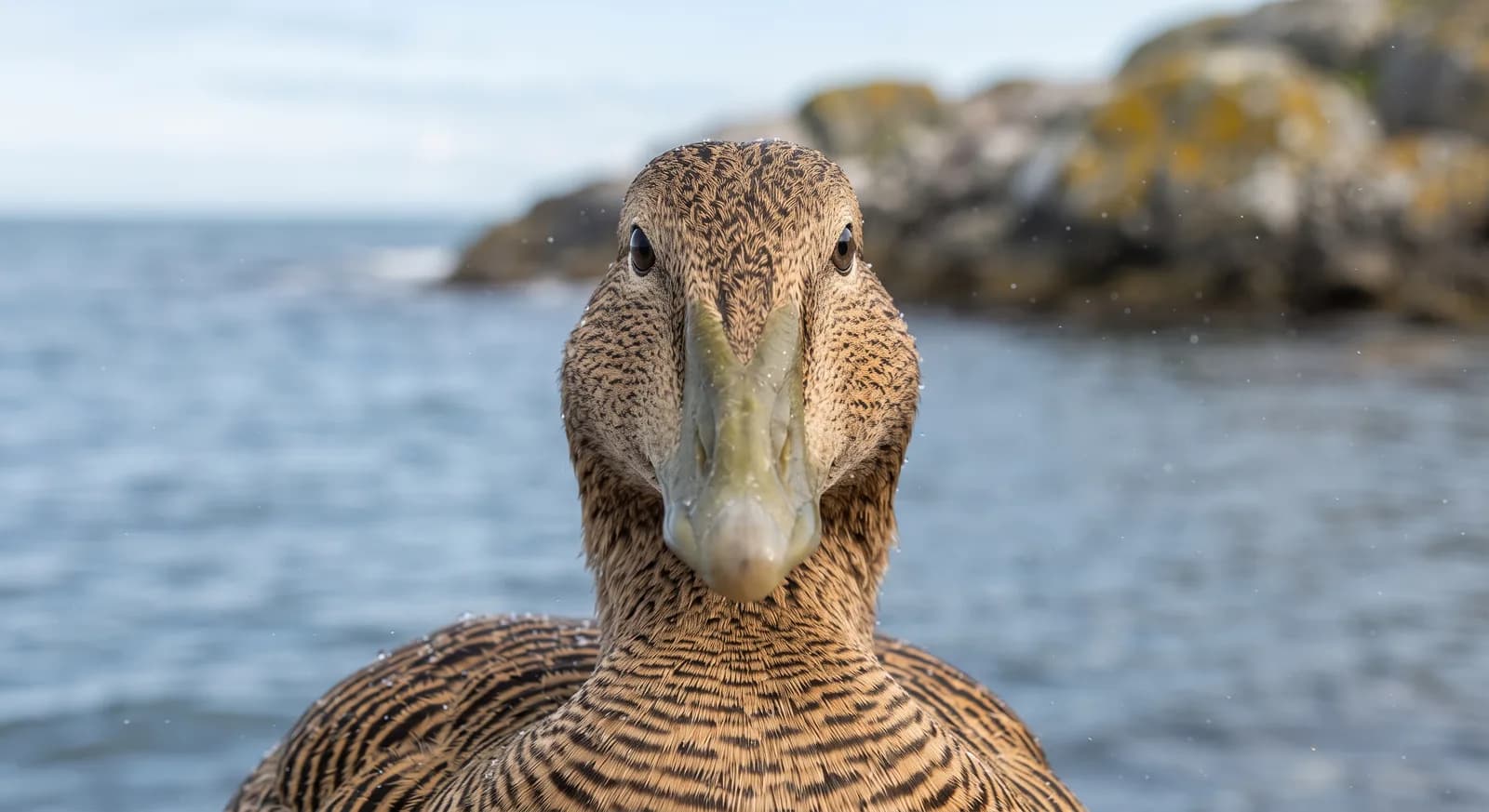
Common Eider
Somateria mollissima
Common Ringed Plover
Charadrius hiaticula
American Golden Plover
Pluvialis dominica
Sanderling
Calidris alba
Great Skua
Stercorarius skua
Great Grey Shrike
Lanius excubitor
Keep exploring
Based on what we already know about gyrfalcon.
Comments
Share an experience, a fun fact or a tip for seeing the gyrfalcon.
Be the first to comment.