Birds · Anseriformes · Anatidae
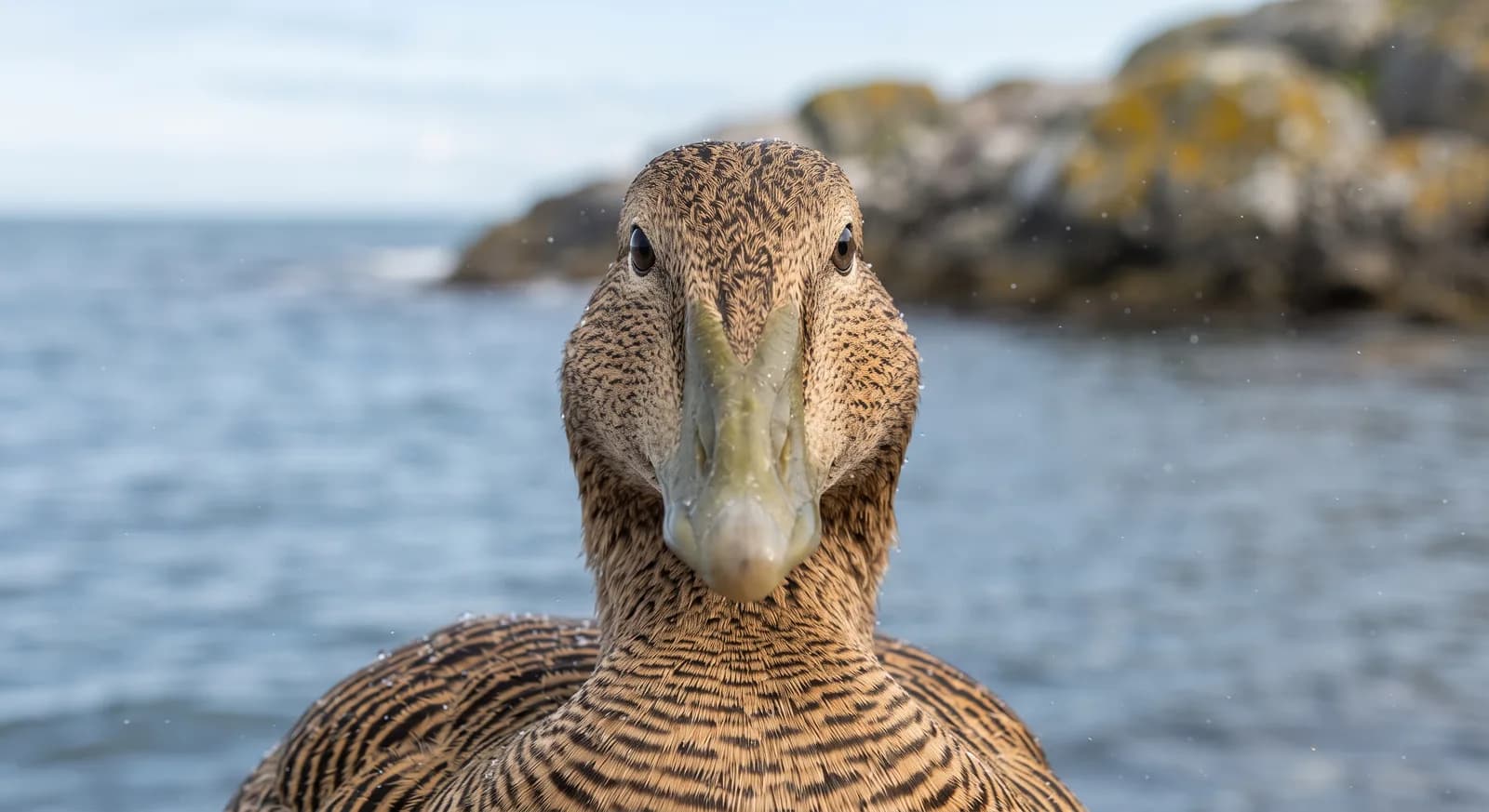
Common Eider
Somateria mollissima
The species is abundant and widely distributed; it faces no significant short-term risk. See full glossary
The female plucks down from her own breast to line the nest, an extraordinarily insulating material known as eiderdown, traditionally collected by Arctic communities.
Weight
850 g – 3 kg
Size
50 cm – 71 cm
Lifespan
15 years
Diet
Carnivore
Feeds mainly on other animals.
Activity
Diurnal
Active mainly during the day.
Social structure
Herd
Lives in large groups as a strategy against predators.
Sighting difficulty
Easy
Fun facts
- The female plucks down from her own breast to line the nest — eiderdown.
- It is the largest duck in the northern hemisphere.
- Males leave the female as incubation begins, so she is alone for almost four weeks.
Life cycle & biology
- Skeleton type
- Vertebrate - pneumatised bony skeleton (bird)
- Habitat & environment
- Rocky Arctic and subarctic coasts of the northern hemisphere, on both the Atlantic and the Pacific
- Birth weight
- Exact weight at hatching not found as a precise figure
- Size at birth
- Precocial, covered in dark brown down, able to swim and feed itself almost at once
- Sexual maturity
- Female: ~2 years | Male: ~3 years
- Gestation / incubation
- 25-28 days
- Litter / clutch size
- 2 to 8 eggs per clutch (most commonly 4-5)
Sources consulted: Planet of Birds; A-Z Animals; AnAge (genomics.senescence.info); Animal Diversity Web; Simply Birding; U.S. Fish & Wildlife Service; Massachusetts government wildlife fact sheet
Where to find it
See its range on the interactive mapWhere to watch it
Parques y spots de buceo donde se ha documentado esta especie — se muestran 10 de 34 documentados.
Related species
Other species in the catalogue with the most in common with Common Eider — same habitat, park, country, tags or family.
 Least Concern
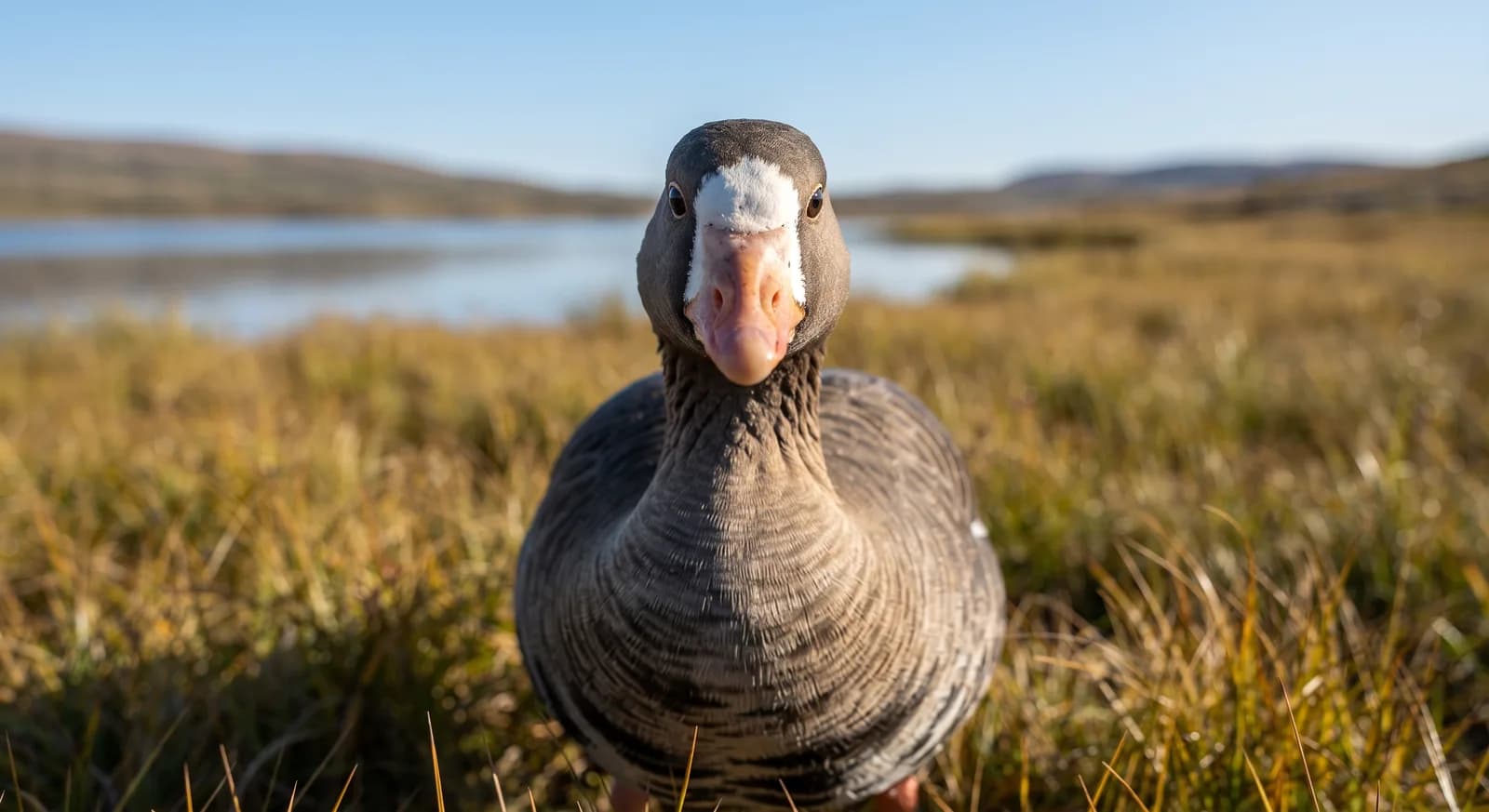
Greater White-fronted Goose
Anser albifrons
Brent Goose
Branta bernicla
Eurasian Wigeon
Mareca penelope
Common Shelduck
Tadorna tadorna
Red-breasted Merganser
Mergus serrator
Snow Goose
Anser caerulescens
Keep exploring
Based on what we already know about common eider.
Comments
Share an experience, a fun fact or a tip for seeing the common eider.
Be the first to comment.