One of the 3 sandpipers on WAnimals
Birds · Charadriiformes · Scolopacidae
Sanderling
Calidris alba
The species is abundant and widely distributed; it faces no significant short-term risk. See full glossary
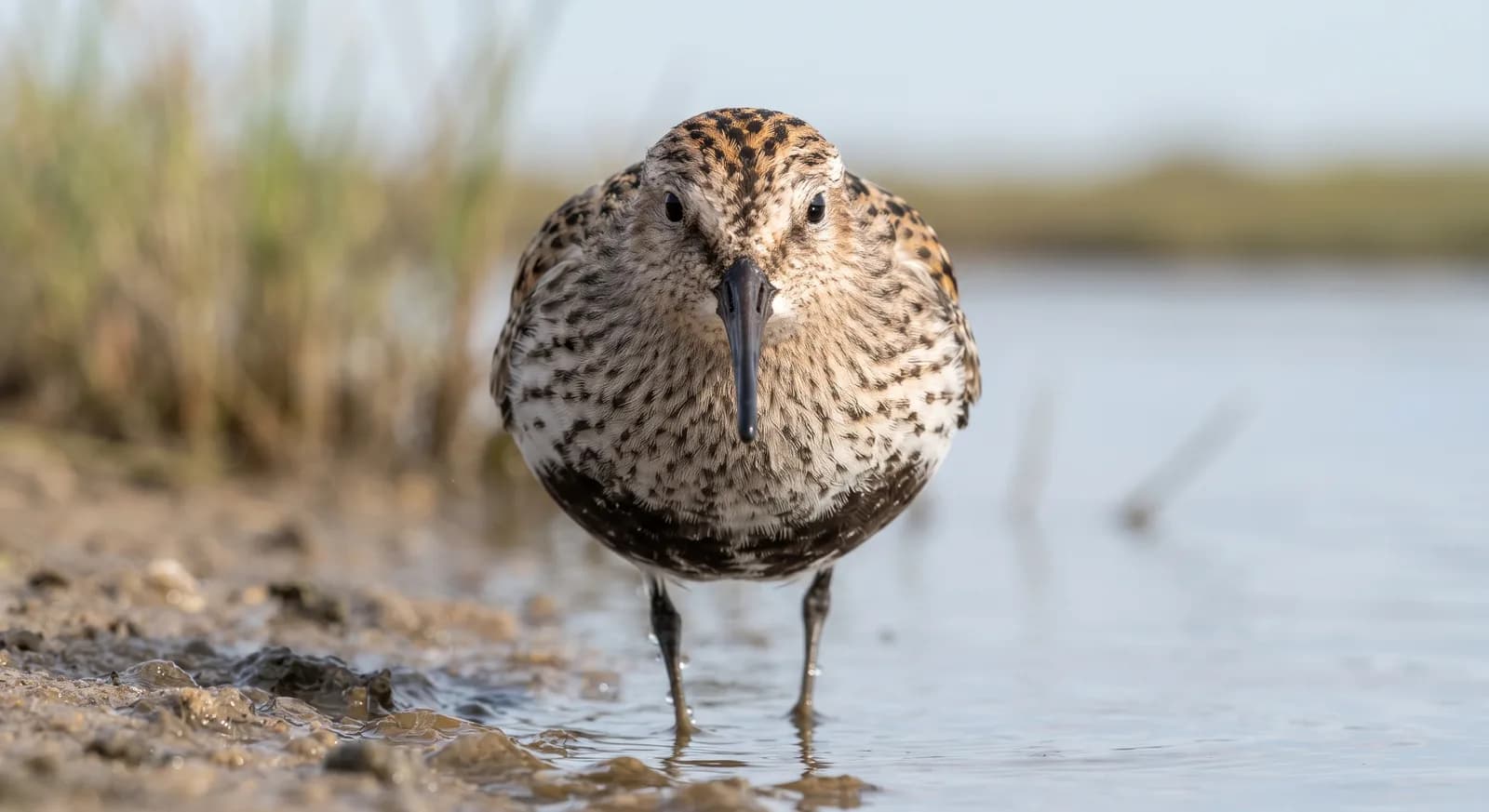
The sanderling is the sandy-beach wader par excellence: it runs tirelessly after each retreating wave, pecking at the draining water, and flees at full speed from the next. In winter it is almost entirely white, the palest of the sandpipers. It breeds on the northernmost Arctic tundra and winters on beaches across five continents.
Weight
40 g – 100 g
Size
18 cm – 21 cm
Lifespan
16 years
Diet
Insectivore
Feeds mainly on insects and other invertebrates.
Activity
Diurnal
Active mainly during the day.
Social structure
Solitary
Lives and hunts alone, joining others only to breed.
Sighting difficulty
Easy
Fun facts
- It is the only sandpiper without a hind toe, which is where its Spanish name comes from: it has only three toes, an adaptation to running on firm sand.
- It chases the backwash of each wave with astonishing precision, making use of the seconds in which the sand is saturated and the invertebrates are within reach near the surface.
- It winters on beaches across five continents: a single bird may travel more than ten thousand kilometres between the Siberian tundra and a South African or Chilean beach.
Life cycle & biology
- Skeleton type
- Vertebrate - internal bony skeleton (bird)
- Habitat & environment
- Stony Arctic tundra for breeding; sandy beaches worldwide for wintering
- Birth weight
- Precocial: born covered in down and leaves the nest within a few hours
- Size at birth
- Precocial: born covered in down and leaves the nest within a few hours
- Sexual maturity
- 2 years
- Gestation / incubation
- 27 days
- Litter / clutch size
- 4
Sources consulted: https://es.wikipedia.org/wiki/Calidris_alba
Where to find it
See its range on the interactive mapBest time: From August to May on sandy beaches worldwide; it is recognised by its ceaseless running after the wash of the waves.
Where to watch it
Parques y spots de buceo donde se ha documentado esta especie — se muestran 10 de 23 documentados.
Related species
Other species in the catalogue with the most in common with Sanderling — same habitat, park, country, tags or family.
Whimbrel
Numenius phaeopus
Ruff
Calidris pugnax
Common Sandpiper
Actitis hypoleucos
Common Greenshank
Tringa nebularia
Ruddy Turnstone
Arenaria interpres
 Least Concern
Dunlin
Calidris alpina
Keep exploring
Based on what we already know about sanderling.
Comments
Share an experience, a fun fact or a tip for seeing the sanderling.
Be the first to comment.