Birds · Charadriiformes · Scolopacidae
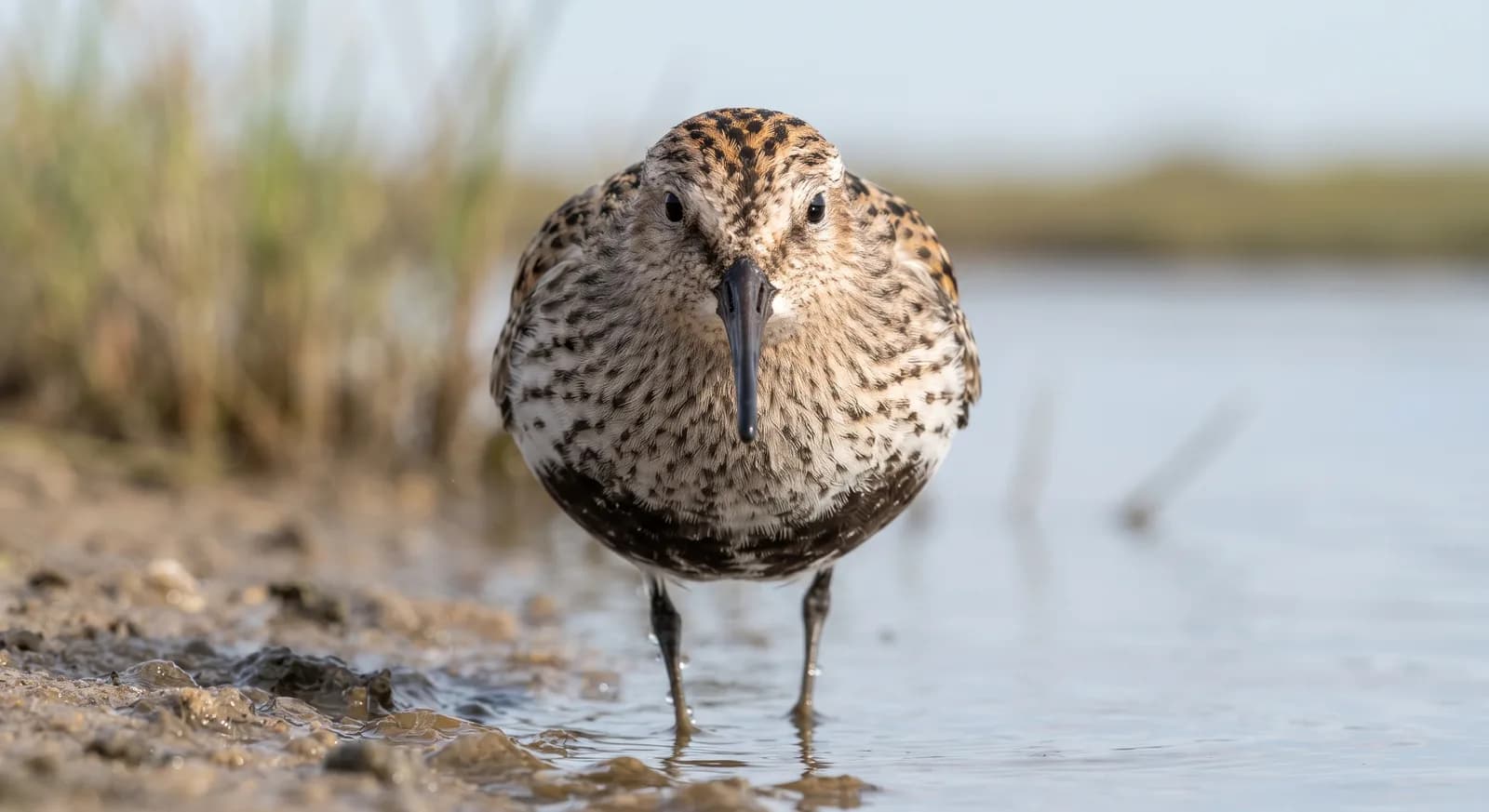
Ruff
Calidris pugnax
The species is abundant and widely distributed; it faces no significant short-term risk. See full glossary
The ruff is a wader with one of the most extraordinary breeding systems in the animal kingdom. In spring the males grow ruffs and head tufts of feathers in colours that differ sharply from one individual to another and gather at collective leks where they compete in front of the females. There are three genetic types of male, with completely different strategies, determined by a supergene inherited as a single block.
Weight
102 g – 170 g
Size
20 cm – 32 cm
Lifespan
14 years
Diet
Insectivore
Feeds mainly on insects and other invertebrates.
Activity
Diurnal
Active mainly during the day.
Social structure
Solitary
Lives and hunts alone, joining others only to breed.
Sighting difficulty
Easy
Fun facts
- GeneralMales grow ruffs of feathers in colours unique to each bird, for their contests on the courtship lek.
- It has three genetically determined types of male: the territorials, with a dark ruff, which defend a spot on the lek; the satellites, with a white ruff, which slip in without fighting; and the faeders, which mimic females in size and plumage and mate furtively.
- Those three strategies are coded in a supergene, a block of more than a hundred genes inherited as a whole, which arose from a chromosomal inversion about four million years ago.
- No two males have the same ruff: the individual pattern is so variable that it works as a mark of identity within the lek.
Life cycle & biology
- Skeleton type
- Vertebrate - internal bony skeleton (bird)
- Habitat & environment
- Wet meadows and tundra; rice paddies and marshes on passage
- Birth weight
- Precocial: born covered in down and leaves the nest within a few hours
- Size at birth
- Precocial: born covered in down and leaves the nest within a few hours
- Sexual maturity
- 2 years
- Gestation / incubation
- 22 days of incubation
- Litter / clutch size
- 4 eggs
Sources consulted: https://es.wikipedia.org/wiki/Calidris_pugnax
Where to find it
See its range on the interactive mapBest time: From March to April and from August to October in Iberian rice fields and marshes, on passage; in spring the males show their breeding ruffs.
Where to watch it
Parques y spots de buceo donde se ha documentado esta especie — se muestran 10 de 37 documentados.
Related species
Other species in the catalogue with the most in common with Ruff — same habitat, park, country, tags or family.
Whimbrel
Numenius phaeopus
Common Redshank
Tringa totanus
Sanderling
Calidris alba
 Least Concern
Dunlin
Calidris alpina
Common Sandpiper
Actitis hypoleucos
Common Greenshank
Tringa nebularia
Keep exploring
Based on what we already know about ruff.
Comments
Share an experience, a fun fact or a tip for seeing the ruff.
Be the first to comment.