One of the 2 shanks on WAnimals
Birds · Charadriiformes · Scolopacidae
Common Redshank
Tringa totanus
The species is abundant and widely distributed; it faces no significant short-term risk. See full glossary
Its striking bright red or orange legs and its persistent alarm call have earned it the nickname of the warden of the marshes, being the first species to raise the alarm at a predator.
Weight
85 g – 155 g
Size
27 cm – 29 cm
Lifespan
9 years
Diet
Carnivore
Feeds mainly on other animals.
Activity
Diurnal
Active mainly during the day.
Social structure
Solitary
Lives and hunts alone, joining others only to breed.
Sighting difficulty
Easy
Fun facts
- comportamientoIt is among the first birds to give the alarm when an intruder appears on the marsh, which is why it is popularly known as the warden of the marshes.
Life cycle & biology
- Skeleton type
- Vertebrate - pneumatised bony skeleton (bird)
- Habitat & environment
- Marshes, wet meadows and estuaries of Europe and Asia, wintering on the coasts of southern Europe, Africa and southern Asia
- Birth weight
- Exact weight at hatching not found as a precise figure
- Size at birth
- Precocial, able to feed itself soon after hatching
- Sexual maturity
- 1 year
- Gestation / incubation
- 22-25 days
- Litter / clutch size
- 3 to 5 eggs per clutch (most commonly 4)
Sources consulted: AnAge (genomics.senescence.info); BirdBuddy Wiki; Grokipedia; Birds of the World; SeaLifeBase; Wikipedia (Common redshank); ResearchGate (ageing and sexing study)
Where to find it
See its range on the interactive mapBest time: From August to April in Atlantic and Mediterranean marshes and saltpans; it gives itself away with a very loud alarm whistle.
Where to watch it
Parques y spots de buceo donde se ha documentado esta especie — se muestran 10 de 72 documentados.
Related species
Other species in the catalogue with the most in common with Common Redshank — same habitat, park, country, tags or family.
Ruff
Calidris pugnax
 Least Concern
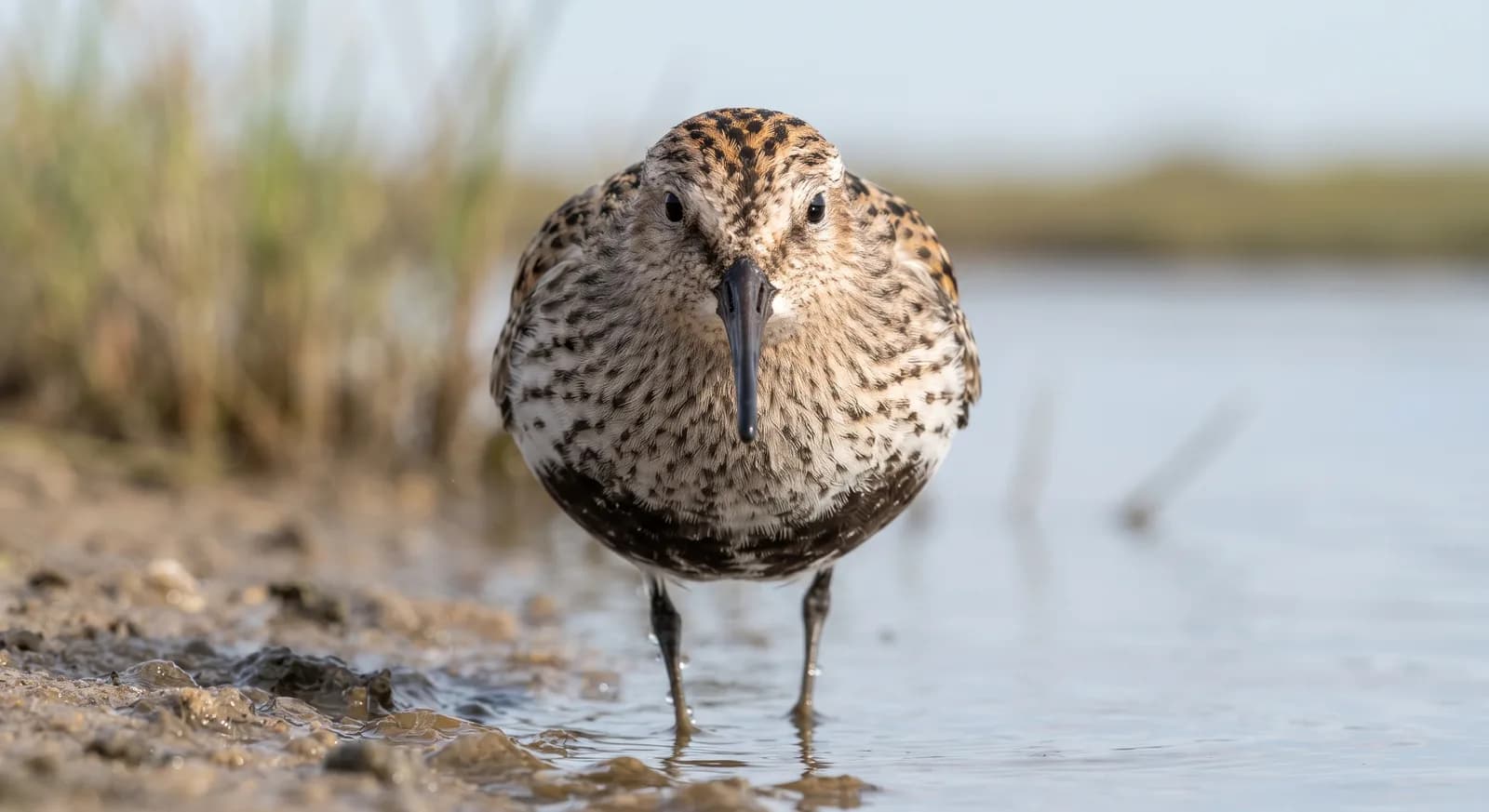
Dunlin
Calidris alpina
Common Sandpiper
Actitis hypoleucos
Common Greenshank
Tringa nebularia
Common Snipe
Gallinago gallinago
Whimbrel
Numenius phaeopus
Keep exploring
Based on what we already know about common redshank.
Comments
Share an experience, a fun fact or a tip for seeing the common redshank.
Be the first to comment.