Birds · Charadriiformes · Scolopacidae
Common Snipe
Gallinago gallinago
The species is abundant and widely distributed; it faces no significant short-term risk. See full glossary
In its display flight the male dives and the outer feathers of its tail vibrate in the airflow, producing a bleating sound that has earned it the nickname of flying goat in several languages.
Weight
80 g – 180 g
Size
25 cm – 27 cm
Lifespan
10 years
Diet
Carnivore
Feeds mainly on other animals.
Activity
Crepuscular
Active above all at dawn and dusk.
Social structure
Solitary
Lives and hunts alone, joining others only to breed.
Sighting difficulty
Easy
Fun facts
- The vibration of its tail feathers in the display flight makes a bleating sound that has earned it the nickname of flying goat.
- It probes the mud for food with its head buried in the ground.
- One documented bird reached 18.2 years.
Life cycle & biology
- Skeleton type
- Vertebrate - pneumatised bony skeleton (bird)
- Habitat & environment
- Marshes, bogs, tundra and wet meadows of Europe and Asia, wintering in warmer country as far as central Africa
- Birth weight
- 11 grams
- Size at birth
- Precocial, covered in reddish down with black and white markings, able to feed itself though accompanied by its parents
- Sexual maturity
- 1-2 years
- Gestation / incubation
- 18-21 days
- Litter / clutch size
- 4 eggs per clutch
Sources consulted: AnAge (genomics.senescence.info); Animal Diversity Web; Birda; Birds Wiki Fandom; Animalia.bio; Avibase; Animal Diversity Web (Wilson's snipe comparativo)
Where to find it
See its range on the interactive mapBest time: From October to March in Iberian marshes, rice fields and flooded meadows; it is detected as it flushes in a zigzag with a rasping call.
Where to watch it
Parques y spots de buceo donde se ha documentado esta especie — se muestran 10 de 37 documentados.
Related species
Other species in the catalogue with the most in common with Common Snipe — same habitat, park, country, tags or family.
Common Redshank
Tringa totanus
Ruff
Calidris pugnax
 Least Concern
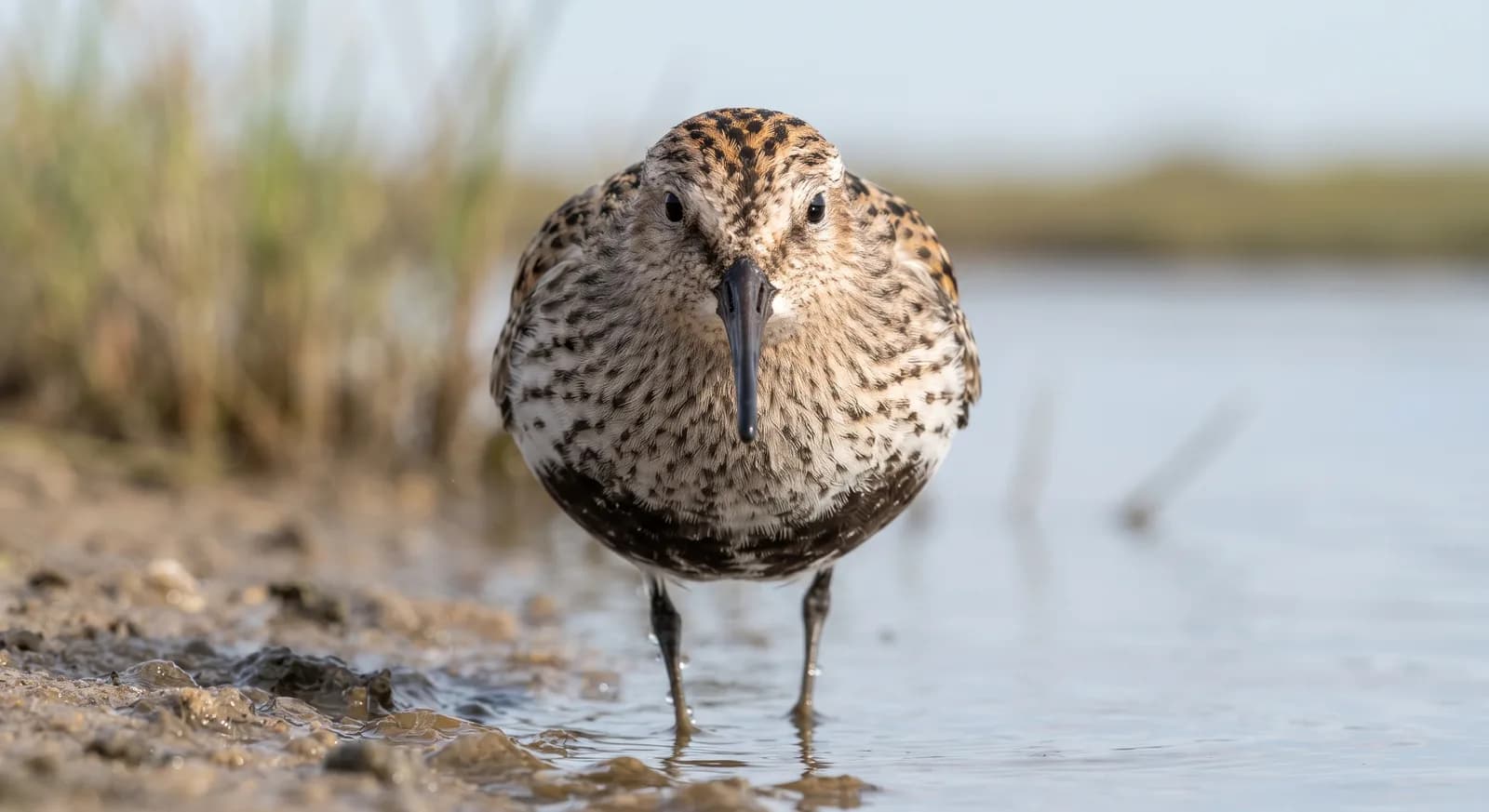
Dunlin
Calidris alpina
Common Greenshank
Tringa nebularia
Ruddy Turnstone
Arenaria interpres
Whimbrel
Numenius phaeopus
Keep exploring
Based on what we already know about common snipe.
Comments
Share an experience, a fun fact or a tip for seeing the common snipe.
Be the first to comment.