One of the 3 curlews on WAnimals
Birds · Charadriiformes · Scolopacidae
Whimbrel
Numenius phaeopus
The species is abundant and widely distributed; it faces no significant short-term risk. See full glossary
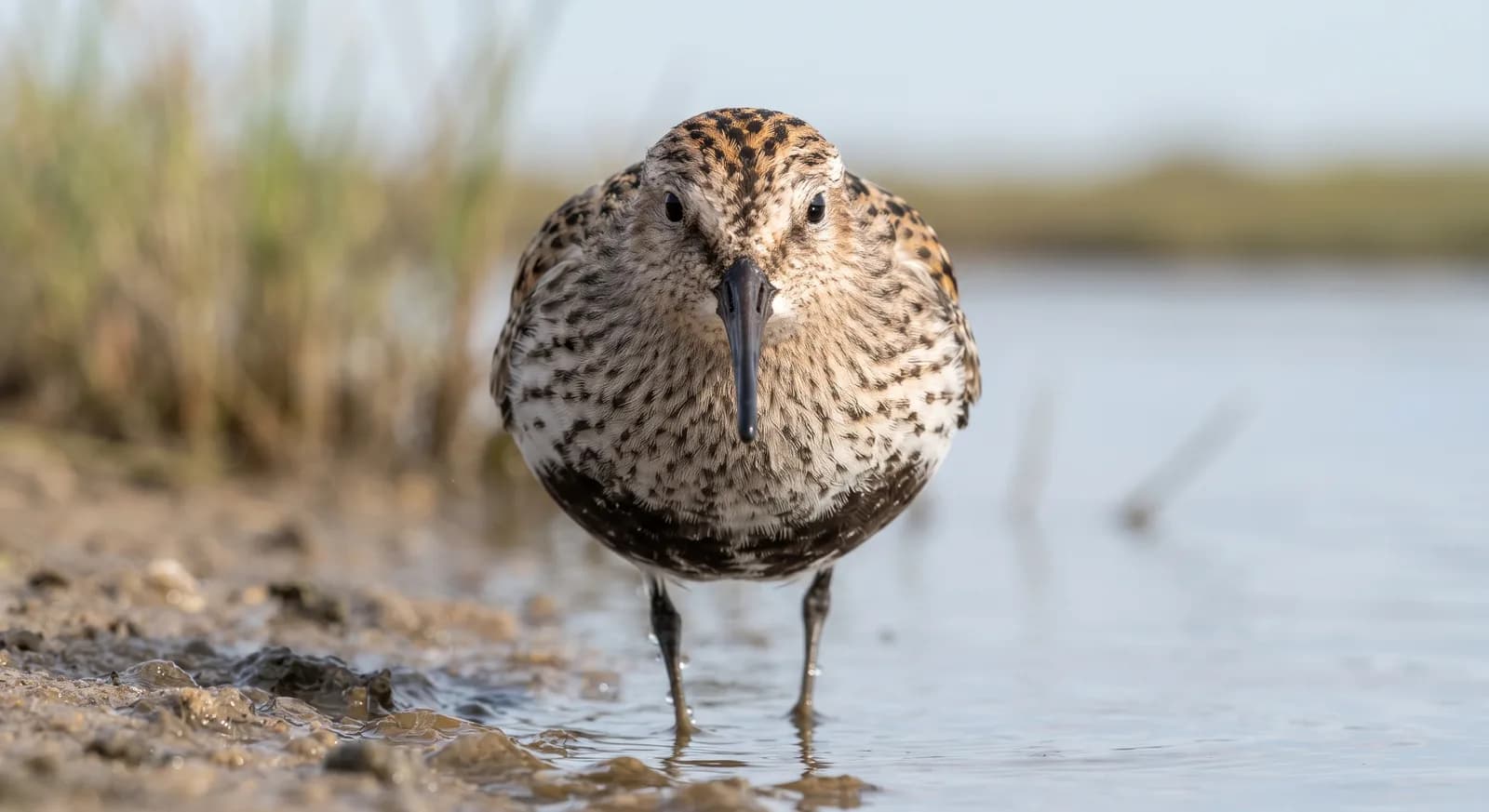
The whimbrel is a large wader with a long, downcurved bill and a striking pale stripe on the crown. It breeds on the tundra and peat bogs of northern Eurasia and North America and winters on coasts across five continents. Its Spanish name comes from its call: a rapid series of seven whistled notes, unmistakable across the marshes. In winter it specialises in crabs, which it extracts from their burrows with its curved bill.
Weight
270 g – 600 g
Size
37 cm – 47 cm
Lifespan
25 years
Diet
Omnivore
Combines animal and plant food depending on availability.
Activity
Diurnal
Active mainly during the day.
Sighting difficulty
Easy
Fun facts
- GeneralIts curved bill pulls crabs out of their burrows in the mud.
- Its call is a series of seven rapid, descending whistles that gives it away without being seen, and that has earned it onomatopoeic names in several languages.
- Its curved bill is adapted to crab burrows: it follows the curve of the tunnel and pulls the crab out, then tears off its legs before swallowing it.
- The populations that breed in Alaska cross the Pacific to Oceania without stopping, a flight of several days over open ocean.
Life cycle & biology
- Skeleton type
- Vertebrate - internal bony skeleton (bird)
- Habitat & environment
- Bogs and tundra when breeding; saltmarsh and beaches on passage
- Sexual maturity
- 2 years
- Gestation / incubation
- 22 days
- Litter / clutch size
- 4
Sources consulted: https://en.wikipedia.org/wiki/Eurasian_whimbrel
Where to find it
See its range on the interactive mapWhere to watch it
Parques y spots de buceo donde se ha documentado esta especie — se muestran 10 de 24 documentados.
Related species
Other species in the catalogue with the most in common with Whimbrel — same habitat, park, country, tags or family.
Sanderling
Calidris alba
Ruff
Calidris pugnax
 Least Concern
Dunlin
Calidris alpina
Common Sandpiper
Actitis hypoleucos
Common Greenshank
Tringa nebularia
Ruddy Turnstone
Arenaria interpres
Keep exploring
Based on what we already know about whimbrel.
Comments
Share an experience, a fun fact or a tip for seeing the whimbrel.
Be the first to comment.