Species group · Birds
Curlews
WAnimals has 3 species of curlew, all in the family Scolopacidae.
- 3 species
- 1 family
- 98 countries
- 35 parks
- Weight
- 270 g – 1 kg
- Length
- 37 cm – 60 cm
- Lifespan
- 12 – 25 years
Ranges calculated from the entries that record the figure, not from all 3.
All 3 species of curlews on WAnimals
Each one has its own full entry. This group does not replace them: it brings them together.
Conservation status
1 especies in this group están en alguna categoría de riesgo real según la UICN.
See the global conservation statusWhere they live
Recorded in 98 countries. The ones with the most species in the group:
Where to see them
Did you know…
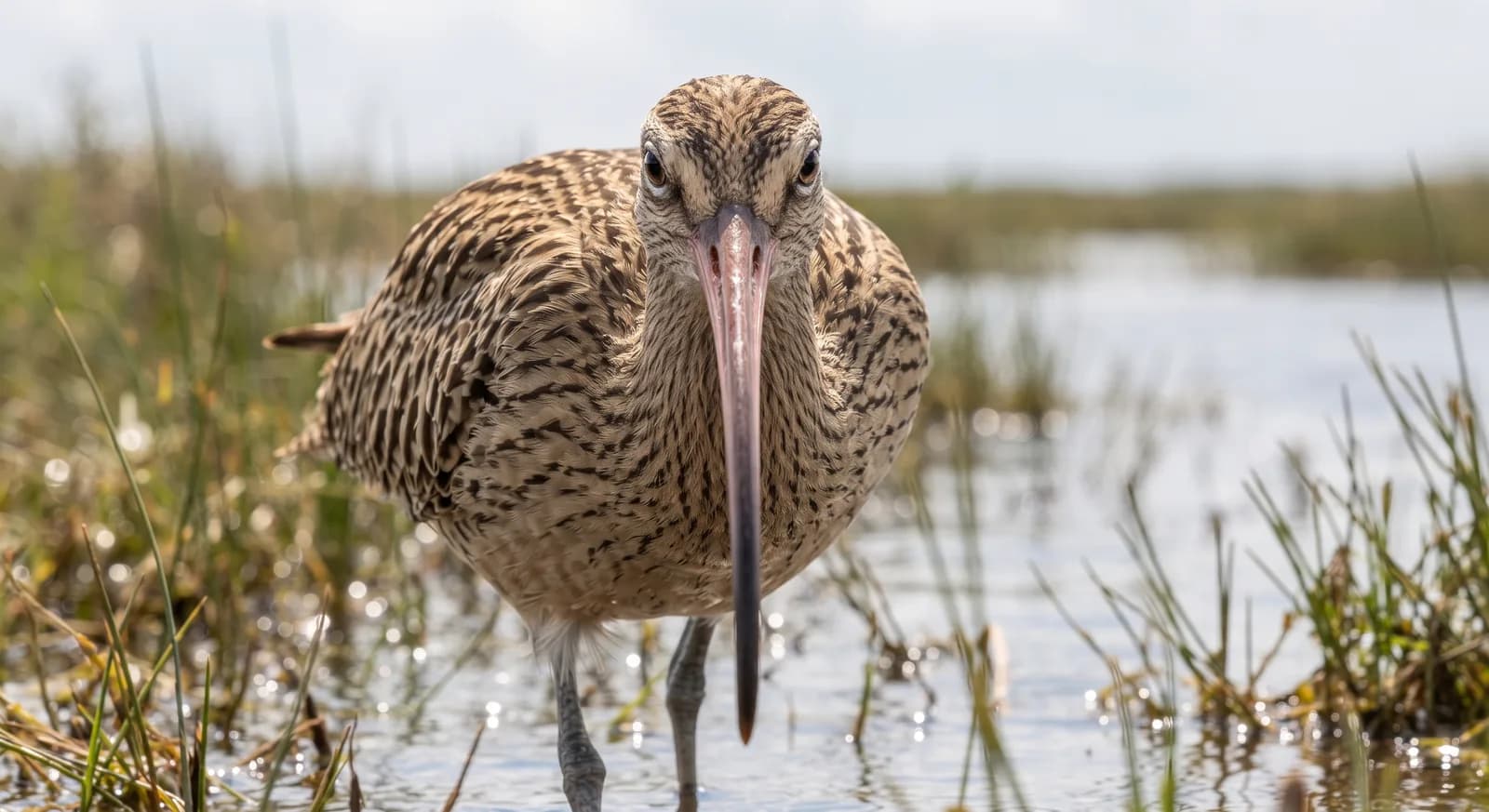
It has the longest down-curved bill of any European wader, suited to drawing worms and invertebrates out of deep mud on marshes and estuaries.
From Eurasian Curlew
Its curved bill pulls crabs out of their burrows in the mud.
From Whimbrel
Its call is a series of seven rapid, descending whistles that gives it away without being seen, and that has earned it onomatopoeic names in several languages.
From Whimbrel
Its curved bill is adapted to crab burrows: it follows the curve of the tunnel and pulls the crab out, then tears off its legs before swallowing it.
From Whimbrel
It is the only wader in the world that loses the ability to fly while moulting: it renews all its flight feathers at once and spends several weeks on the ground on Pacific atolls, completely defenceless against introduced rats and cats.
The young migrate alone: the adults leave Alaska weeks before the juveniles, which then cross thousands of kilometres of ocean on their own to islands they have never seen.