One of the 3 curlews on WAnimals
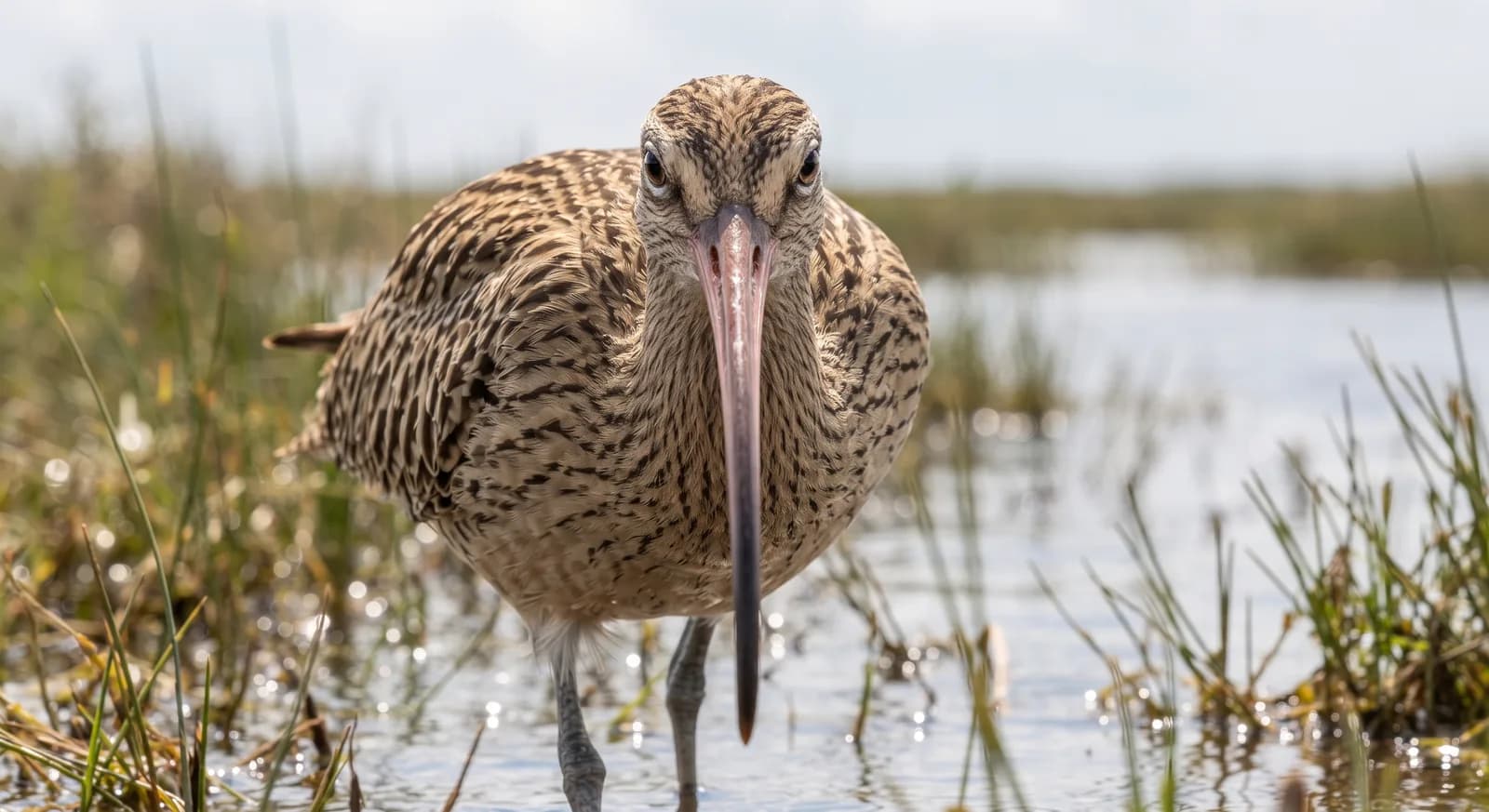
Birds · Charadriiformes · Scolopacidae
Eurasian Curlew
Numenius arquata
It could become endangered in the near future if current threats go unchecked. See full glossary
It is the largest wader in Europe, recognisable by its long down-curved bill, longer still in the female. A bird ringed in 1992 was still alive in 2026 at at least 33 years old, the documented longevity record for the species.
Weight
540 g – 1 kg
Size
50 cm – 60 cm
Lifespan
12 years
Diet
Carnivore
Feeds mainly on other animals.
Activity
Diurnal
Active mainly during the day.
Social structure
Family group
Lives in small family groups with close bonds.
Sighting difficulty
Moderate
Fun facts
- anatomíaIt has the longest down-curved bill of any European wader, suited to drawing worms and invertebrates out of deep mud on marshes and estuaries.
Life cycle & biology
- Skeleton type
- Vertebrate - pneumatised bony skeleton (bird)
- Habitat & environment
- Grassland, coastal marsh, taiga and wetland of Europe and Asia, wintering on coasts and estuaries
- Birth weight
- Exact weight at hatching not found as a precise figure
- Size at birth
- Precocial, able to move soon after hatching
- Sexual maturity
- 2 years
- Gestation / incubation
- ~28-30 days
- Litter / clutch size
- 4 eggs per clutch
Sources consulted: AnAge; Birdfact; Birda; Animalia.bio; eBird; Birds of the World; Avibase; Wikipedia
Where to find it
See its range on the interactive mapWhere to watch it
Parks and dive sites where this species has been documented.
Related species
Other species in the catalogue with the most in common with Eurasian Curlew — same habitat, park, country, tags or family.
Black-tailed Godwit
Limosa limosa
Common Redshank
Tringa totanus
Ruff
Calidris pugnax
 Least Concern
Dunlin
Calidris alpina
Common Greenshank
Tringa nebularia
Common Snipe
Gallinago gallinago
Keep exploring
Based on what we already know about eurasian curlew.
Comments
Share an experience, a fun fact or a tip for seeing the eurasian curlew.
Be the first to comment.