Birds · Galliformes · Cracidae
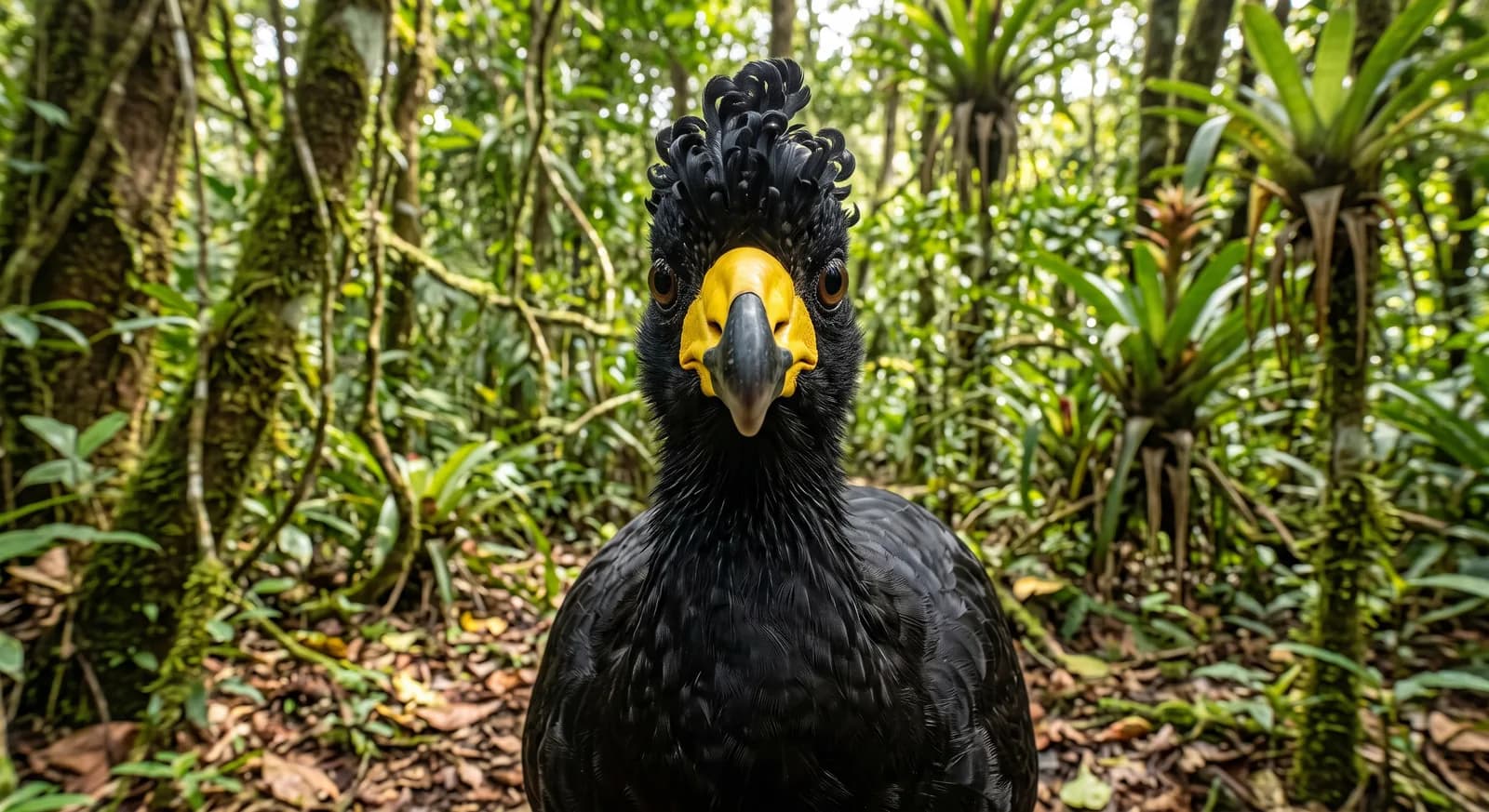
Great Curassow
Crax rubra
It faces a high risk of extinction in the wild over the medium term. See full glossary
The great curassow is a large black cracid with a very distinctive curly crest and a yellow knob above the bill in males. The females come in three different colour morphs, which is exceptional within a single species. It walks the forest floor looking for fallen fruit and roosts in the trees. Its size and its meat have made it a prime quarry throughout Central America.
Weight
3.7 kg – 4.2 kg
Size
78 cm – 92 cm
Lifespan
24 years
Diet
Herbivore
Feeds mainly on plants.
Activity
Diurnal
Active mainly during the day.
Social structure
In pairs
Usually lives in pairs, sometimes for life.
Sighting difficulty
Moderate
Fun facts
- The females have three completely different colour morphs living side by side in the same population: barred, rufous and dark, to the point that they were once described as separate species.
- The male gives a deep, ventriloquial booming produced by an elongated windpipe, so low in frequency that it is almost impossible to tell where it is coming from.
- It is one of the first species to vanish from a hunted forest: its size, its slowness and its habit of perching in the open make it an easy target.
Life cycle & biology
- Skeleton type
- Vertebrate - internal bony skeleton (bird)
- Habitat & environment
- Primary lowland rainforest of Central America and north-western South America
- Sexual maturity
- 3 years
- Gestation / incubation
- 31 days of incubation
- Litter / clutch size
- 2 eggs
Sources consulted: https://es.wikipedia.org/wiki/Crax_rubra
Where to find it
See its range on the interactive mapWhere to watch it
Parks and dive sites where this species has been documented.
Related species
Other species in the catalogue with the most in common with Great Curassow — same habitat, park, country, tags or family.
Horned Guan
Oreophasis derbianus
Crested Guan
Penelope purpurascens
Military Macaw
Ara militaris
Helmeted Curassow
Pauxi pauxi
Black Guan
Chamaepetes unicolor
 Least Concern
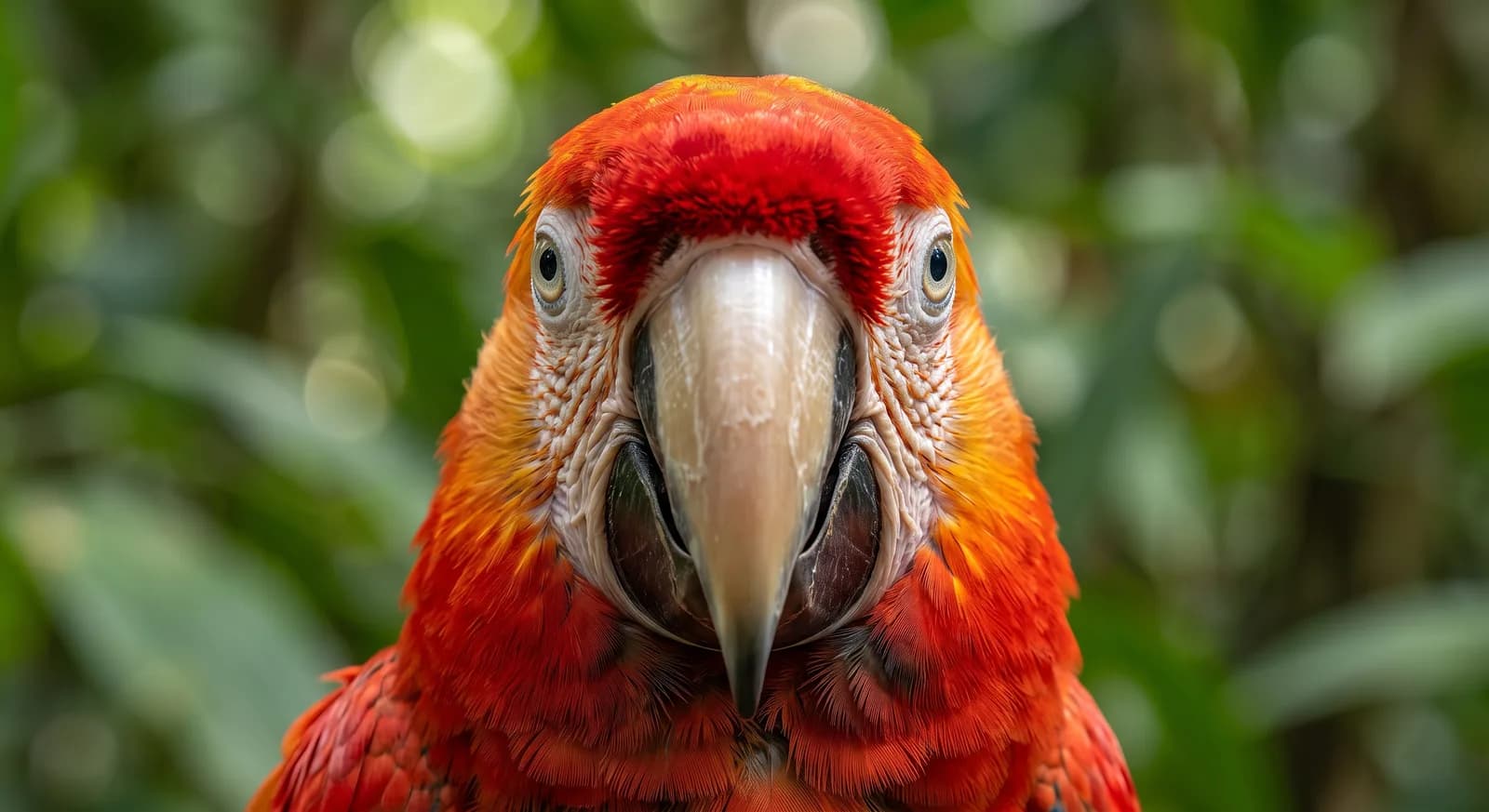
Scarlet Macaw
Ara macao
How to help
The great curassow is classified as vulnerable. Organizations such as UICN, WWF y Wildlife Conservation Society work specifically on its conservation and that of its habitat; looking into their programs is a good starting point if you want to get involved.
It's documented in 5 real protected areas — part of why protecting these places matters for its conservation.
Keep exploring
Based on what we already know about great curassow.
Comments
Share an experience, a fun fact or a tip for seeing the great curassow.
Be the first to comment.