One of the 15 butterflies on WAnimals
Insects · Lepidoptera · Saturniidae
Spanish Moon Moth
Graellsia isabellae
It has not yet been assessed against the IUCN criteria. See full glossary
The Spanish moon moth is a ditrysian lepidopteran of the family Saturniidae, one of the most striking in the European fauna, with a wingspan ranging from 45 mm to 10 cm. It was formerly called Actias isabellae. It is the only species of the genus Graellsia, and the only European saturniid with tails on its hindwings.
Size
7 cm – 10 cm
Lifespan
1 years
Diet
Herbivore
Feeds mainly on plants.
Activity
Nocturnal
Active mainly at night.
Social structure
Solitary
Lives and hunts alone, joining others only to breed.
Sighting difficulty
Unknown
Fun facts
- GeneralDiscovered in Madrid in 1849; it is the most spectacular moth in Europe.
- Like other emperor moths, the adult does not feed: it lives barely a week, just long enough to mate and lay its eggs.
- It was one of the first insect species protected by law in Spain; collectors pursued it so relentlessly that it fetched very high prices on the black market.
- It is considered the most beautiful moth in Europe, and it is an endemism almost exclusive to the Iberian mountains.
- It was discovered by the Spanish naturalist Mariano de la Paz Graells at Peguerinos, Ávila, in 1848, and he dedicated it to Queen Isabella II. The species was later renamed in honour of Graells himself.
- Its discovery stirred controversy: there were entomologists who could not believe that a moth so unlike the European ones could come from Spain, and who maintained that Graells had brought it from India or the Americas.
- It is the only European saturniid with tails on its hindwings, and the only representative of its genus.
- It has a single generation a year, and the adult flies between April and July depending on altitude.
- It is protected by the European Union's Habitats Directive, the Bern Convention and CITES, and is listed as a species of special interest in the Spanish catalogue. Its main threats are fires, spraying against the processionary moth, and collectors.
Life cycle & biology
- Skeleton type
- Invertebrate - chitin exoskeleton (insect)
- Habitat & environment
- Mountain pine woods of Scots and black pine
Sources consulted: https://es.wikipedia.org/wiki/Graellsia_isabellae
Where to find it
See its range on the interactive mapBest time: April to June, on mild nights in mountain pine woods
Where to watch it
Parques y spots de buceo donde se ha documentado esta especie — se muestran 10 de 14 documentados.
Related species
Other species in the catalogue with the most in common with Spanish Moon Moth — same habitat, park, country, tags or family.
Great Peacock Moth
Saturnia pyri
Western Capercaillie
Tetrao urogallus
 Near Threatened
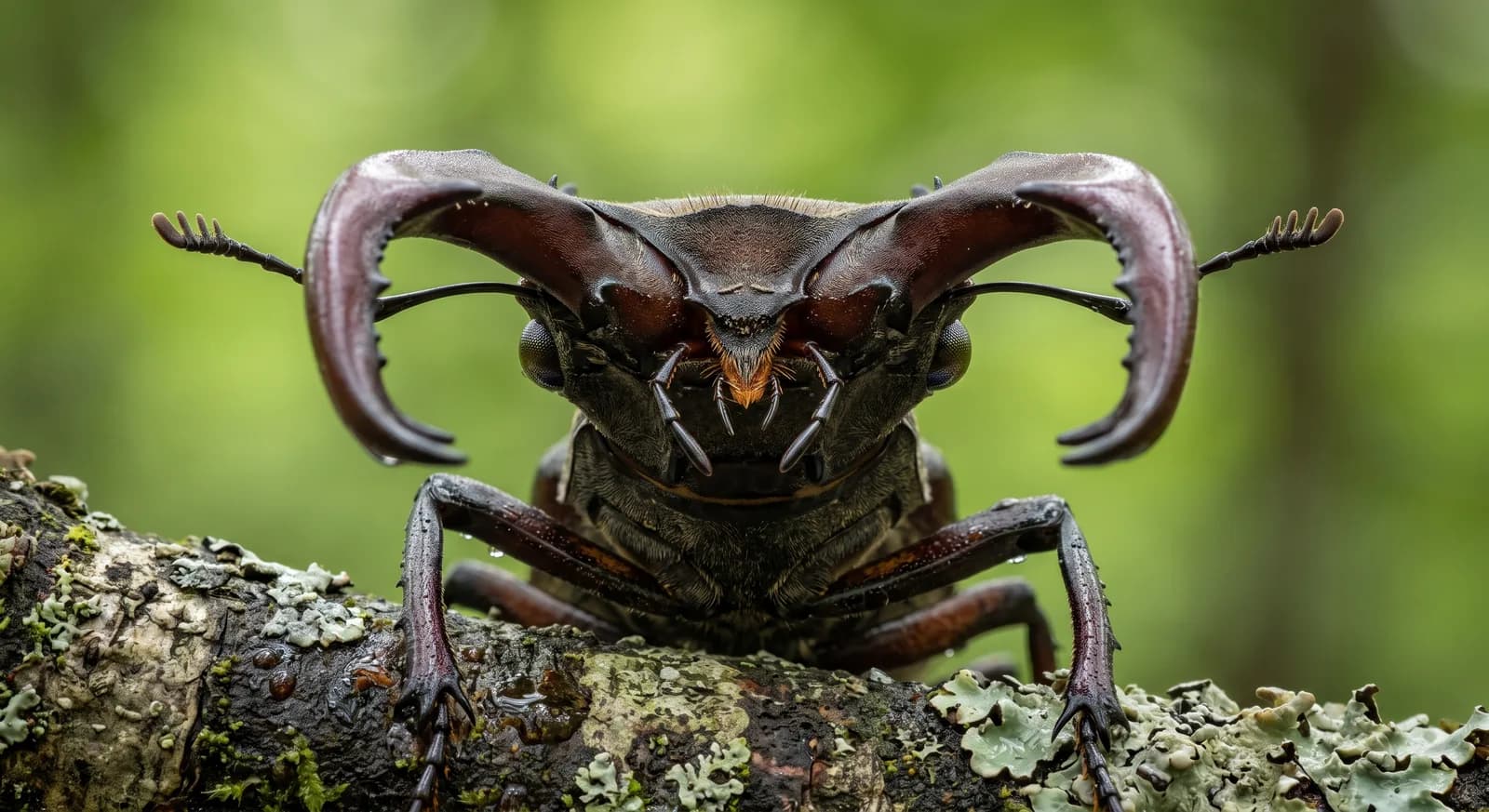
Stag Beetle
Lucanus cervus
Greater Capricorn Beetle
Cerambyx cerdo
Ant-lion
Myrmeleon formicarius
European Rhinoceros Beetle
Oryctes nasicornis
Keep exploring
Based on what we already know about spanish moon moth.
Comments
Share an experience, a fun fact or a tip for seeing the spanish moon moth.
Be the first to comment.