Mammals · Artiodactyla · Bovidae
Markhor
Capra falconeri
It could become endangered in the near future if current threats go unchecked. See full glossary
The markhor is an artiodactyl mammal of the family Bovidae native to the mountain regions of Central Asia and the Himalaya. Markhor in Persian means snake-eater. It is the national animal of Pakistan. Its horns are highly prized by hunters and by Chinese medicine. It is currently considered a near-threatened species on the IUCN Red List.
Weight
41 kg on average
Size
up to 1.9 m
Lifespan
13 years
Diet
Herbivore
Feeds mainly on plants.
Activity
Diurnal
Active mainly during the day.
Social structure
Herd
Lives in large groups as a strategy against predators.
Sighting difficulty
Moderate
Fun facts
- GeneralThe national animal of Pakistan; its spiral horns reach 1.6 m.
- It is the tallest wild goat at the shoulder, and its corkscrew-spiralled horns, up to 160 cm in the male, are unlike those of any other caprid.
- The name may come from the Persian mar and khor, snake eater, or from the Pashto mar and akhur, snake horn. The second explanation fits better, because it is strictly vegetarian.
- It is one of the best-documented recovery stories in recent conservation: community-based management in Pakistan and Tajikistan reversed its decline and allowed it to be downlisted from Endangered to Near Threatened in the 2015 assessment.
- That model works because it returns to the local communities the income from a very limited, tightly controlled trophy hunt, which turns the animal into a resource worth protecting.
- It is the national animal of Pakistan.
Life cycle & biology
- Skeleton type
- Vertebrate - internal bony skeleton (mammal)
- Habitat & environment
- Rocky slopes and mountain woodland (600-3,600 m)
- Sexual maturity
- 2 years
- Gestation / incubation
- 5.4 months
- Litter / clutch size
- 2
Sources consulted: https://es.wikipedia.org/wiki/Capra_falconeri
Where to find it
See its range on the interactive mapBest time: From December to January, during the rut
Where to watch it
Parks and dive sites where this species has been documented.
Related species
Other species in the catalogue with the most in common with Markhor — same habitat, park, country, tags or family.
Chiru
Pantholops hodgsonii
Himalayan Goral
Naemorhedus goral
Siberian Ibex
Capra sibirica
Urial
Ovis vignei
 Least Concern
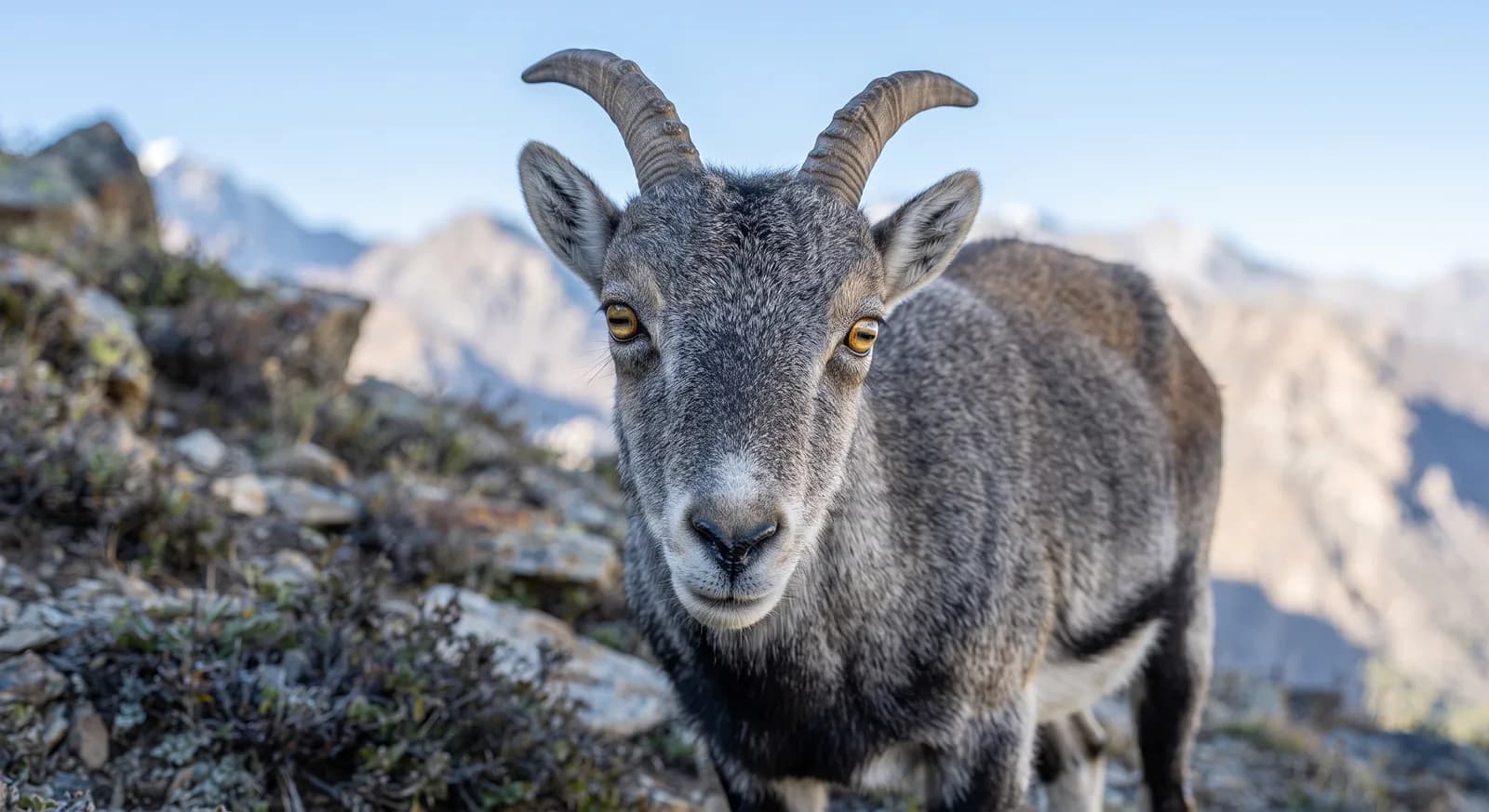
Blue Sheep
Pseudois nayaur
 Vulnerable
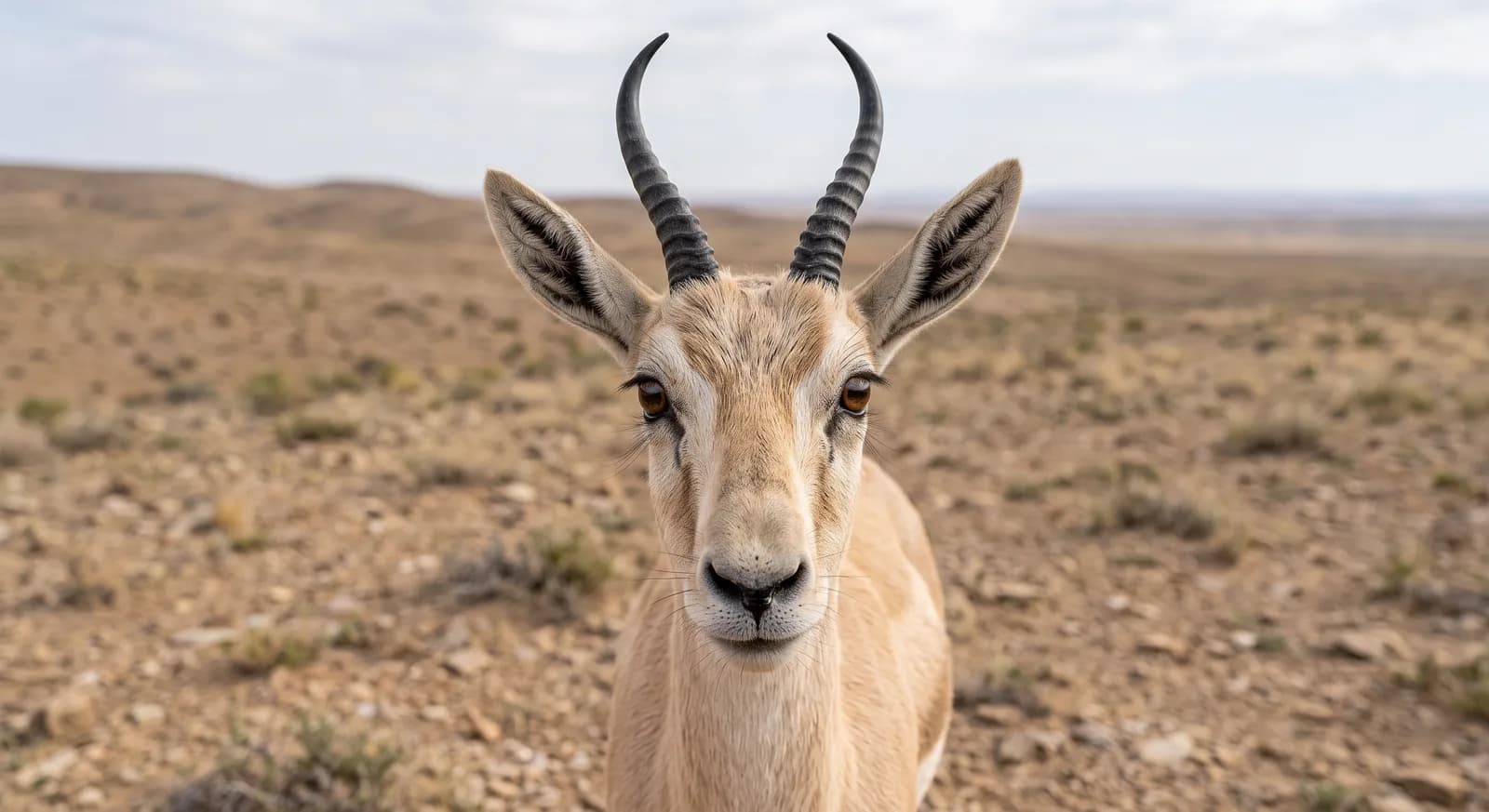
Goitered Gazelle
Gazella subgutturosa
Keep exploring
Based on what we already know about markhor.
Comments
Share an experience, a fun fact or a tip for seeing the markhor.
Be the first to comment.