One of the 2 skunks on WAnimals
Mammals · Carnivora · Mephitidae
Striped Skunk
Mephitis mephitis
It has not yet been assessed against the IUCN criteria. See full glossary
Its iconic defence — an extremely foul-smelling spray from glands near the base of the tail — can carry as far as 14 metres.
Weight
700 g – 6.3 kg
Size
46.5 cm – 81.5 cm
Lifespan
4 years
Diet
Omnivore
Combines animal and plant food depending on availability.
Activity
Nocturnal
Active mainly at night.
Social structure
Solitary
Lives and hunts alone, joining others only to breed.
Sighting difficulty
Unknown
Fun facts
- People can smell it from as far as 1.6 km downwind, and it is used only as a last resort, after an elaborate warning display.
- It eats insects, small vertebrates, fruit and carrion.
- It lives in woodland, grassland and towns across much of North America.
Life cycle & biology
- Skeleton type
- Vertebrate - internal bony skeleton (mammal)
- Habitat & environment
- Woodland, grassland and towns across much of North America
- Birth weight
- 32-35 g at birth, its markings already visible before birth
- Size at birth
- 32-35 g at birth
- Sexual maturity
- 10 months
- Gestation / incubation
- 59-77 days, with up to 19 days of delayed implantation
- Litter / clutch size
- 2 to 10 young per litter (average 6-7)
- Lifespan in captivity
- Documented record of up to 10 years
Sources consulted: Animal Diversity Web; Vermont Fish & Wildlife Department; BioKIDS; Smithsonian National Zoo; Squam Lakes Natural Science Center; Animalia.bio
Where to watch it
Parques y spots de buceo donde se ha documentado esta especie — se muestran 10 de 79 documentados.
Related species
Other species in the catalogue with the most in common with Striped Skunk — same habitat, park, country, tags or family.
Eastern Spotted Skunk
Spilogale putorius
 Least Concern
Brown Bear
Ursus arctos
Virginia Opossum
Didelphis virginiana
Mexican Mouse Opossum
Marmosa mexicana
 Least Concern
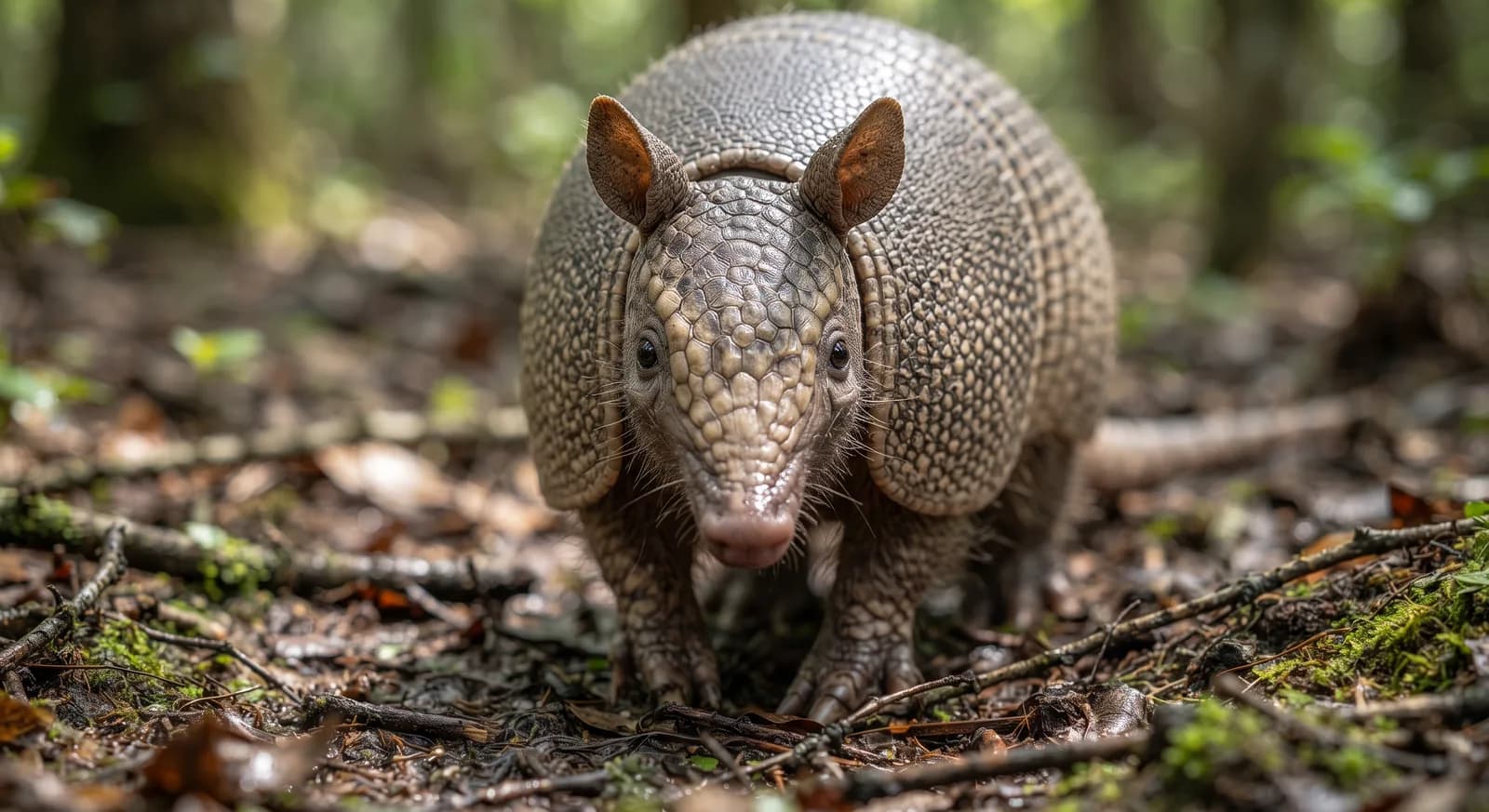
Nine-banded Armadillo
Dasypus novemcinctus
Eastern Mole
Scalopus aquaticus
Keep exploring
Based on what we already know about striped skunk.
Comments
Share an experience, a fun fact or a tip for seeing the striped skunk.
Be the first to comment.