One of the 5 opossums on WAnimals
Mammals · Didelphimorphia · Didelphidae
Virginia Opossum
Didelphis virginiana
The species is abundant and widely distributed; it faces no significant short-term risk. See full glossary
It is the only marsupial native to North America north of Mexico, with an exceptionally short life and rapid breeding for its size.
Weight
1.9 kg – 6.4 kg
Size
33 cm – 55 cm
Lifespan
2 years
Diet
Omnivore
Combines animal and plant food depending on availability.
Activity
Nocturnal
Active mainly at night.
Social structure
Solitary
Lives and hunts alone, joining others only to breed.
Sighting difficulty
Easy
Fun facts
- Isolated populations on predator-free islands have been found to age markedly more slowly than mainland ones.
- It eats fruit, insects, small vertebrates and carrion.
- It lives in woodland, farmland and towns across much of North America.
- fisiologíaIt is immune or highly resistant to the venom of many snakes, rattlesnakes included, thanks to a particular protein in its blood.
- defensaUnder extreme threat it can feign death involuntarily, entering a genuine catatonic state (thanatosis) that may last several hours.
Life cycle & biology
- Skeleton type
- Vertebrate - internal bony skeleton (marsupial mammal)
- Habitat & environment
- Woodland, farmland and towns across much of North America, from Costa Rica to southern Canada
- Birth weight
- Born extremely undeveloped after only 12-13 days of gestation, the size of a bee
- Size at birth
- Born extremely undeveloped
- Sexual maturity
- Female: ~6 months | Male: ~8 months (though they usually breed for the first time at 10 months)
- Gestation / incubation
- 12-13 days (one of the shortest gestations among mammals)
- Litter / clutch size
- 5 to 21 young per litter, limited by the number of teats available (9-14 depending on the source), with 1-3 litters a year
- Lifespan in captivity
- Documented record of up to 6.6-10 years
Sources consulted: Animalia.bio; Dimensions.com; AnAge (genomics.senescence.info); Animal Diversity Web; NHPBS NatureWorks; Texas Tech NSRL Mammals of Texas; Virginia DWR; FaunaFocus; BioKIDS
Where to find it
See its range on the interactive mapBest time: All year round, at night; in North America it is common even in suburban areas, gardens and rubbish bins.
Where to watch it
Parques y spots de buceo donde se ha documentado esta especie — se muestran 10 de 29 documentados.
Related species
Other species in the catalogue with the most in common with Virginia Opossum — same habitat, park, country, tags or family.
Mexican Mouse Opossum
Marmosa mexicana
 Least Concern
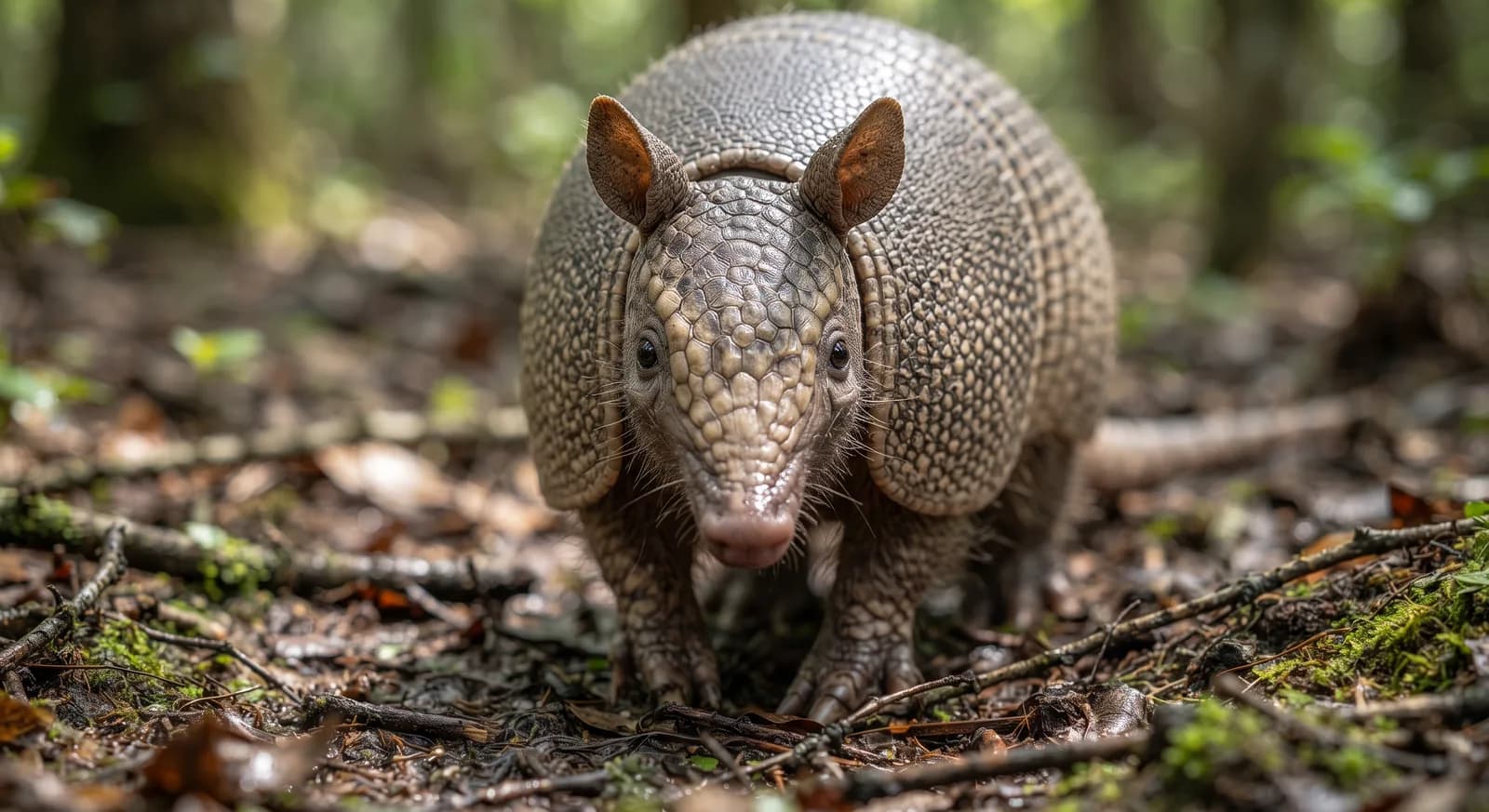
Nine-banded Armadillo
Dasypus novemcinctus
Eastern Gray Squirrel
Sciurus carolinensis
Eastern Chipmunk
Tamias striatus
Southern Flying Squirrel
Glaucomys volans
North American Porcupine
Erethizon dorsatum
Keep exploring
Based on what we already know about virginia opossum.
Comments
Share an experience, a fun fact or a tip for seeing the virginia opossum.
Be the first to comment.