One of the 18 monkeys on WAnimals
Mammals · Primates · Cercopithecidae
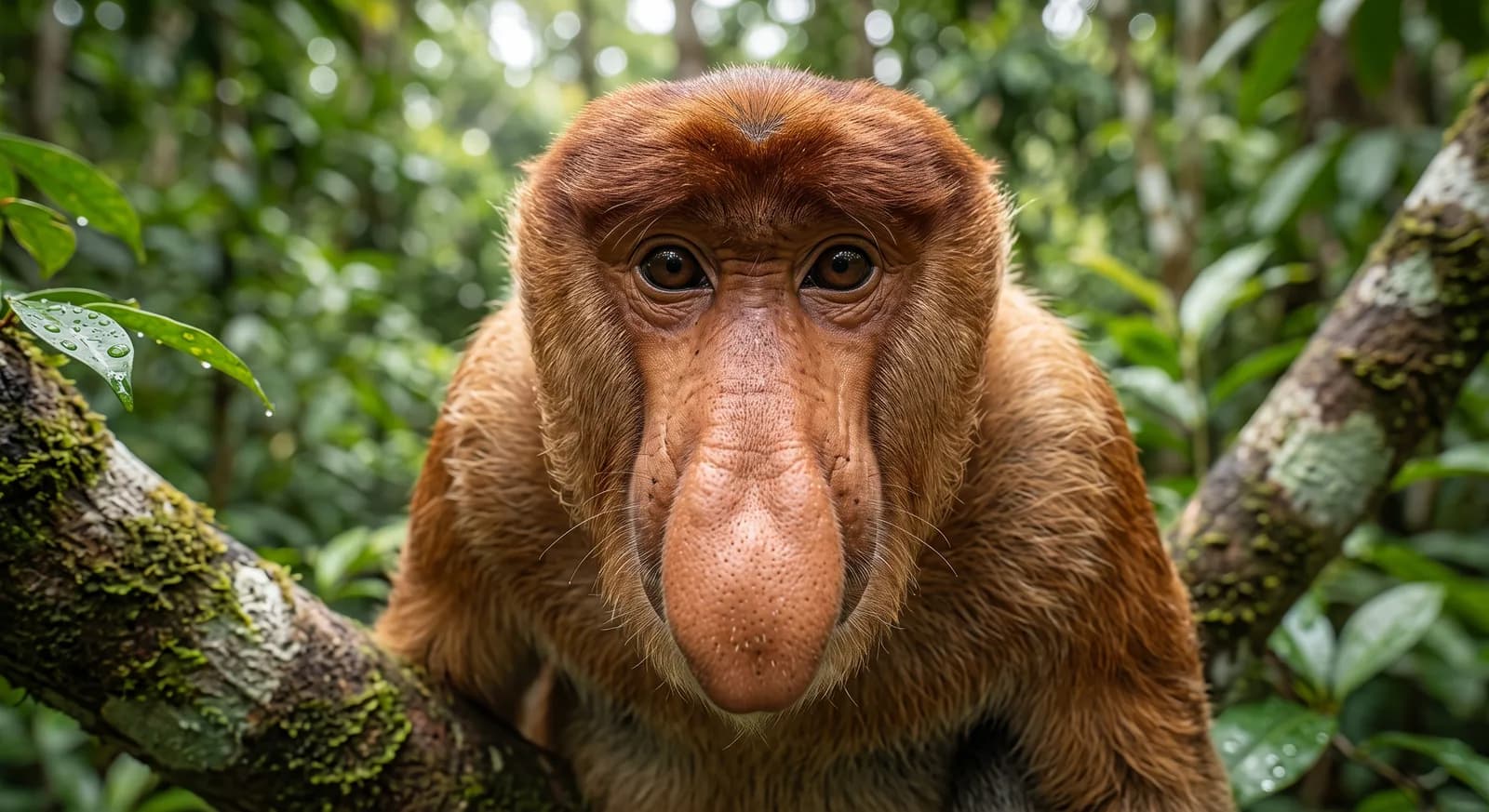
Proboscis Monkey
Nasalis larvatus
It faces a very high risk of extinction in the wild in the near future. See full glossary
Males grow the largest nose relative to body size of any primate, which works as a resonating chamber to amplify their calls.
Weight
7 kg – 22 kg
Size
52 cm – 72 cm
Lifespan
15 years
Diet
Herbivore
Feeds mainly on plants.
Activity
Diurnal
Active mainly during the day.
Social structure
Family group
Lives in small family groups with close bonds.
Sighting difficulty
Hard
Fun facts
- It is an excellent swimmer, able to cover 20 metres underwater without surfacing, and its fingers are partly webbed.
- It feeds on young leaves, seeds and mangrove fruit, and occasionally on invertebrates such as caterpillars.
- It lives in the mangroves, riverine forest and swamp forest of Borneo, always close to water.
- anatomíaMales grow a strikingly large nose that amplifies their calls and may advertise social dominance and breeding fitness to females.
Life cycle & biology
- Skeleton type
- Vertebrate - internal bony skeleton (mammal)
- Habitat & environment
- Mangroves, riverine forest and swamp forest of Borneo, always close to water
- Birth weight
- ~490 grams, with a deep blue face at birth
- Size at birth
- Deep blue face at birth, turning grey by about 2.5 months and adult cream by 8.5
- Sexual maturity
- Male: ~7 years | Female: ~4-5 years
- Gestation / incubation
- 166-200 days (5.5-6.5 months)
- Litter / clutch size
- 1 young per birth
- Lifespan in captivity
- Documented record of up to 23-25 years in captivity
Sources consulted: IVIS; AnAge (genomics.senescence.info); Dimensions.com; Biology Dictionary; Britannica; Animalia.bio; Animal Diversity Web; EBSCO Research Starters; PMC (vocal identity nose study)
Where to watch it
Parks and dive sites where this species has been documented.
Related species
Other species in the catalogue with the most in common with Proboscis Monkey — same habitat, park, country, tags or family.
Southern Pig-tailed Macaque
Macaca nemestrina
 Endangered
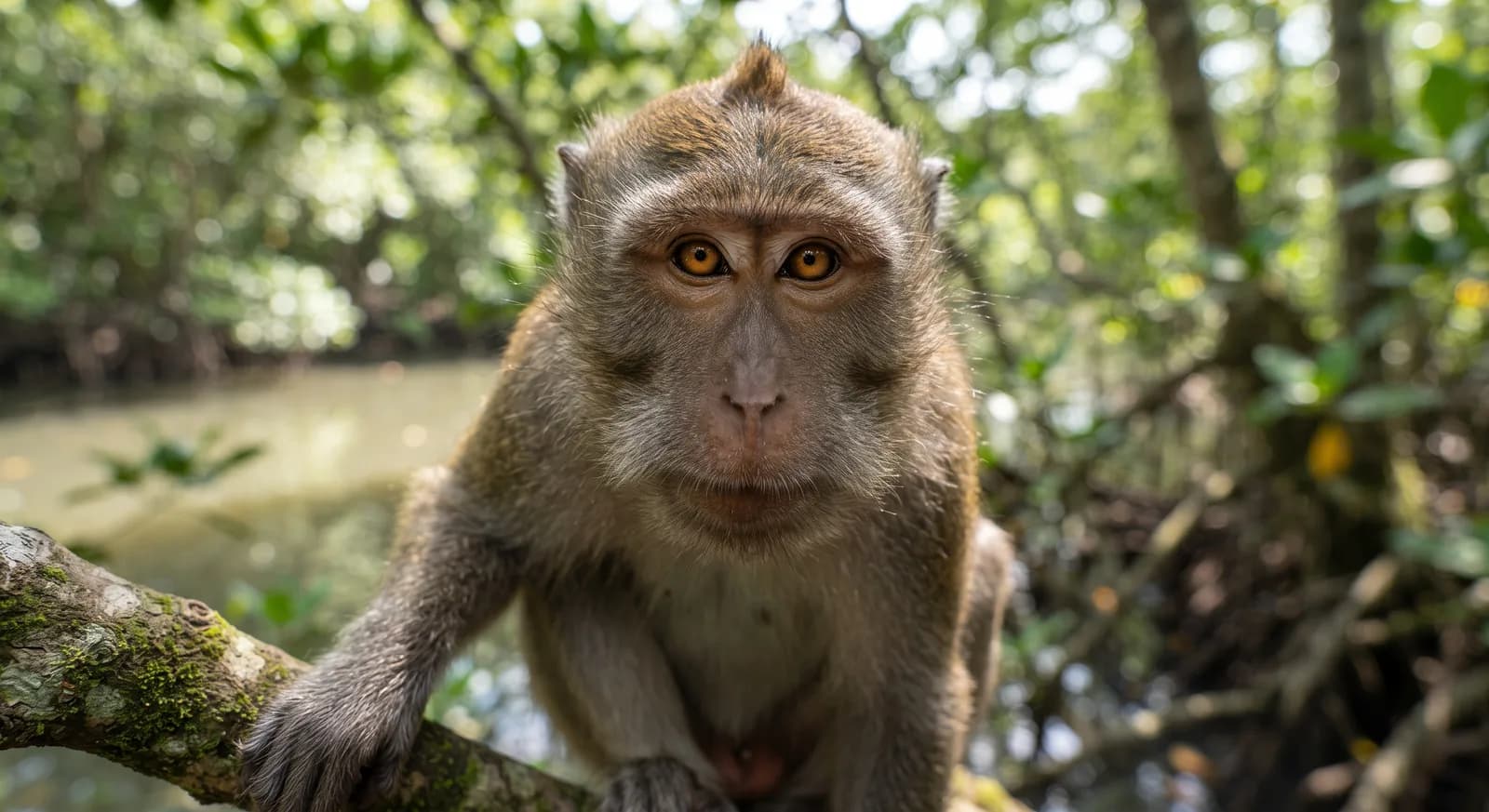
Long-tailed Macaque
Macaca fascicularis
 Vulnerable
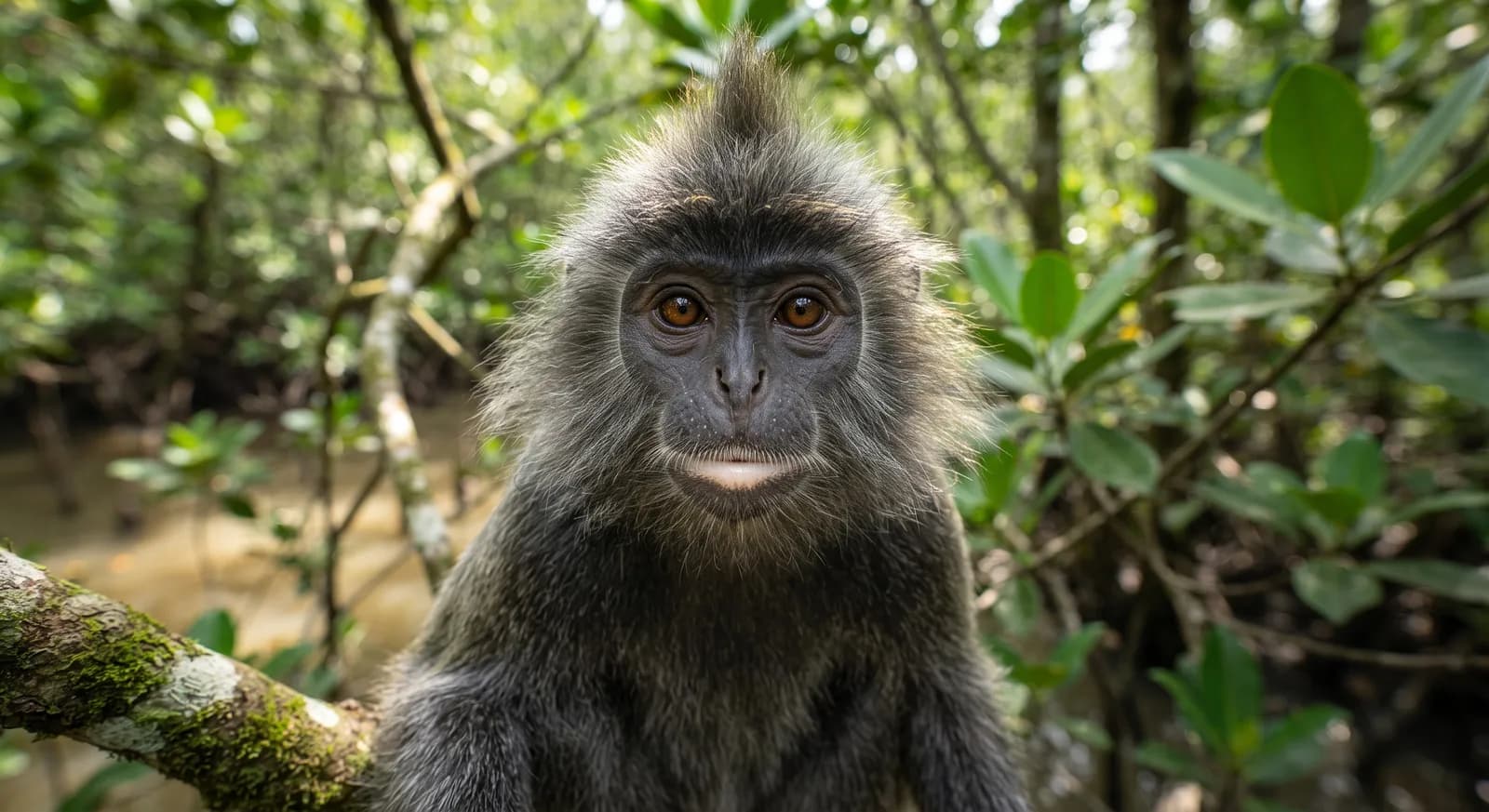
Silvery Lutung
Trachypithecus cristatus
Javan Surili
Presbytis comata
Southeast Asian Box Turtle
Cuora amboinensis
 Endangered
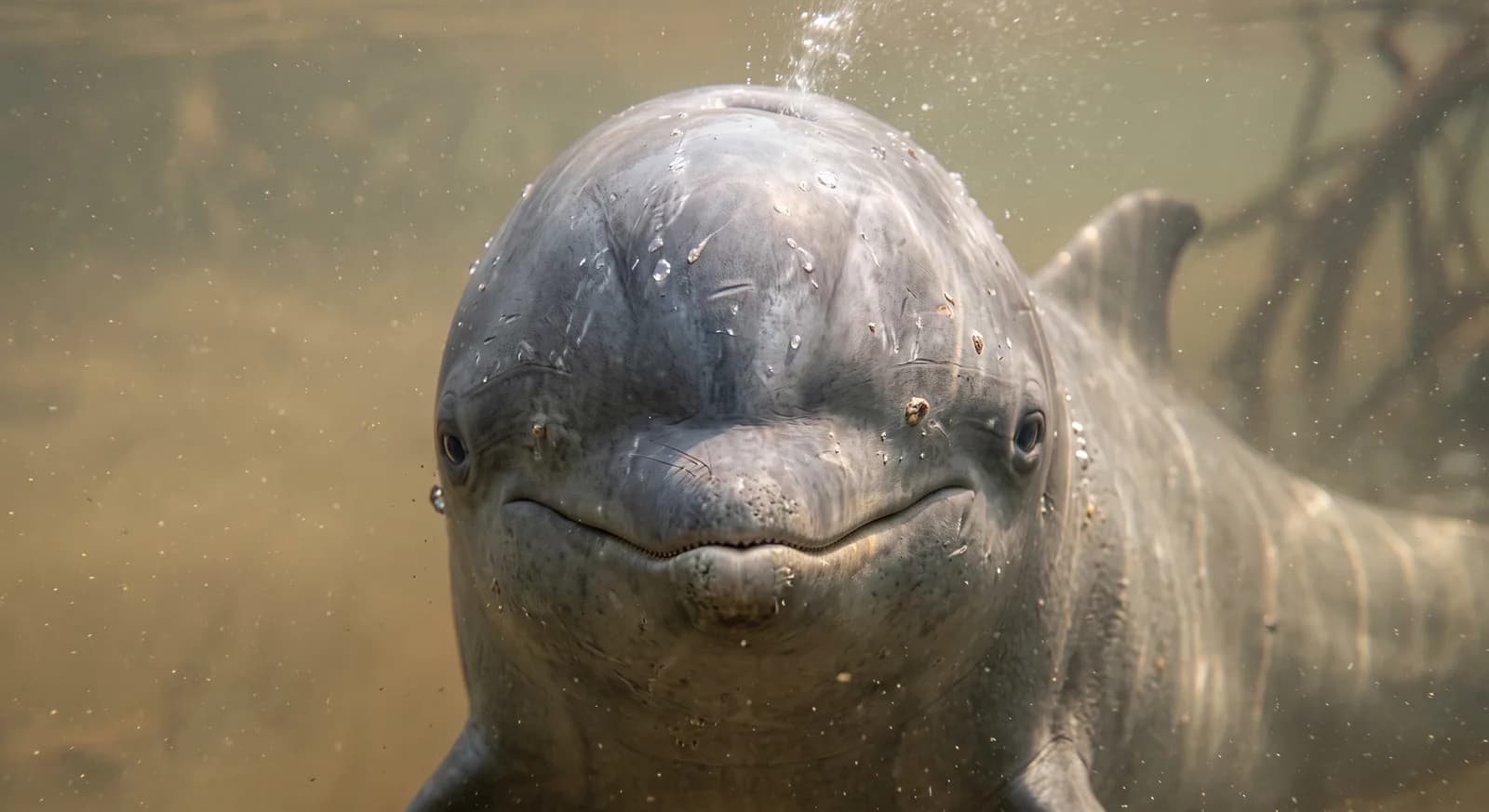
Irrawaddy Dolphin
Orcaella brevirostris
How to help
The proboscis monkey is classified as endangered. Organizations such as UICN, WWF y Wildlife Conservation Society work specifically on its conservation and that of its habitat; looking into their programs is a good starting point if you want to get involved.
It's documented in 5 real protected areas — part of why protecting these places matters for its conservation.
Keep exploring
Based on what we already know about proboscis monkey.
Comments
Share an experience, a fun fact or a tip for seeing the proboscis monkey.
Be the first to comment.