One of the 7 octopuses on WAnimals
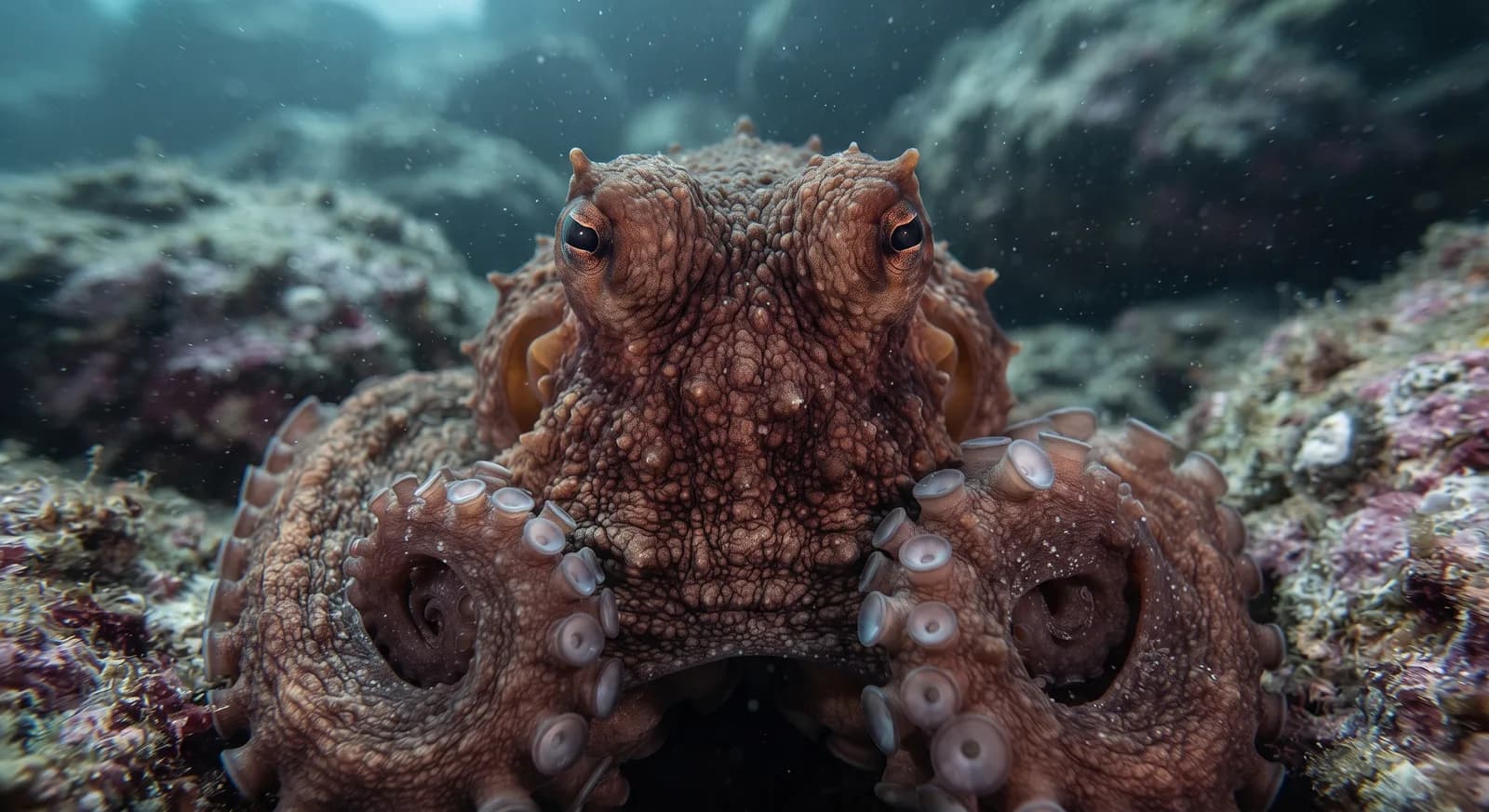
Cephalopods · Octopoda · Octopodidae
Giant Pacific Octopus
Enteroctopus dofleini
The species is abundant and widely distributed; it faces no significant short-term risk. See full glossary
For all that it is the largest octopus in the world, its life is surprisingly short: barely three to five years, a span governed by the optic gland, an endocrine organ that triggers senescence after breeding.
Weight
10 kg – 50 kg
Size
up to 5 m
Lifespan
4 years
Diet
Carnivore
Feeds mainly on other animals.
Activity
Nocturnal
Active mainly at night.
Social structure
Solitary
Lives and hunts alone, joining others only to breed.
Sighting difficulty
Easy
Fun facts
- The female stops feeding for the months she spends tending her eggs, and starves to death shortly after they hatch.
- It eats fish, crustaceans, molluscs, echinoderms and other octopuses.
- It lives in temperate coastal waters all around the rim of the North Pacific.
- anatomíaIt can change the colour and texture of its skin in a fraction of a second thanks to specialised cells called chromatophores.
Life cycle & biology
- Skeleton type
- Invertebrate - no skeleton (soft-bodied cephalopod)
- Habitat & environment
- Temperate coastal waters around the whole rim of the North Pacific, from Baja California to Alaska, Japan and Korea
- Birth weight
- ~6 mm long at hatching, the size of a grain of rice
- Size at birth
- ~6 mm long at hatching
- Sexual maturity
- 2-5 years
- Gestation / incubation
- 5-7 months of incubation, guarded throughout by the female, who does not feed
- Litter / clutch size
- 20,000 to 100,000 eggs per clutch (up to 400,000 according to some sources)
- Lifespan in captivity
- 3-5 years, much as in the wild
Sources consulted: TheSea.org; ScienceDirect; National Geographic; SeaDoc Society; Facts and Details; ADFG Alaska; California Sea Grant; Animal Diversity Web; UW Interactive Oceans
Where to find it
See its range on the interactive mapWhere to watch it
Parques y spots de buceo donde se ha documentado esta especie — se muestran 20 de 29 documentados.
Related species
Other species in the catalogue with the most in common with Giant Pacific Octopus — same habitat, park, country, tags or family.
Greater Blue-ringed Octopus
Hapalochlaena lunulata
Horn Shark
Heterodontus francisci
 Least Concern
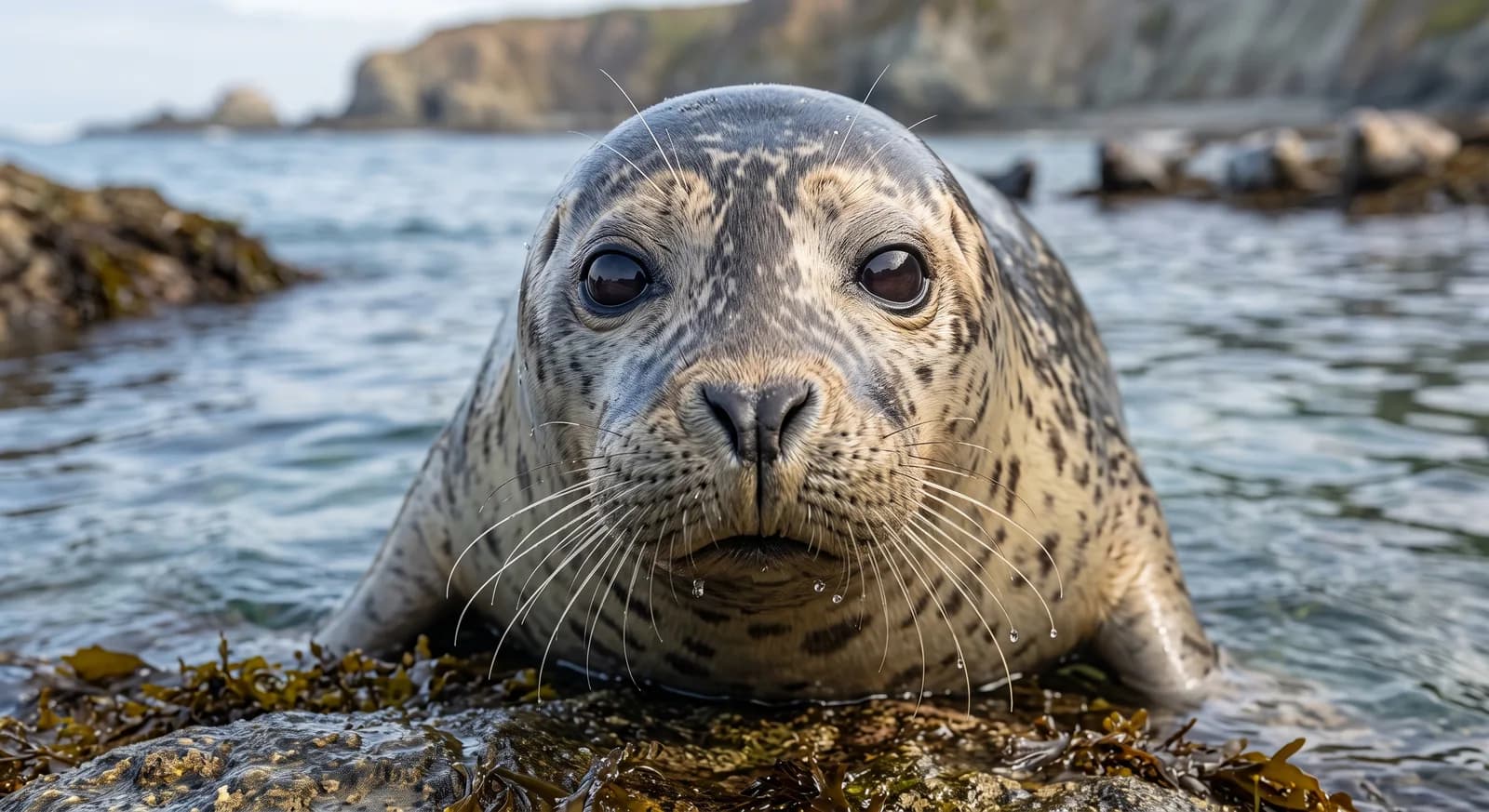
Harbor Seal
Phoca vitulina
Bluntnose Sixgill Shark
Hexanchus griseus
Pacific Hagfish
Eptatretus stoutii
Cuvier's Beaked Whale
Ziphius cavirostris
Keep exploring
Based on what we already know about giant pacific octopus.
Comments
Share an experience, a fun fact or a tip for seeing the giant pacific octopus.
Be the first to comment.