Species group · Cephalopods
Octopuses
WAnimals has 7 species of octopus, spread across 3 families (Amphitretidae, Octopodidae, Opisthoteuthidae).
- 7 species
- 3 families
- 162 countries
- 86 parks
- Weight
- 80 g – 50 kg
- Length
- 10 cm – 5 m
- Lifespan
- 1 – 4 years
Ranges calculated from the entries that record the figure, not from all 7.
All 7 species of octopuses on WAnimals
Each one has its own full entry. This group does not replace them: it brings them together.
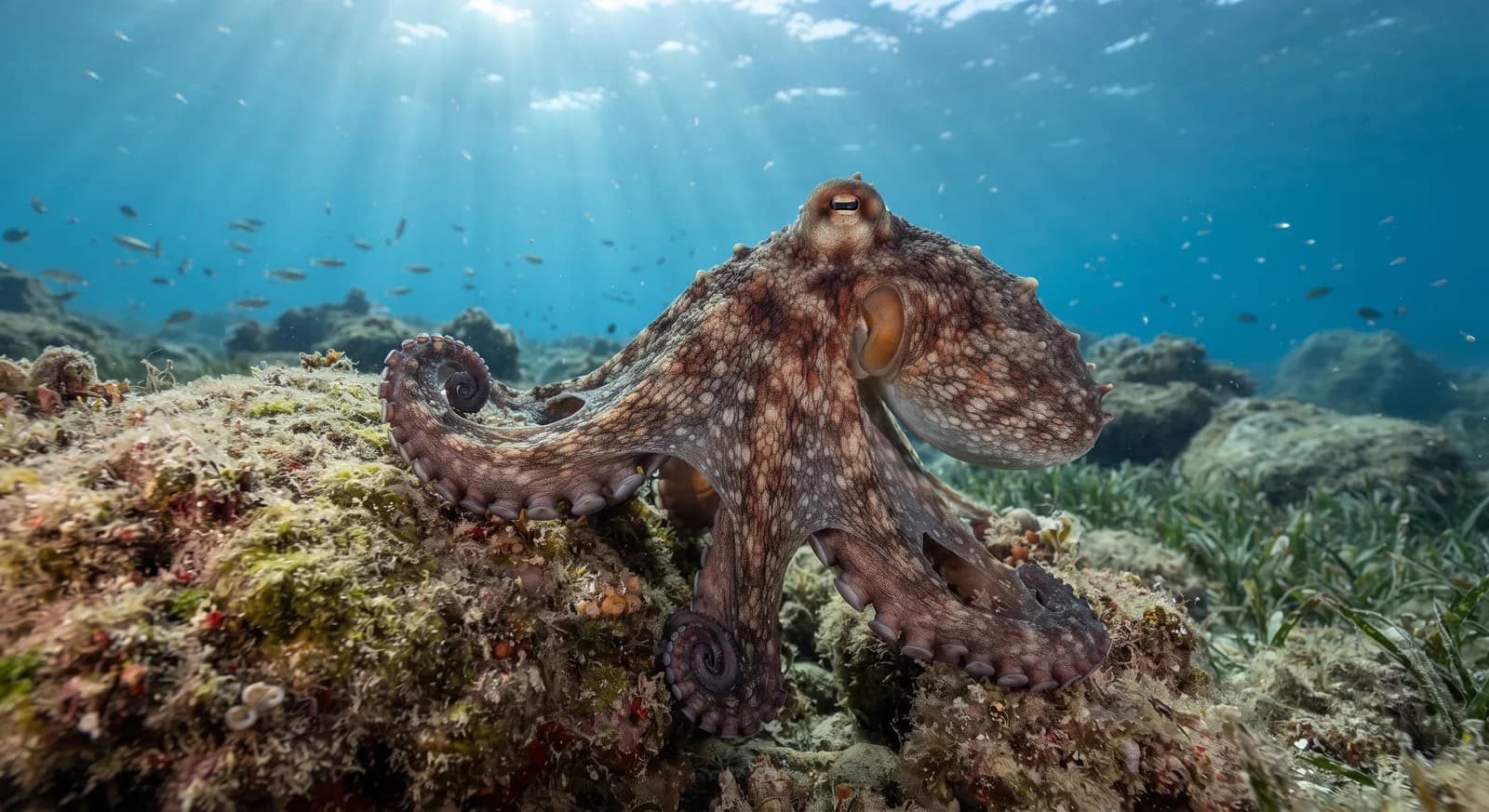 Not Evaluated
Common Octopus
Octopus vulgaris
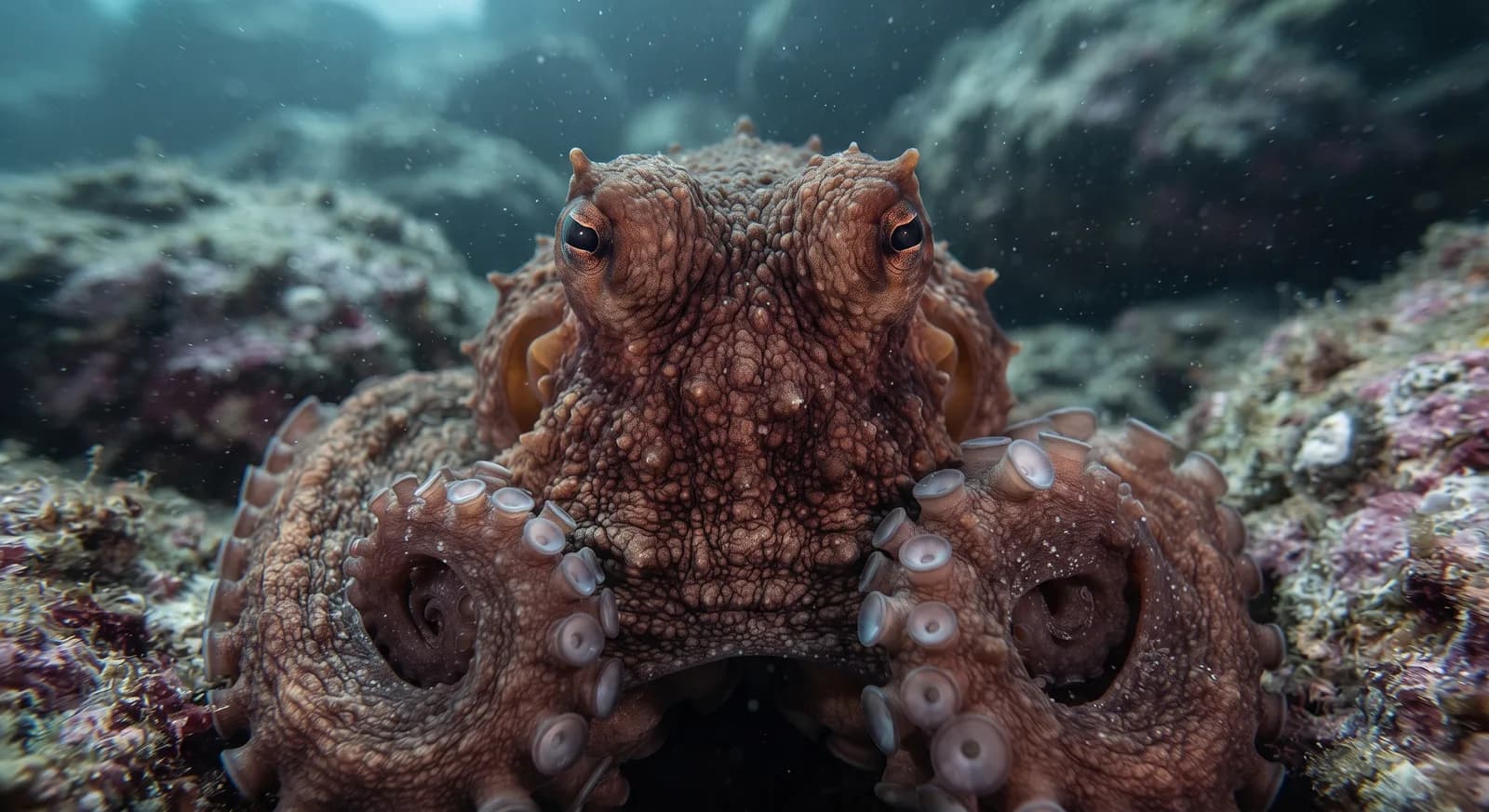 Least Concern
Giant Pacific Octopus
Enteroctopus dofleini
Day Octopus
Octopus cyanea
Greater Blue-ringed Octopus
Hapalochlaena lunulata
Mimic Octopus
Thaumoctopus mimicus
Telescope Octopus
Amphitretus pelagicus
Dumbo Octopus
Grimpoteuthis discoveryi
Conservation status
No species documented in this group is genuinely at risk according to the IUCN, with the data available today.
See the global conservation statusWhere they live
Recorded in 162 countries. The ones with the most species in the group:
Where to see them
- Arrecifes de Tubbataha3 species
- Bali Barat3 species
- Bunaken3 species
- Karimunjawa3 species
- Komodo3 species
- Wakatobi3 species
- Cape Range2 species
- Gran Barrera de Coral2 species
- Ningaloo2 species
- Setonaikai2 species
- Whitsunday Islands2 species
- Al Hoceima1 species
- Alor Archipelagodiving
- Ambon (Twilight Zone)diving
- Amed y Jemeluk Baydiving
- Anilaodiving
- Bunaken Marine Parkdiving
- Bunutandiving
Did you know…
It lives only 12 to 15 months, breeding just once in its lifetime.
From Common Octopus
A female can lay between 100,000 and 500,000 eggs in a single clutch.
From Common Octopus
It can solve complex problems and use tools, a rarity among invertebrates.
From Common Octopus
The female stops feeding for the months she spends tending her eggs, and starves to death shortly after they hatch.
It eats fish, crustaceans, molluscs, echinoderms and other octopuses.
It lives in temperate coastal waters all around the rim of the North Pacific.
It can change its colour, texture and body pattern in under a second to stay hidden as it moves about the sea floor by day.
From Day Octopus
It has been documented hunting in collaboration with groupers and other reef fish: the fish points out the hidden prey and the octopus extracts it from the crevice.
From Day Octopus