One of the 7 octopuses on WAnimals
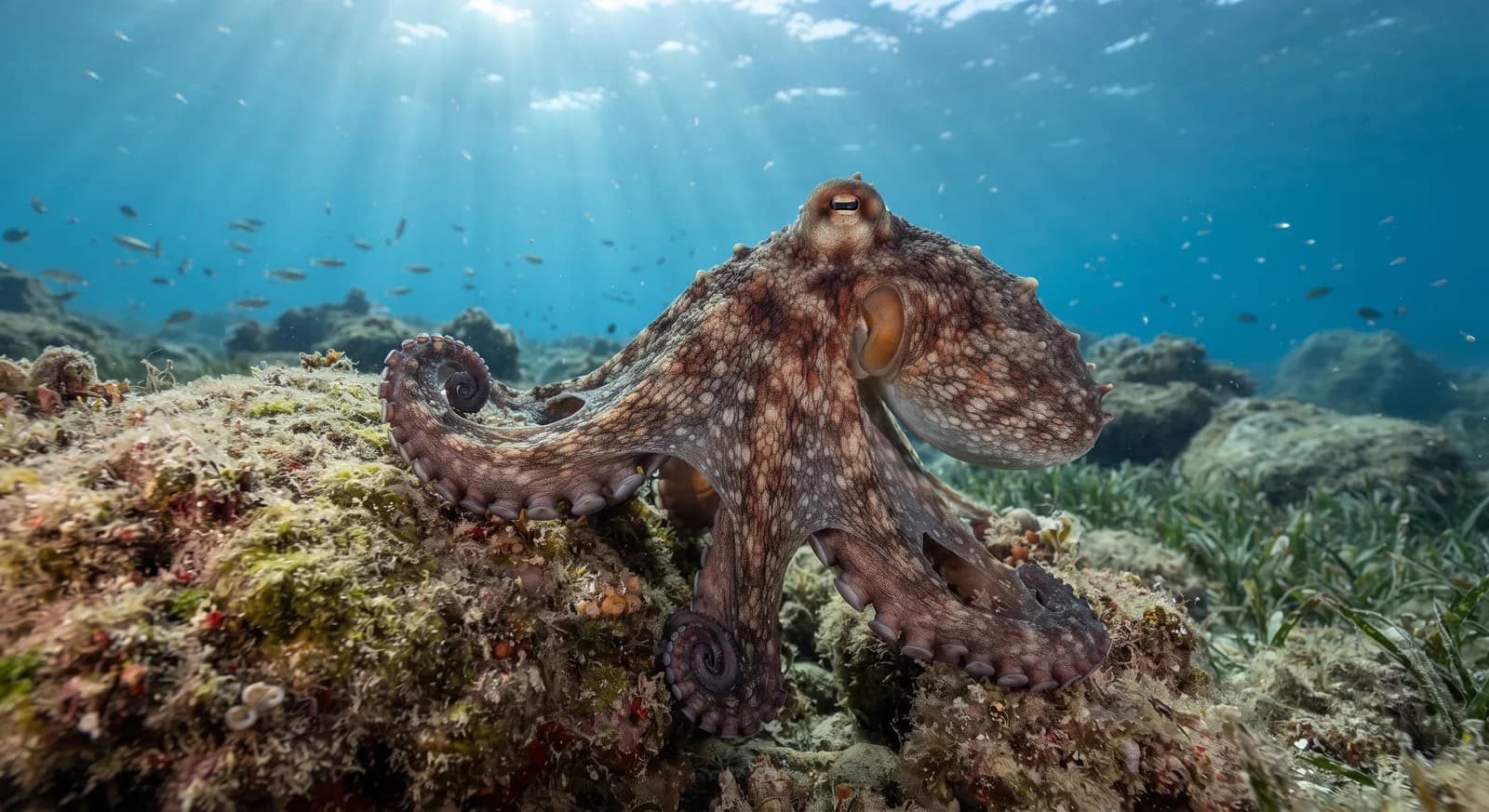
Cephalopods · Octopoda · Octopodidae
Common Octopus
Octopus vulgaris
It has not yet been assessed against the IUCN criteria. See full glossary
It is semelparous: the male dies shortly after mating and the female dies once she has guarded her eggs through to hatching. It is one of the most intelligent invertebrates known, able to solve problems and use tools.
Weight
3 kg – 5 kg
Size
30 cm – 91 cm
Lifespan
1 years
Diet
Carnivore
Feeds mainly on other animals.
Activity
Crepuscular
Active above all at dawn and dusk.
Social structure
Solitary
Lives and hunts alone, joining others only to breed.
Sighting difficulty
Unknown
Fun facts
- It lives only 12 to 15 months, breeding just once in its lifetime.
- A female can lay between 100,000 and 500,000 eggs in a single clutch.
- It can solve complex problems and use tools, a rarity among invertebrates.
- anatomíaIt has three hearts and blue blood, because it carries oxygen with copper-based haemocyanin rather than iron-based haemoglobin.
- inteligenciaIt can solve mazes and open screw-top jars from the inside to reach food, behaviours used to study its intelligence.
- comportamientoIt builds small shelters on the seabed from stones and shells piled at the mouth of its den, sometimes reusing litter such as bottle caps or flowerpots.
- inteligenciaIt can unscrew jar lids by turning them from the inside to reach the food within, a skill routinely used in cognitive enrichment studies in aquariums.
Life cycle & biology
- Skeleton type
- Invertebrate - no internal or external skeleton, soft body supported by a hydrostatic musculature
- Habitat & environment
- Rocky and sandy bottoms of the Mediterranean, the eastern Atlantic and the coasts of Japan, between 1 and 200 metres deep
- Size at birth
- Eggs the size of a grain of rice; the newly hatched paralarvae are microscopic and planktonic
- Sexual maturity
- Reaches sexual maturity within a few months, inside its single year of reproductive life
- Gestation / incubation
- Embryonic development of 23-25 days at 25 °C (which can stretch to 4 months in water below 13 °C)
- Litter / clutch size
- 100,000 to 500,000 eggs per clutch
- Lifespan in captivity
- Up to ~25 months documented in the laboratory
Sources consulted: MarineBio; ScienceDirect (Octopus vulgaris chapter); The Cephalopod Page; OctoNation; Vedantu Biology
Where to find it
See its range on the interactive mapWhere to watch it
Parques y spots de buceo donde se ha documentado esta especie — se muestran 20 de 124 documentados.
Related species
Other species in the catalogue with the most in common with Common Octopus — same habitat, park, country, tags or family.
Murex
Bolinus brandaris
Blue Glaucus
Glaucus atlanticus
 Not Evaluated
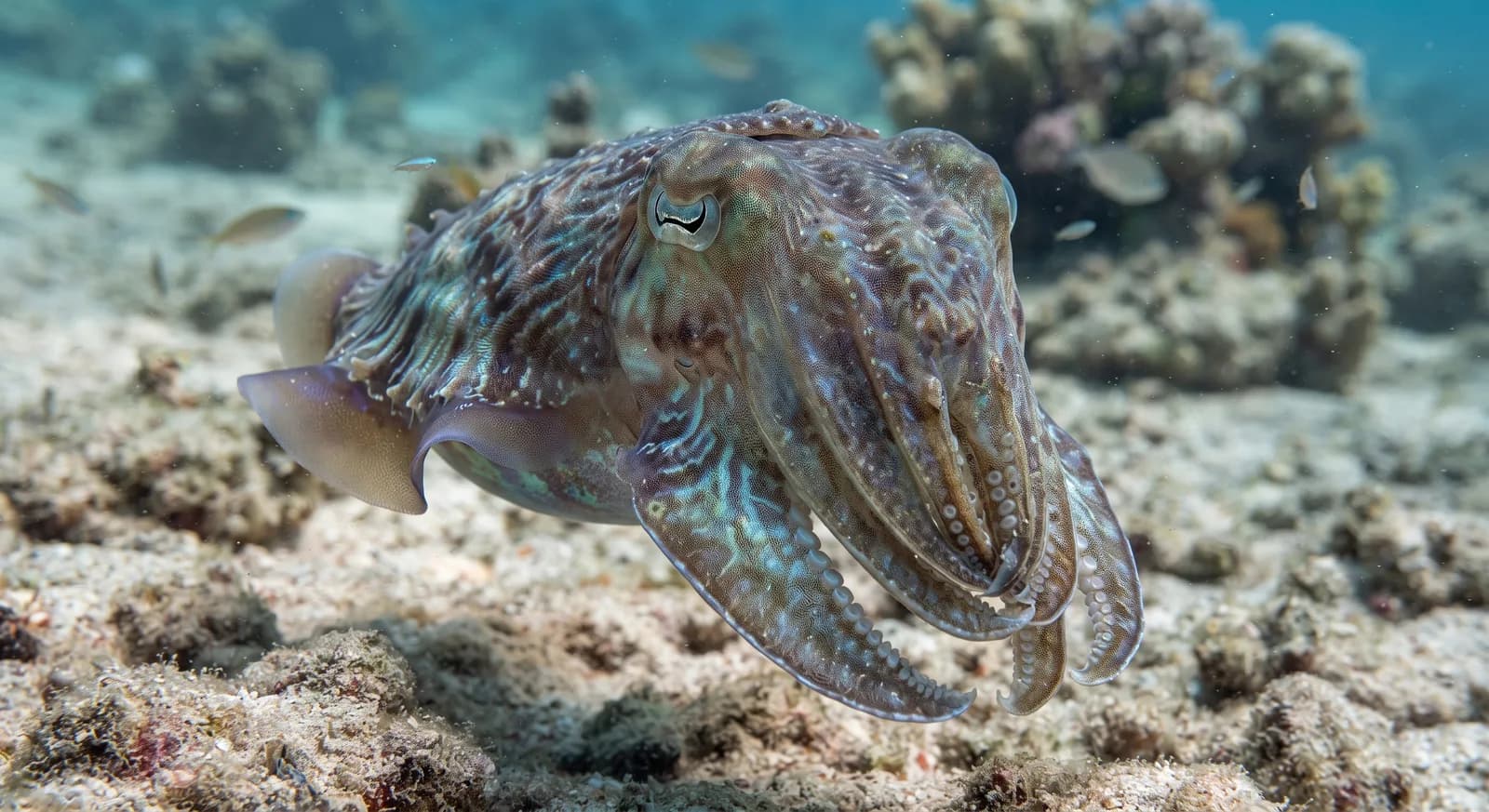
Common Cuttlefish
Sepia officinalis
Greater Argonaut
Argonauta argo
Common Keyhole Limpet
Diodora graeca
Atlantic Bobtail Squid
Sepiola atlantica
Keep exploring
Based on what we already know about common octopus.
Comments
Share an experience, a fun fact or a tip for seeing the common octopus.
Be the first to comment.