One of the 2 cuttlefishes on WAnimals
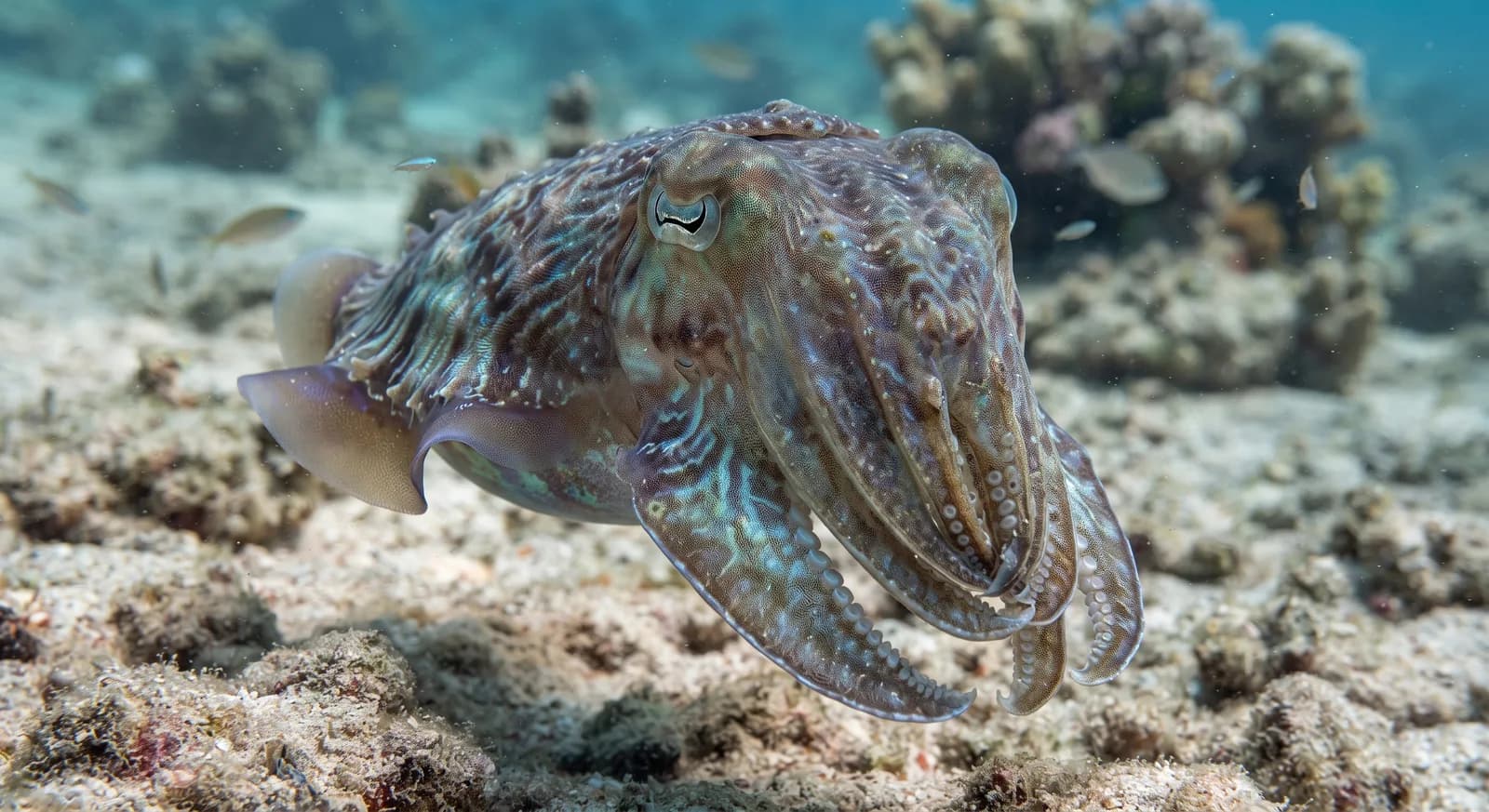
Cephalopods · Sepiida · Sepiidae
Common Cuttlefish
Sepia officinalis
It has not yet been assessed against the IUCN criteria. See full glossary
It can learn to recognise particular prey even before hatching, watching through the transparent shell of the egg with eyes that are already fully formed.
Weight
up to 4 kg
Size
0.8 cm – 49 cm
Lifespan
2 years
Diet
Carnivore
Feeds mainly on other animals.
Activity
Crepuscular
Active above all at dawn and dusk.
Social structure
Solitary
Lives and hunts alone, joining others only to breed.
Sighting difficulty
Unknown
Fun facts
- It can learn to recognise particular prey even before it hatches from the egg.
- It is semelparous: it dies after its one breeding season.
- It is one of the most commercially important cephalopods in European fisheries.
- comportamientoIt can send hypnotic bands of colour travelling across its skin to disorient prey or court a mate, a display known as the passing cloud.
- inteligenciaIt can pass versions of the Stanford marshmallow test of self-control, holding out for a better food reward.
Life cycle & biology
- Skeleton type
- Invertebrate - internal calcareous shell (cuttlebone), no external skeleton
- Habitat & environment
- Sand and mud bottoms of the Mediterranean, the North Sea and the eastern Atlantic, from the shore down to 200 m
- Birth weight
- An egg 8-10 mm across; a hatchling 7-8 mm long overall
- Size at birth
- 7 - 8 mm long overall at hatching
- Sexual maturity
- 14-18 months
- Gestation / incubation
- 30-90 days of egg development (depending on water temperature)
- Litter / clutch size
- 150 to 4,000 eggs per female, depending on her size
Sources consulted: SeaLifeBase; MarineBio; Animalia.bio; Animal Diversity Web; MarLIN; PMC (age estimation study); Academia.edu (cuttlebone aging study)
Where to find it
See its range on the interactive mapBest time: From March to June, during the breeding season, when it moves into shallow weedy bottoms to lay its eggs in clusters.
Where to watch it
Parques y spots de buceo donde se ha documentado esta especie — se muestran 20 de 112 documentados.
Related species
Other species in the catalogue with the most in common with Common Cuttlefish — same habitat, park, country, tags or family.
Murex
Bolinus brandaris
Blue Glaucus
Glaucus atlanticus
 Not Evaluated
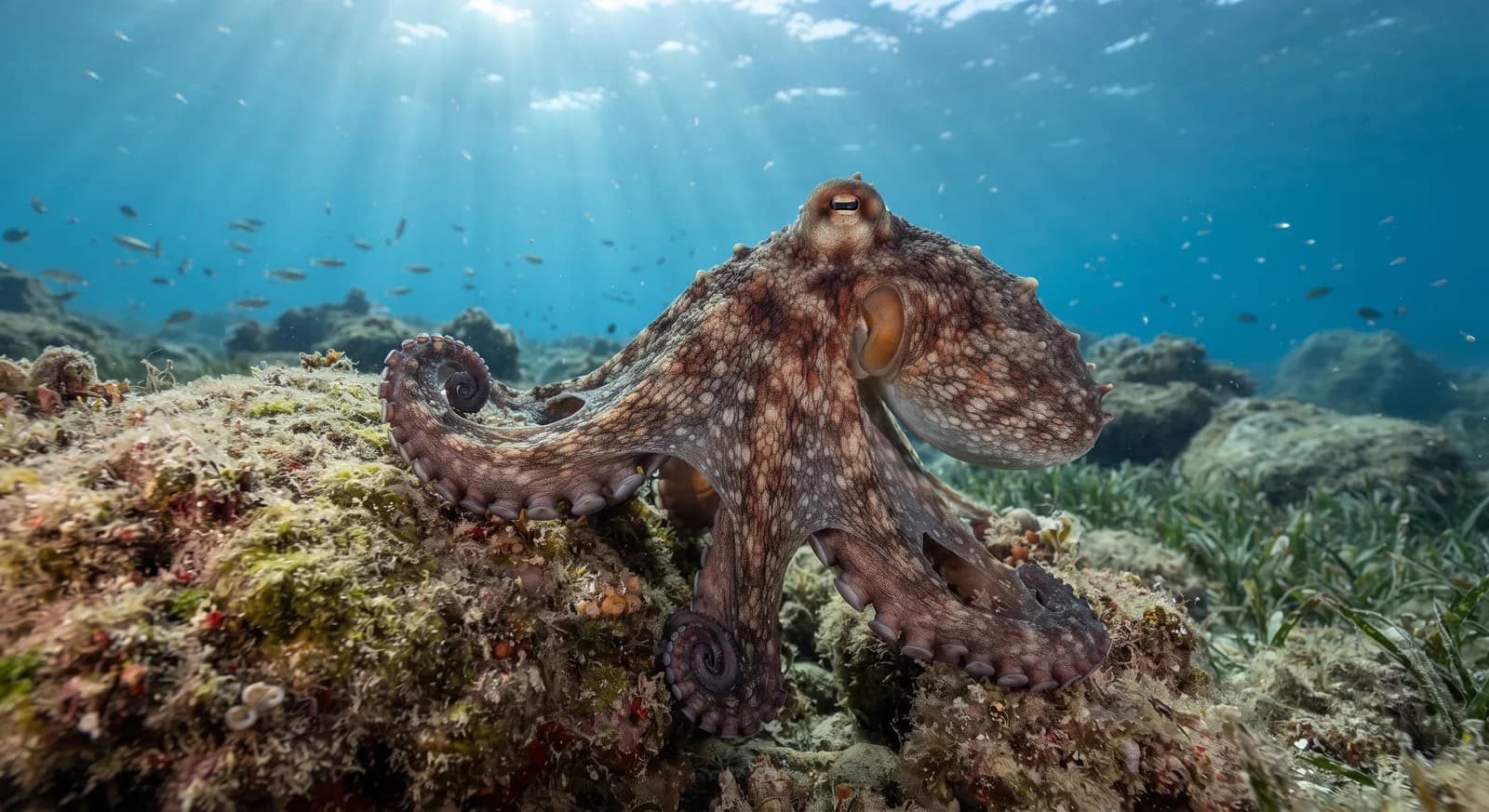
Common Octopus
Octopus vulgaris
Greater Argonaut
Argonauta argo
Common Keyhole Limpet
Diodora graeca
Atlantic Bobtail Squid
Sepiola atlantica
Keep exploring
Based on what we already know about common cuttlefish.
Comments
Share an experience, a fun fact or a tip for seeing the common cuttlefish.
Be the first to comment.