Gastropods · Nudibranchia · Glaucidae
Blue Glaucus
Glaucus atlanticus
It has not yet been assessed against the IUCN criteria. See full glossary
A pelagic nudibranch barely a few centimetres long that floats upside down at the surface of the ocean thanks to a bubble of air it swallows and holds in its stomach. Its underside, turned towards the sky, is silvery blue, and its back, turned towards the depths, is grey: a double camouflage that hides it from above and from below. It feeds on stinging floating organisms such as the Portuguese man o' war.
Size
1 cm – 4 cm
Diet
Carnivore
Feeds mainly on other animals.
Social structure
Solitary
Lives and hunts alone, joining others only to breed.
Sighting difficulty
Unknown
Fun facts
- defensaIt floats upside down at the ocean surface and stores intact stinging cells from the Portuguese men o' war it eats, reusing them, far more concentrated, as a defence of its own.
- It floats foot upwards, so that the silvery blue face we see is in fact its underside.
- It does not swim: it drifts with the wind and the currents, which is why it appears all at once on the beaches after storms.
- It floats on its back by swallowing air: it keeps a bubble in its stomach that holds it at the surface, and it drifts at the mercy of the wind just like the Portuguese man o' war it feeds on.
- It eats Portuguese men o' war and other siphonophores, and it does not digest their nematocysts: it keeps them intact and concentrates them at the tips of its cerata, where it can fire them again.
- And concentrate them it does: the sting of a blue glaucus can be more painful than that of the man o' war itself, because it accumulates the most potent cnidocytes it has been selecting.
- Its colouring is inverted compared with that of almost every other animal, and with good reason: since it floats on its back, the deep blue faces upwards, camouflaging it against the sea when seen from the air, and the silver faces downwards, camouflaging it against the surface when seen from the water.
- It is a hermaphrodite, and all individuals can lay eggs after mating.
- Its mass strandings on beaches are a recurring news story, and it is best not to touch it: it goes on stinging even when dead.
Life cycle & biology
- Skeleton type
- Invertebrate - no rigid skeleton (mollusc)
- Habitat & environment
- Surface of the open ocean in temperate and tropical waters
Sources consulted: Thompson y Bennett (1970), Journal of Experimental Biology; Museo Australiano; Valdés y Campillo
Where to find it
See its range on the interactive mapBest time: After several days of onshore wind, when it washes up on the beaches
Where to watch it
Parques y spots de buceo donde se ha documentado esta especie — se muestran 20 de 117 documentados.
Related species
Other species in the catalogue with the most in common with Blue Glaucus — same habitat, park, country, tags or family.
Murex
Bolinus brandaris
 Not Evaluated
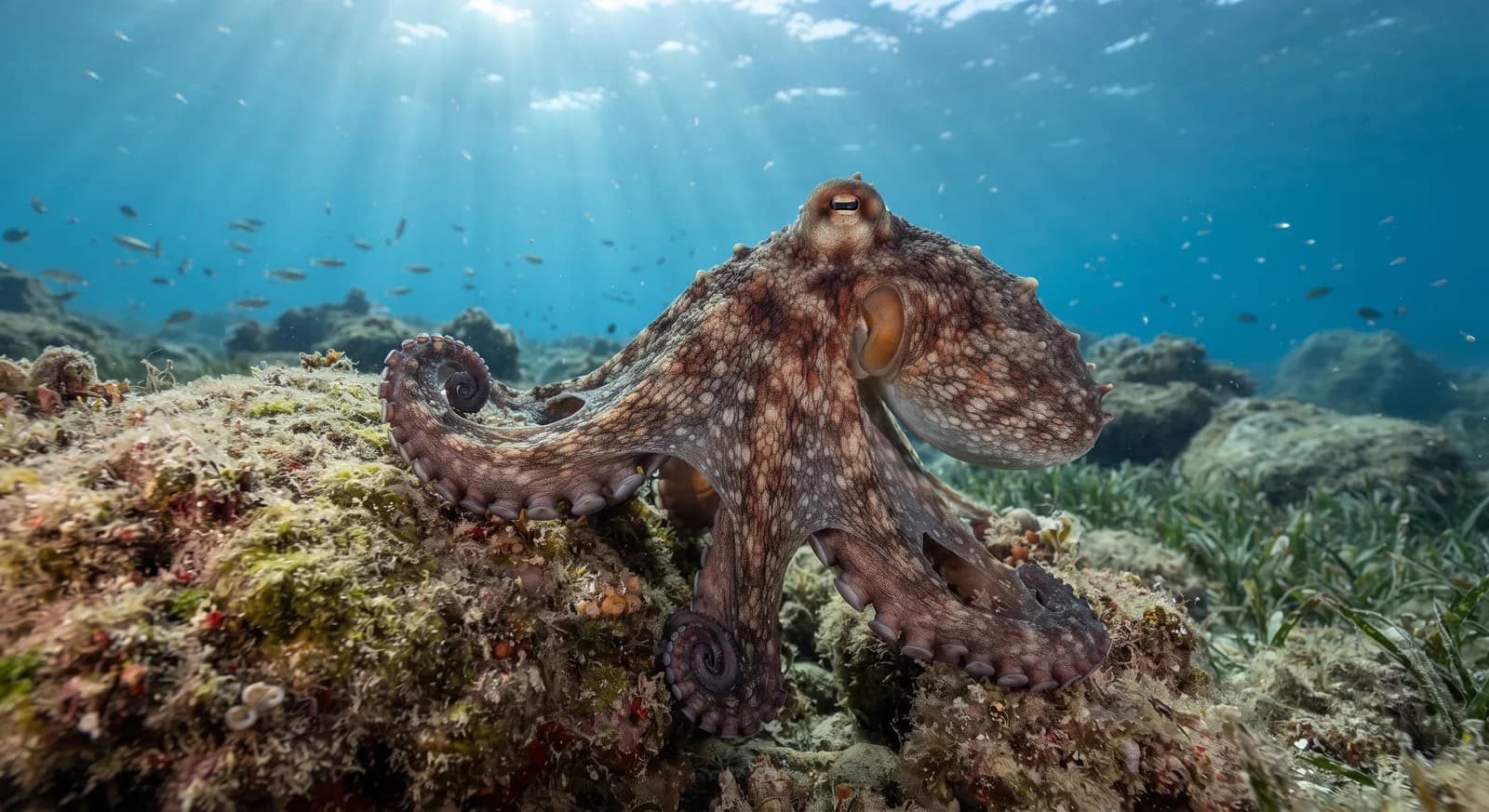
Common Octopus
Octopus vulgaris
 Not Evaluated
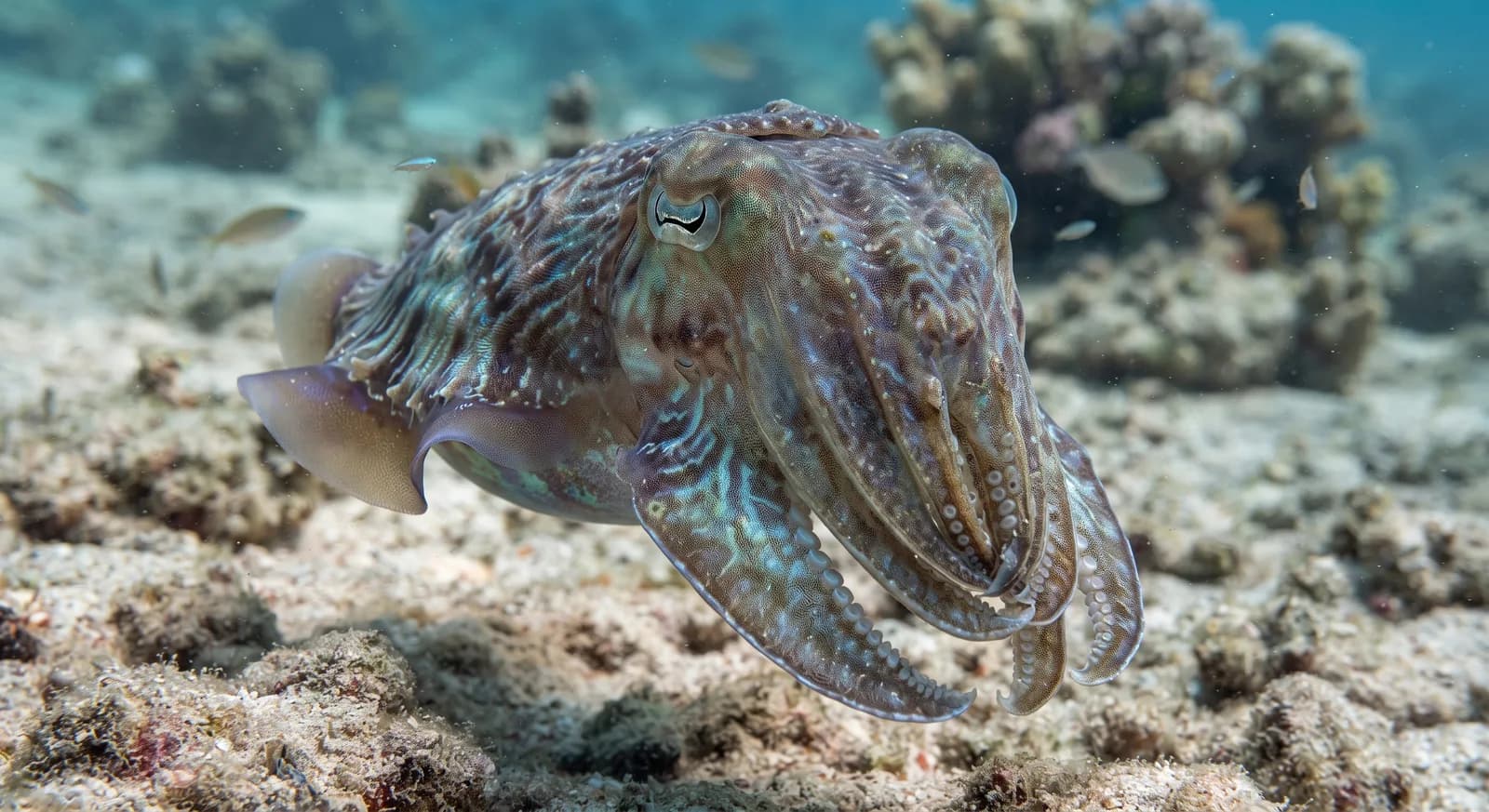
Common Cuttlefish
Sepia officinalis
Greater Argonaut
Argonauta argo
Horse Conch
Pleuroploca gigantea
Common Keyhole Limpet
Diodora graeca
Keep exploring
Based on what we already know about blue glaucus.
Comments
Share an experience, a fun fact or a tip for seeing the blue glaucus.
Be the first to comment.