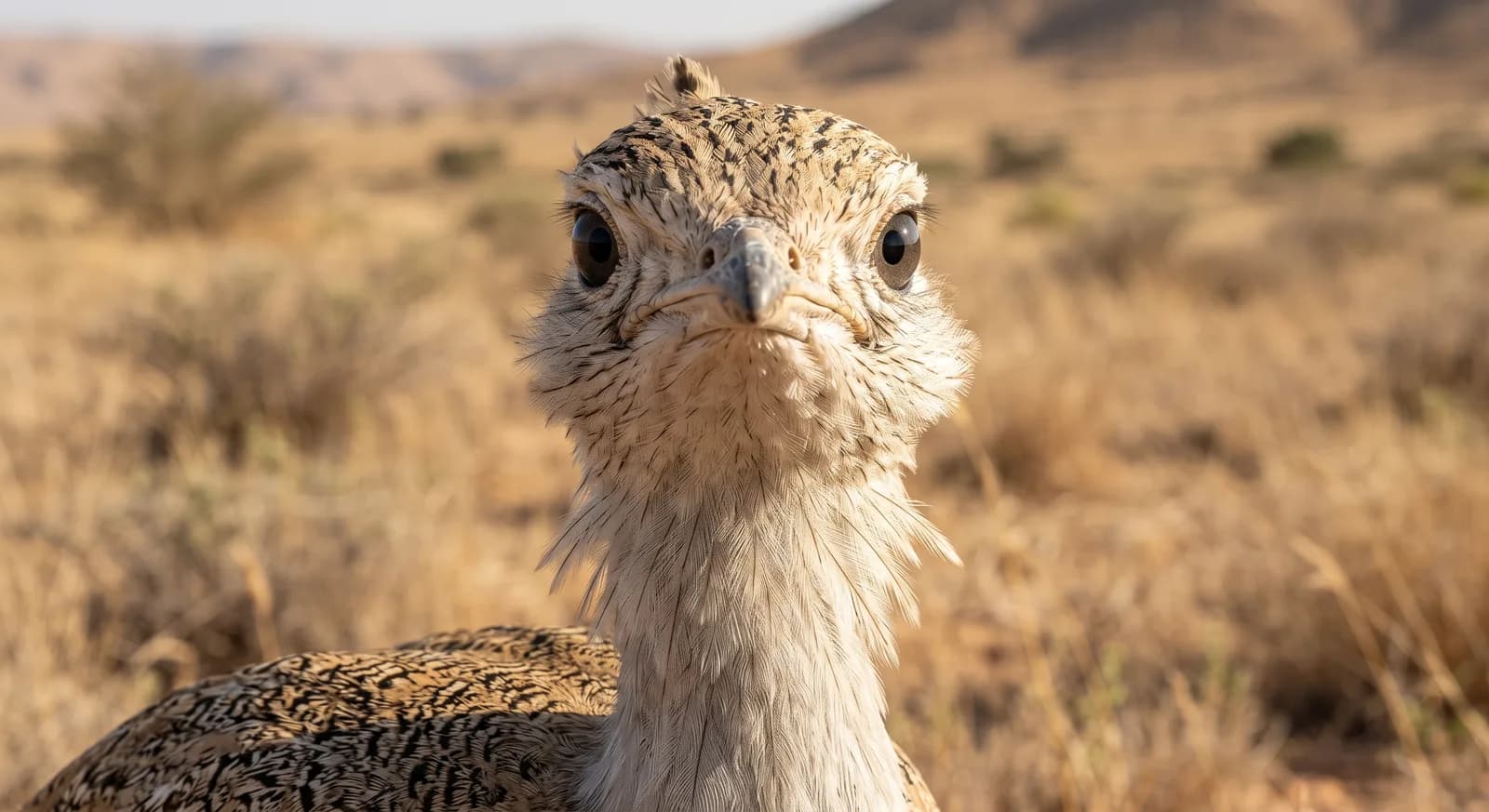
 Vulnerable
Houbara Bustard
Chlamydotis undulata
A steppe reserve near Palmyra created to reintroduce the Arabian oryx and other species of the Syrian desert.
Climate
Arid / desert, Temperate, Mediterranean, Mountain
Plan your visit
Al-Badia steppe with reintroduced ungulates
The Al-Talila Reserve lies some 30 km south-east of Palmyra, in the heart of the Syrian desert, and was delimited by the Government of Syria in 1991 by digging a 57 km perimeter trench. It covers around 30,000 hectares of flat or gently rolling terrain, with localised dunes, depressions and drainage lines that feed into relatively large wadis. It forms part of Al-Badia, the vast arid ecosystem that covers around half of Syrian territory and that has been degrading for decades through overgrazing.
Despite the aridity — less than 200 mm of rain a year — the variety of soils supports a notable plant diversity, above all in its perennial component: Artemisia herba-alba, Achillea conferta and Achillea fragrantissima dominate different sectors, Calligonum comosum and Stipagrostis plumosa colonise the stabilised dunes, and Anabasis syriaca and Seidlitzia rosmarinus occupy the more saline soils. That plant base is what made Al-Talila a suitable place to reintroduce ungulates.
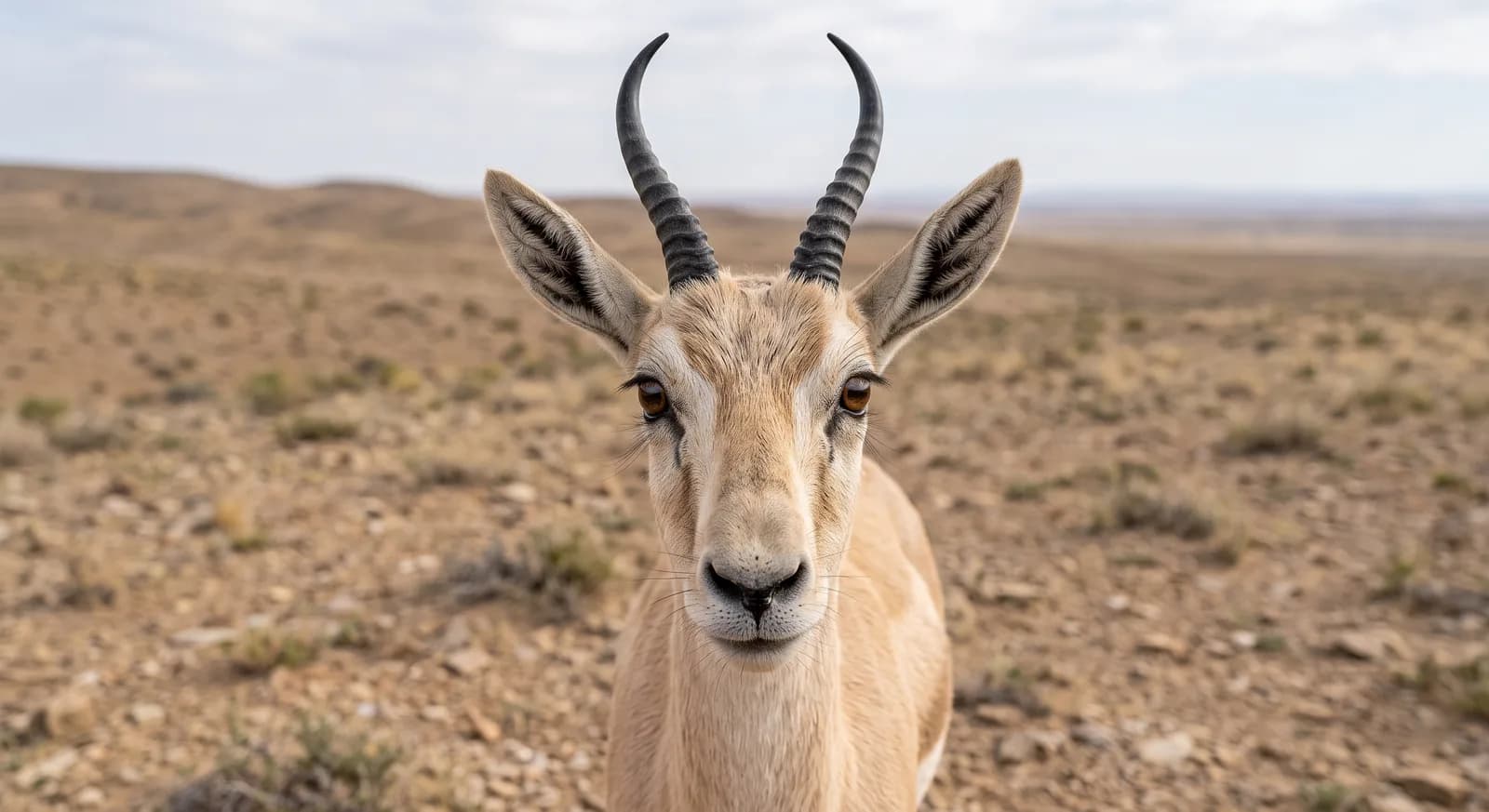
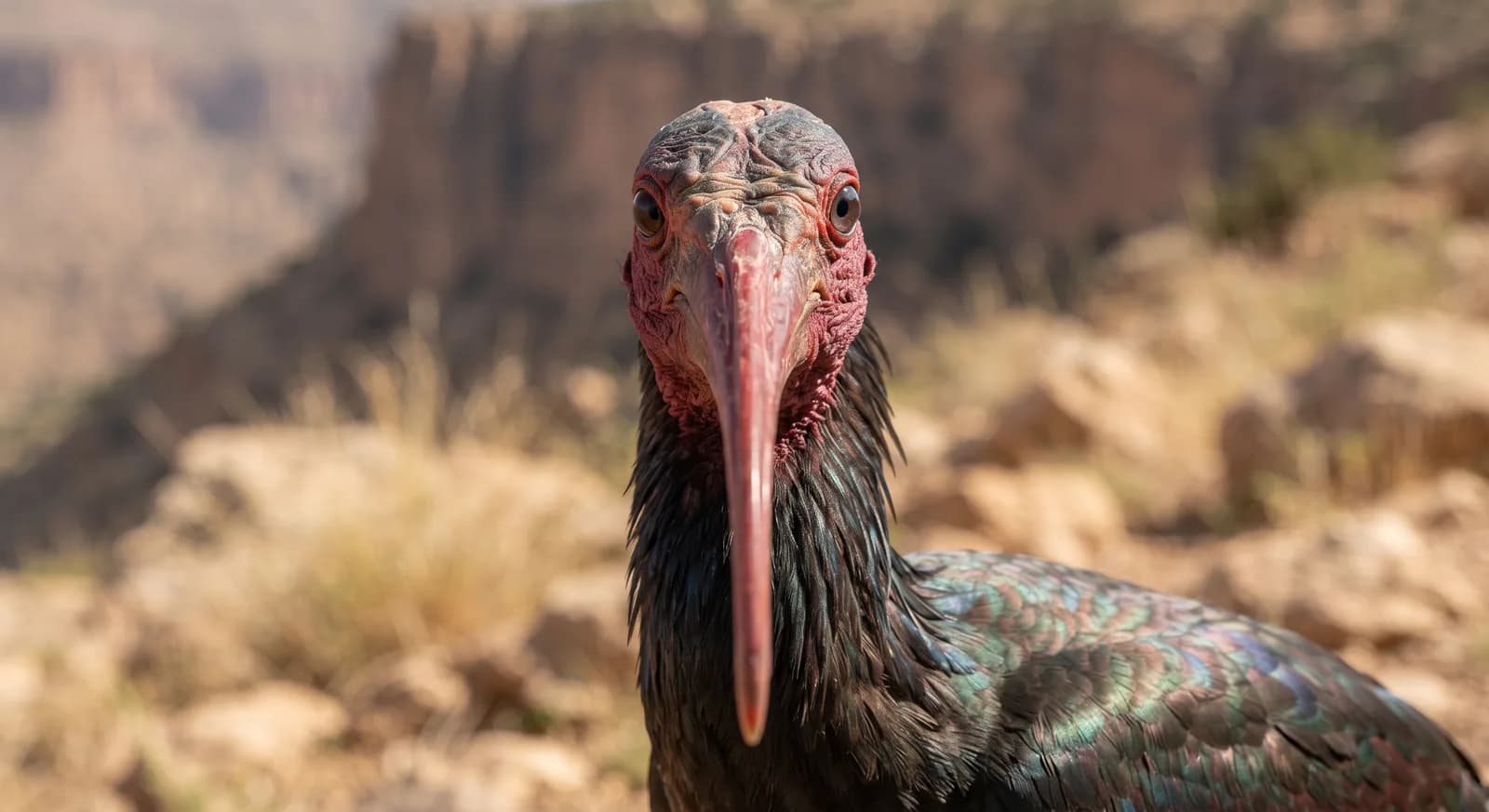
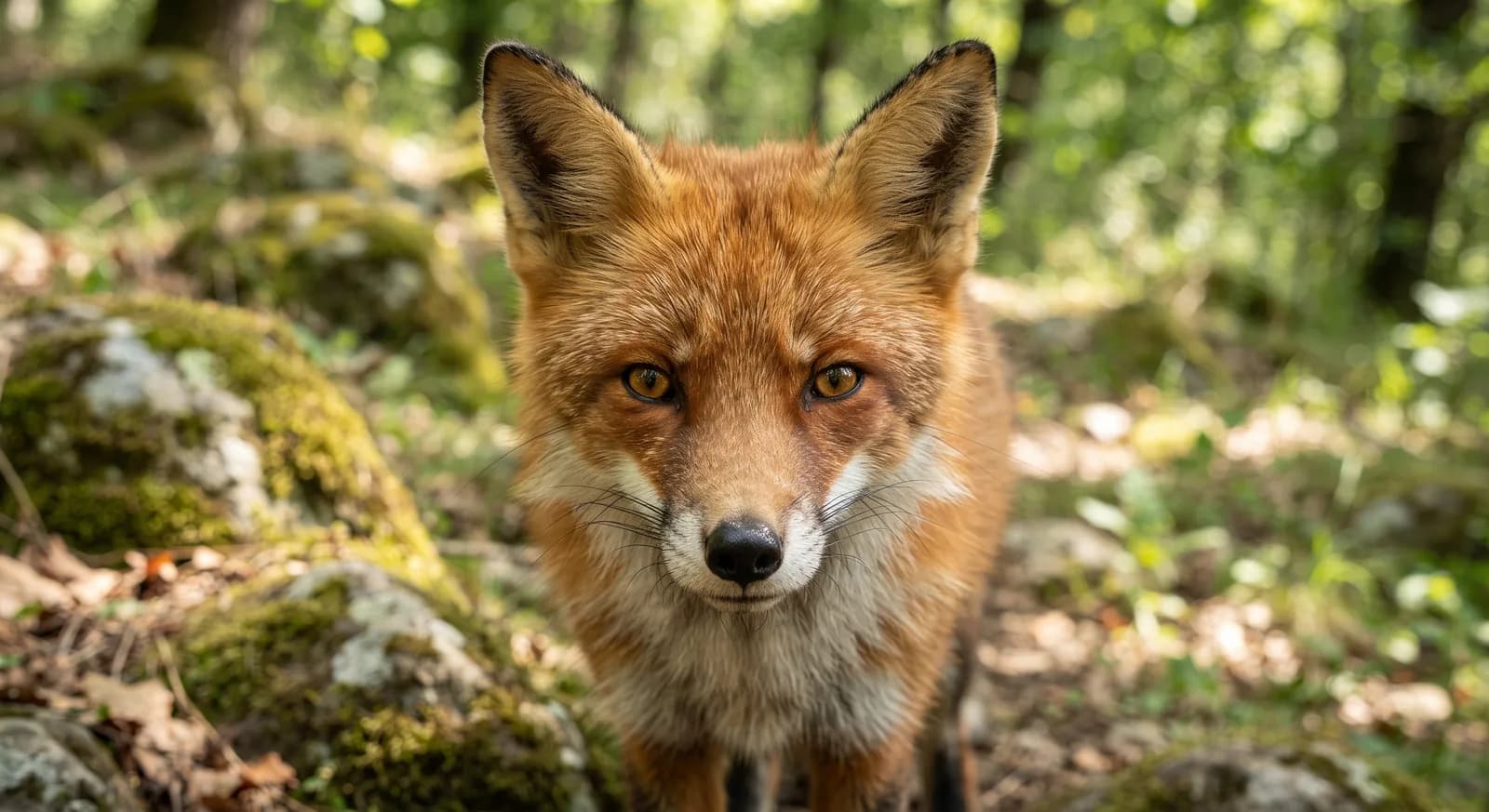
The recovery project, carried out by the FAO with Italian funding between 1996 and 2004, combined staff training, biodiversity inventory, management plans and the effective reintroduction of gazelles and Arabian oryx, which began arriving in 1996. A release area of some 10 km² was set up so that the animals could acclimatise in near-free conditions before occupying the whole reserve. The gazelle, common in the Syrian steppe until the 1950s, had been all but wiped out with the arrival of vehicles and modern weapons; of the oryx there was no living memory in the area, only a 2,000-year-old stone statue at the doors of the Palmyra museum. The reserve is also home to fox, wolf, jackal, wildcat, hare and reptiles, and its surroundings were the setting for the rediscovery in 2002 of a small colony of northern bald ibis, one of the most threatened birds in the world.
Threatened:,,,
Ecosystems found in Syria, where Al-Talila Nature Reserve lies.
Which other parks are like this one?
Same type of protected area: Nature Reserve
Same type of protected area: Nature Reserve
Same type of protected area: Nature Reserve
Based on what we already know about this park.
Same type of protected area: Nature Reserve

 Israel
 Namibia
 Jordan