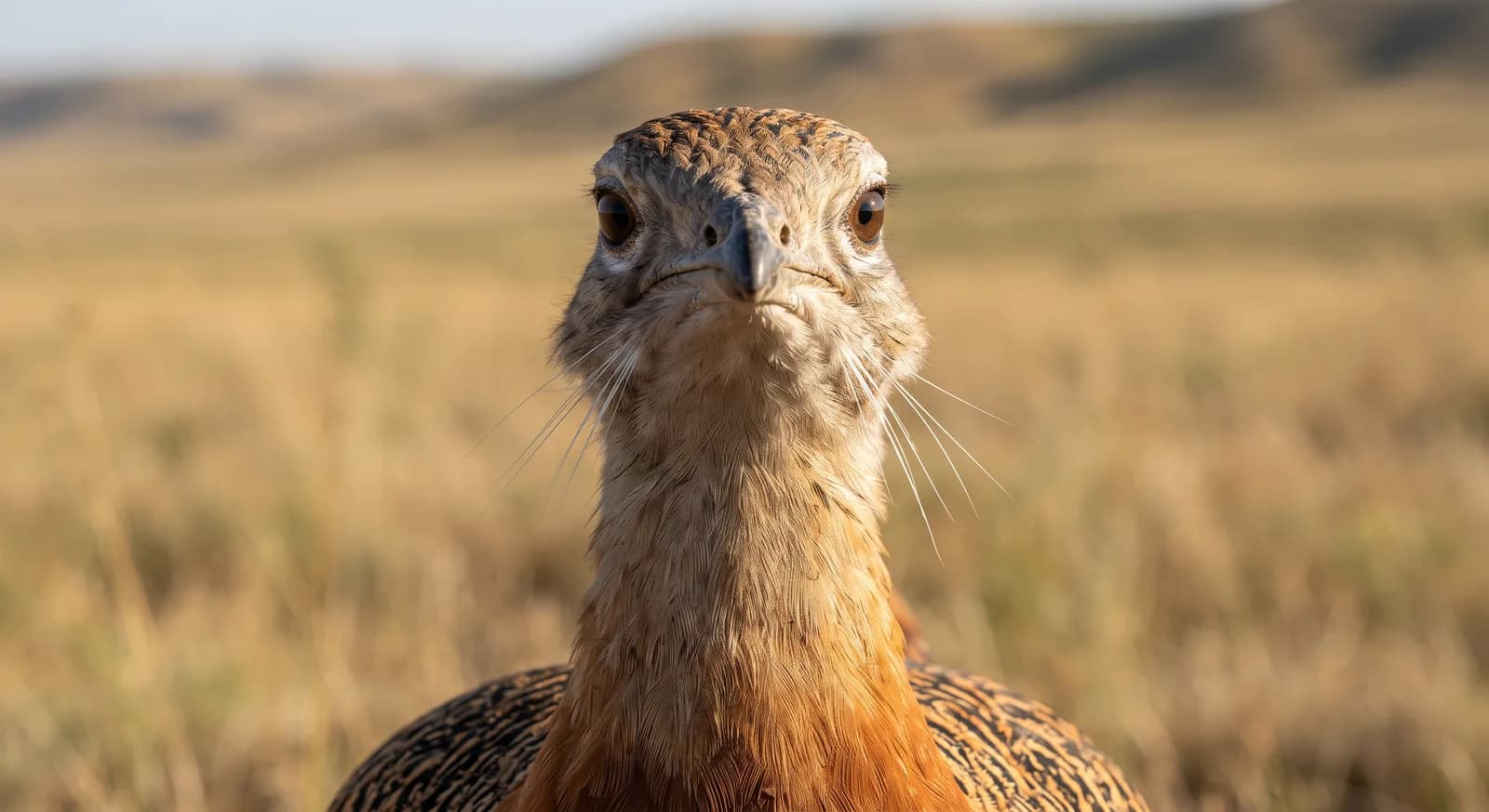
One of the 3 bustards on WAnimals
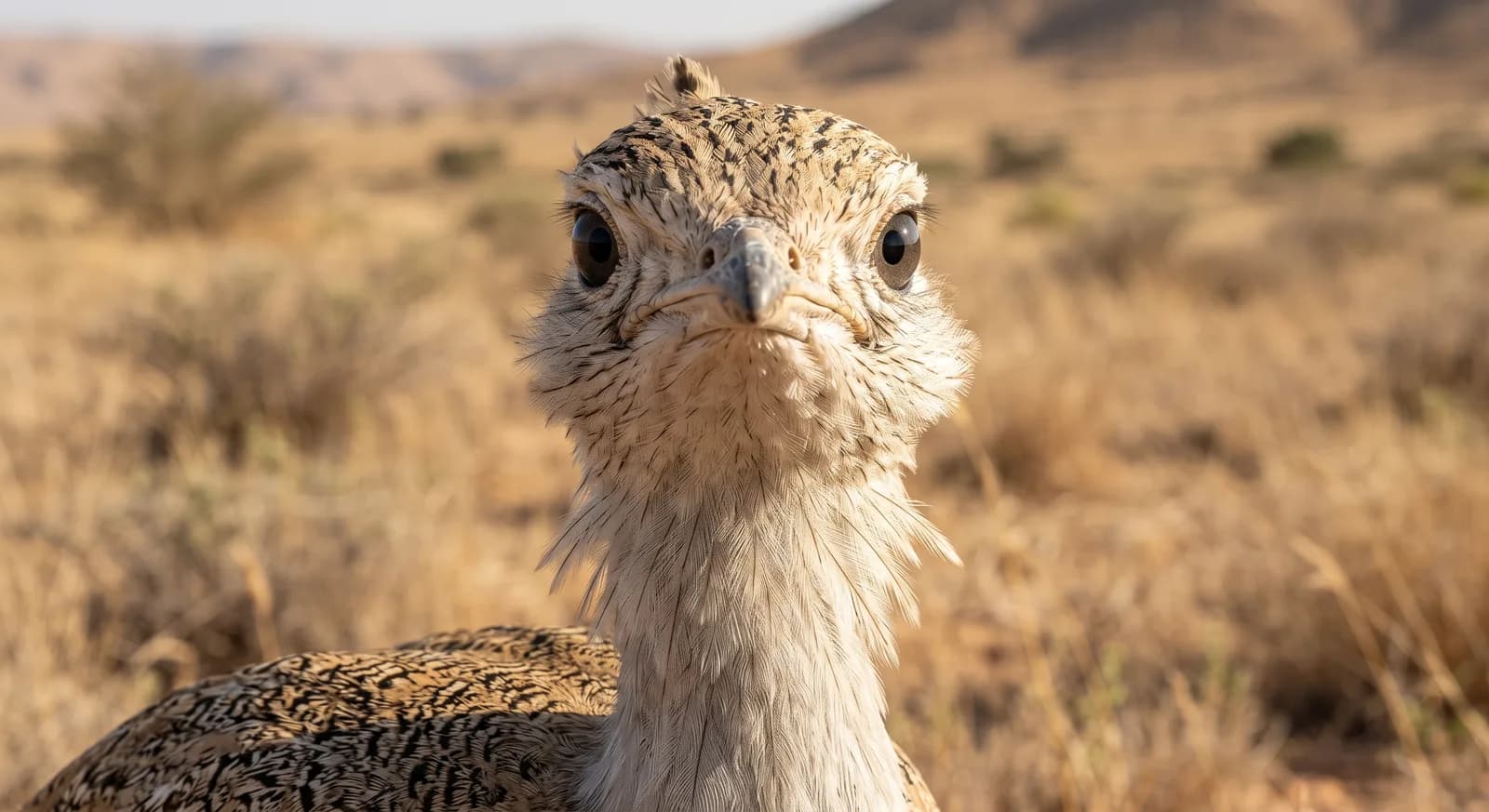
Birds · Otidiformes · Otididae
Chlamydotis undulata
At high risk of extinction in the wild over the medium term.
A large steppe bird with long, sturdy legs and a long neck, sand-coloured above and white below. It sports two long "whiskers" of black feathers on either side of the neck, more obvious in summer, and an erectile crest on the head. The edges of the wings are black.
Weight
1.6 kg on average
Size
55 cm – 65 cm
Diet
Omnivore
Combines animal and plant food depending on availability.
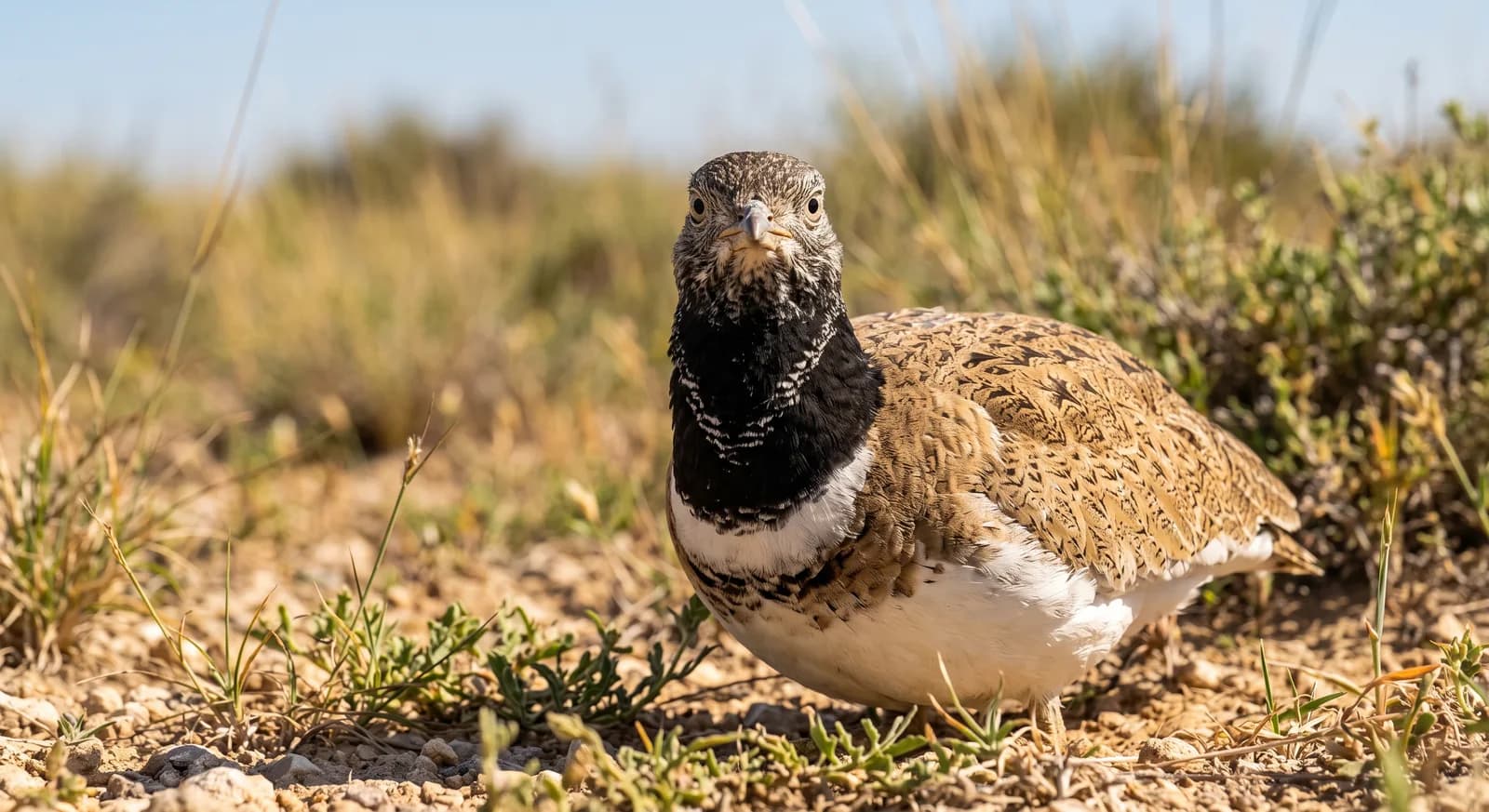
Activity
Diurnal
Active mainly during the day.
Social structure
Solitary
Lives and hunts alone, joining others only to breed.
Sighting difficulty
Moderate
Estimated population
The Canarian subspecies was estimated at some 508 birds in 2023: 388 on Lanzarote, 108 on Fuerteventura and 12 on La Graciosa. It is one of the lowest figures since 1994
AI-generated images: illustrations, not photographs.
Sources consulted: IUCN Red List; Martín et al. 1997, Ardeola 44(1); Carrascal (censos de 2020 y 2023); GREFA (seguimiento anual); Libro Rojo de las Aves de España; Suárez-Santana et al. 2024, Veterinary Sciences 11(7); Banco de Datos de Biodiversidad de Canarias
Best time: All year round on Fuerteventura, Lanzarote and La Graciosa; the males' courtship is most spectacular in spring
Parks and dive sites where this species has been documented.
Other species in the catalogue with the most in common with Houbara Bustard — same habitat, park, country, tags or family.
The houbara bustard is classified as vulnerable. Organisations such as the IUCN, WWF and the Wildlife Conservation Society work specifically on its conservation and that of its habitat; looking into their programmes is a good starting point if you want to get involved.
It's documented in 3 protected areas — one reason why protecting these places matters for its conservation.
Based on what we already know about houbara bustard.
Share an experience, a fun fact or a tip for seeing the houbara bustard.
Be the first to comment.
The pins mark the parks where its presence is documented.