One of the 3 bustards on WAnimals
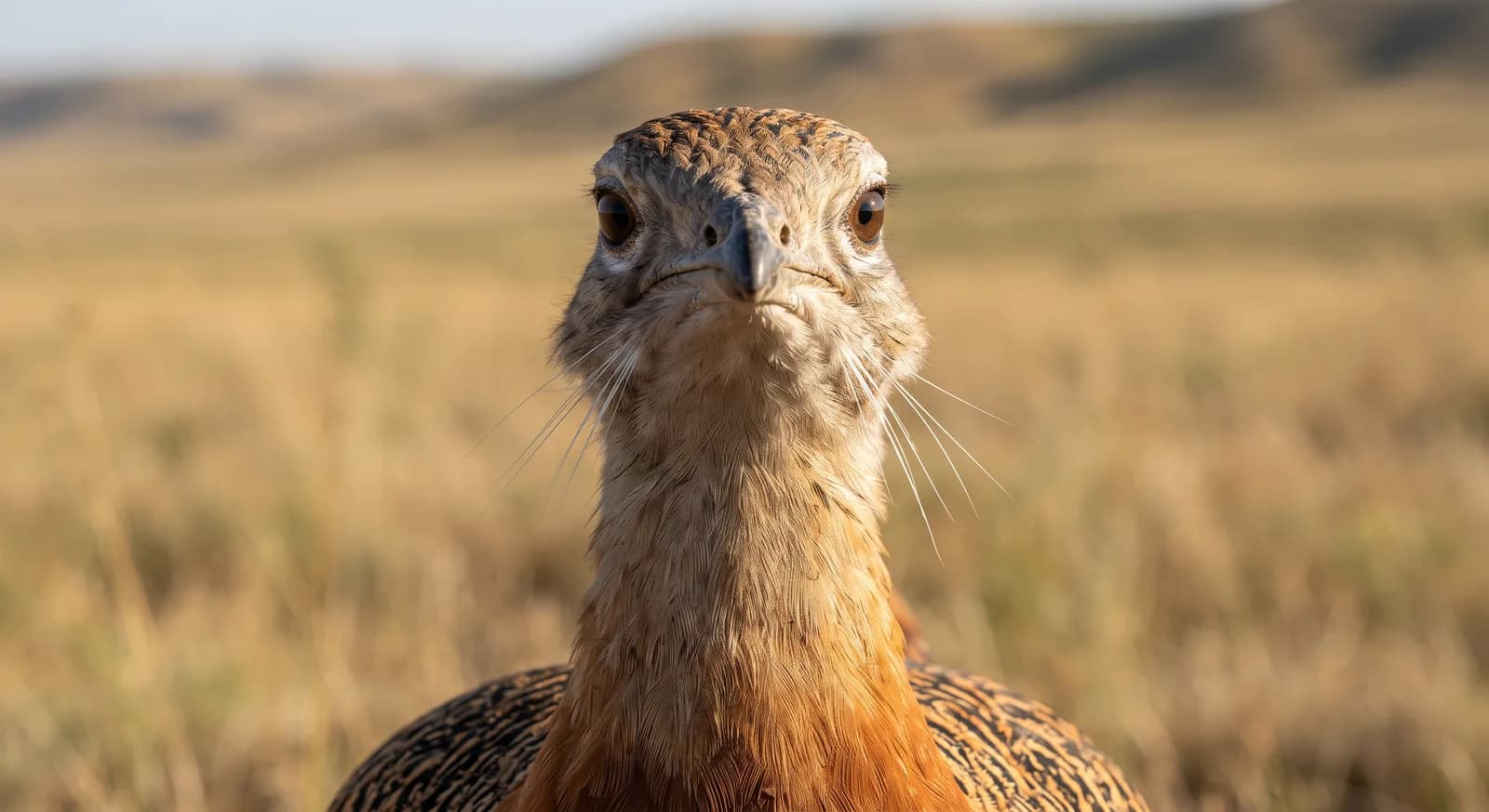
Birds · Otidiformes · Otididae
Otis tarda
It could become threatened in the near future if current threats go unchecked.
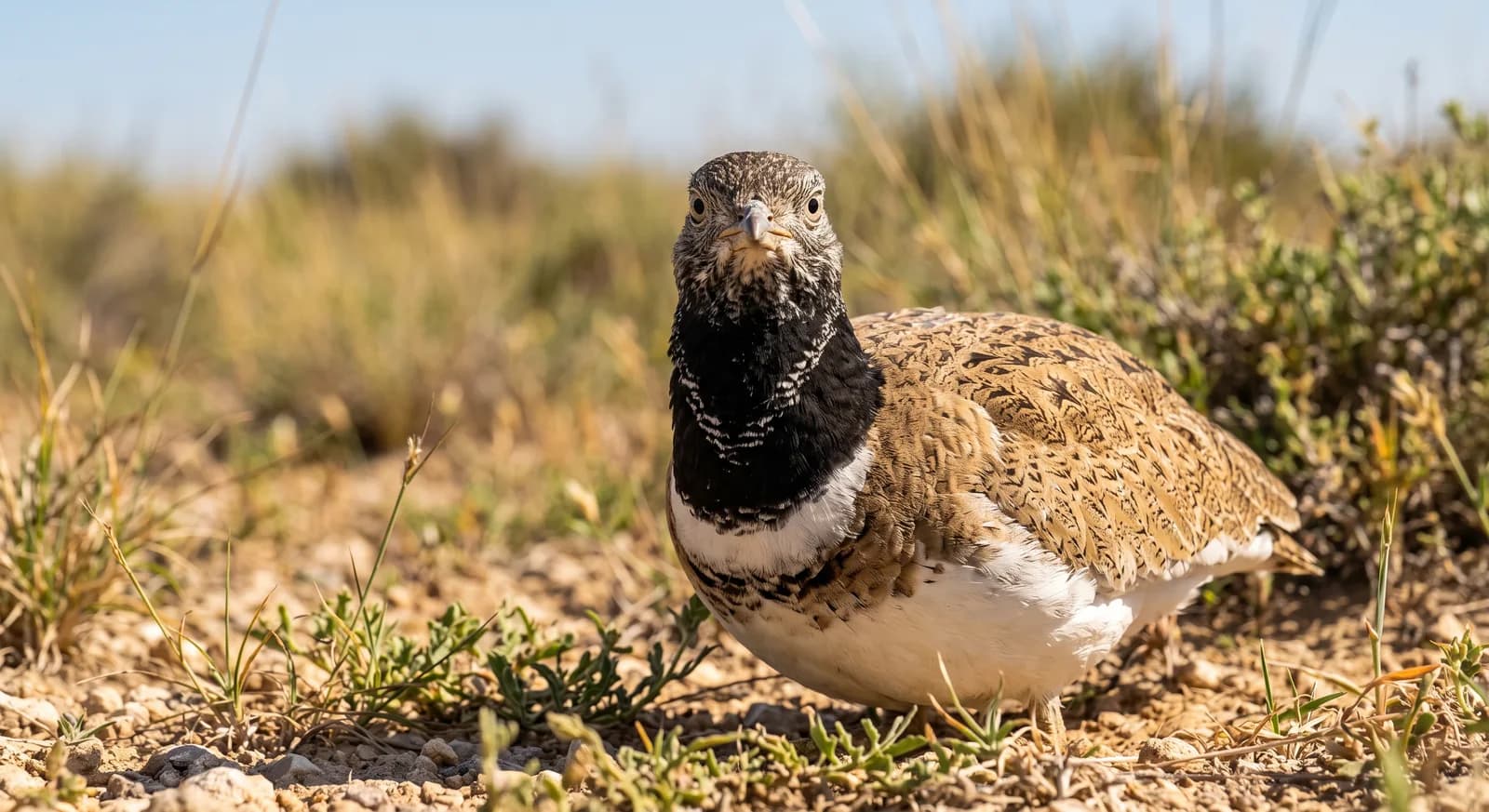
It is one of the heaviest flying birds in the world, with males weighing up to 18 kg. It also shows one of the greatest differences in weight between the sexes of any bird, males reaching twice the weight of females.
Weight
3.1 kg – 18 kg
Size
up to 1 m
Life expectancy
12 years
Diet
Omnivore
Combines animal and plant food depending on availability.
Activity
Diurnal
Active mainly during the day.
Social structure
Herd
Lives in large groups as a strategy against predators.
Sighting difficulty
Moderate
AI-generated images: illustrations, not photographs.
Sources consulted: AnAge; JungleDragon; Birda; Bird Spot; LIFE EUROBUSTARD; Animalia.bio; Birds of the World; eBird; Springer
Parks and dive sites where this species has been documented — showing 10 of 27.
Other species in the catalogue with the most in common with Great Bustard — same habitat, park, country, tags or family.
Based on what we already know about great bustard.
Share an experience, a fun fact or a tip for seeing the great bustard.
Be the first to comment.
The pins mark the parks where its presence is documented.