The Lakes of Ounianga were inscribed on the World Heritage List in 2012 and lie in north-eastern Chad, in the Ennedi region, deep in the Sahara.
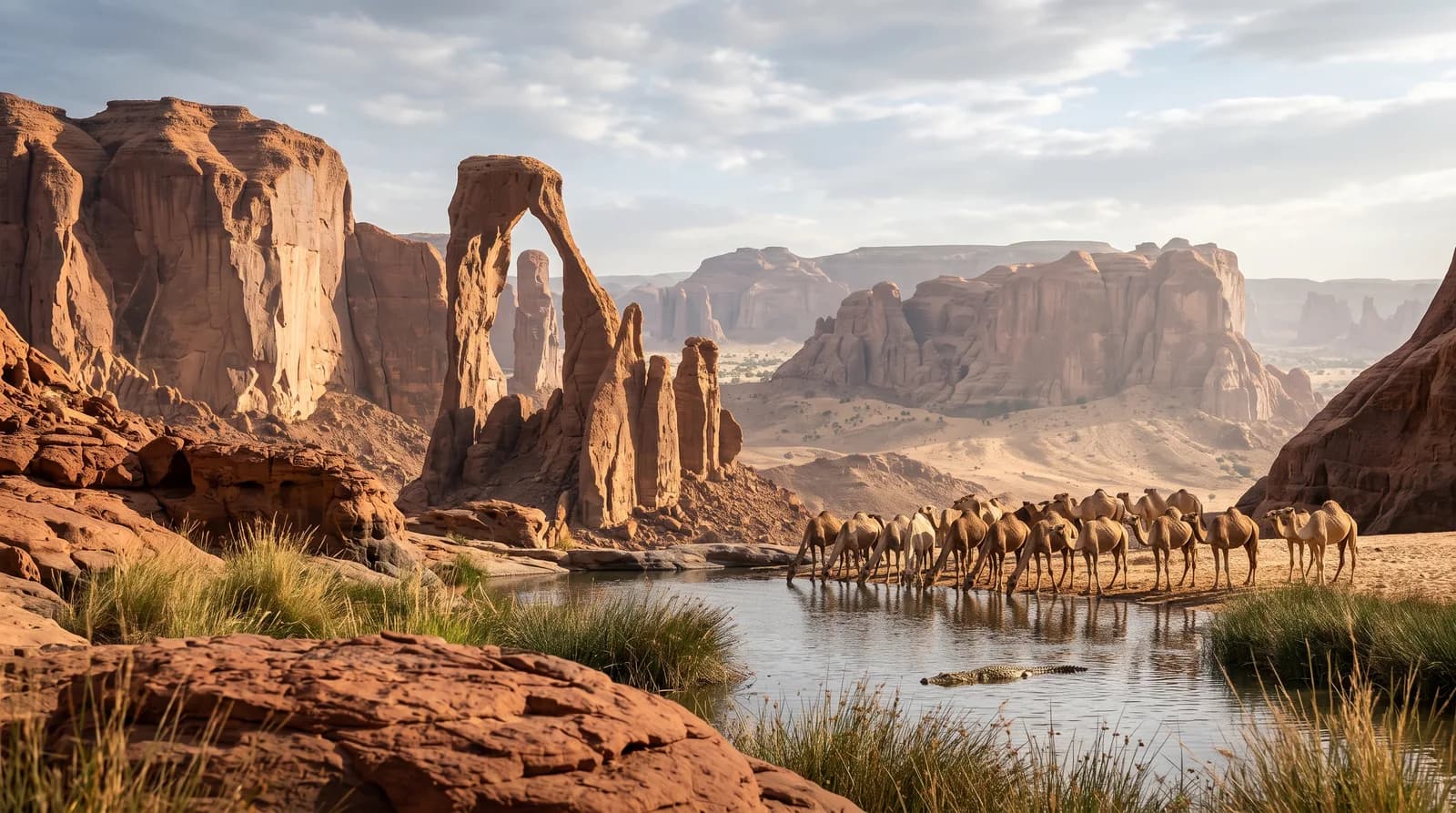
They are eighteen permanent lakes in two groups, Ounianga Kebir and Ounianga Serir, in one of the most arid zones on the planet, with less than two millimetres of rainfall a year. Their existence is explained by a fossil aquifer: water that soaked in millennia ago, when the Sahara was green, which surfaces in these depressions and is replenished from below.
What is exceptional is how they persist. At Ounianga Serir the lakes are separated by dune ridges and connected underground, and a dense cover of reeds blankets much of the surface of some of them, drastically reducing evaporation. The result is a system in which some lakes are fresh and others hypersaline, with colours running from blue to green and red according to salinity and algae, all within a few hundred metres of one another. It is the largest system of permanent freshwater lakes in the desert and a palaeoclimatic archive of the first order on the drying of the Sahara.
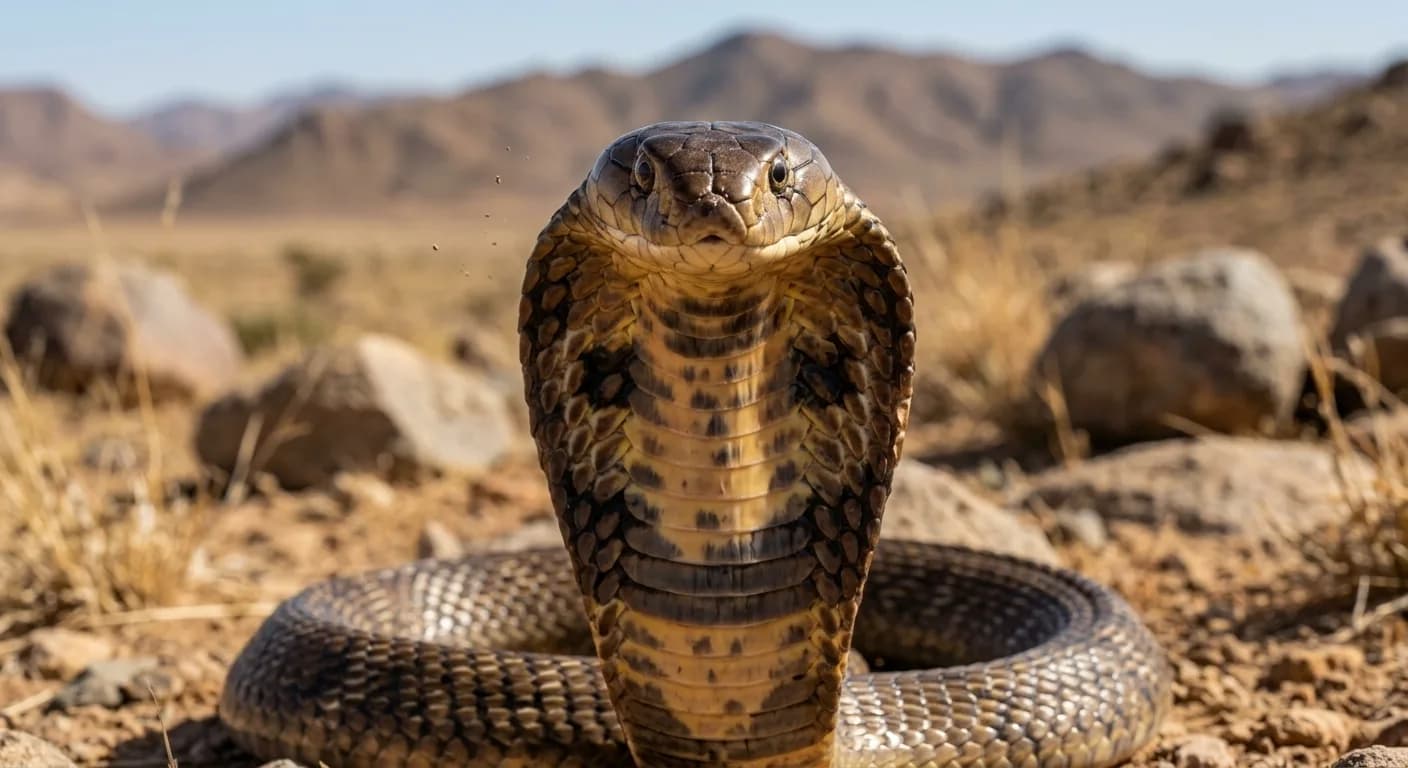 Least Concern
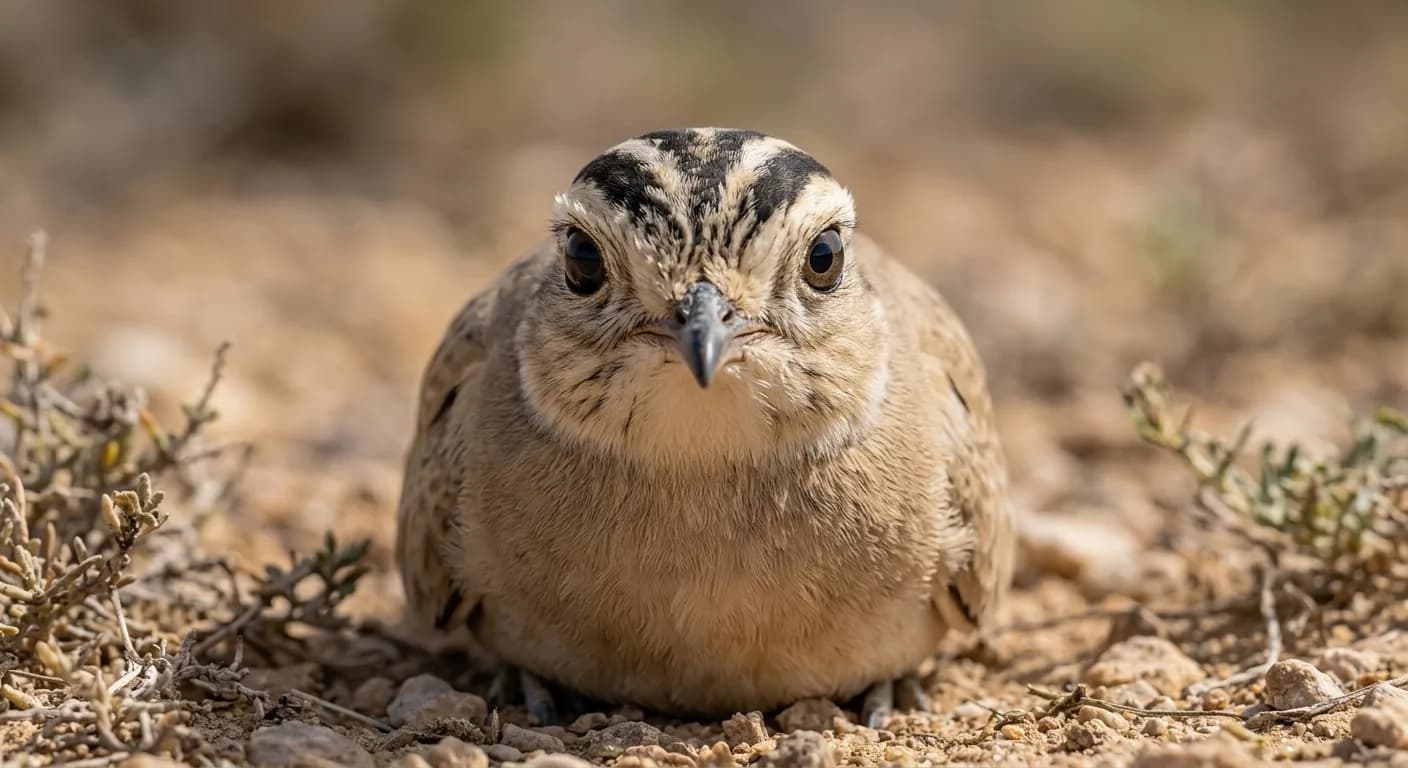 Least Concern
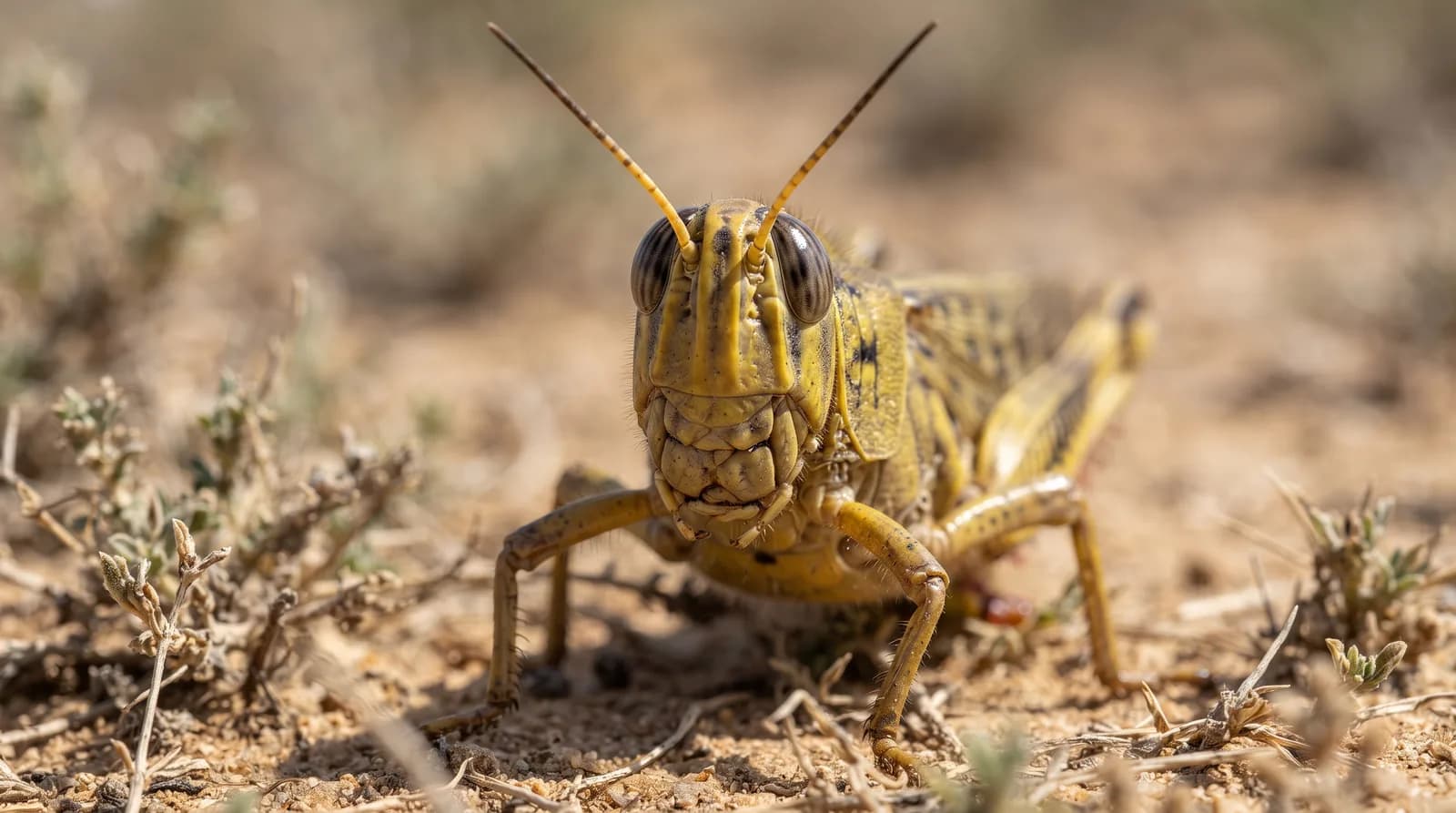 Not Evaluated
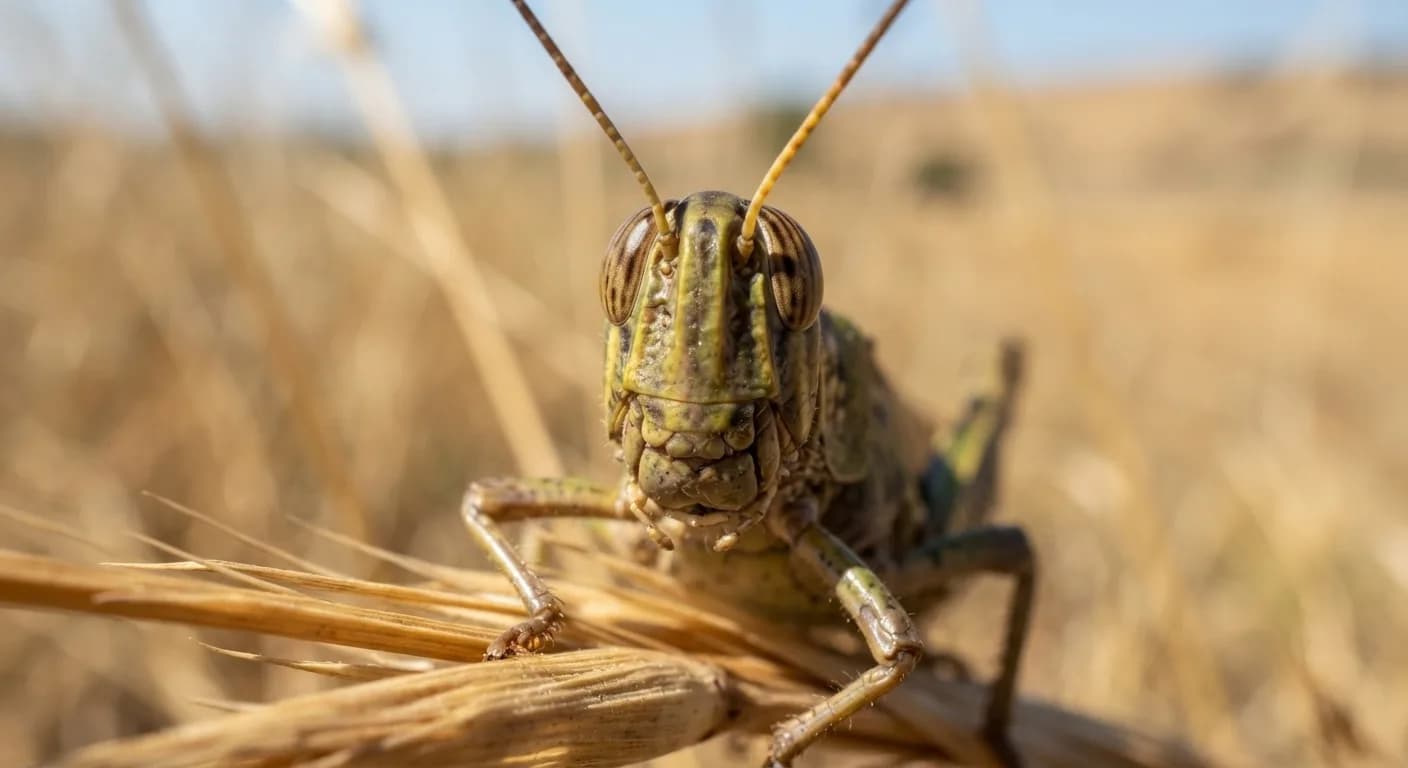 Not Evaluated
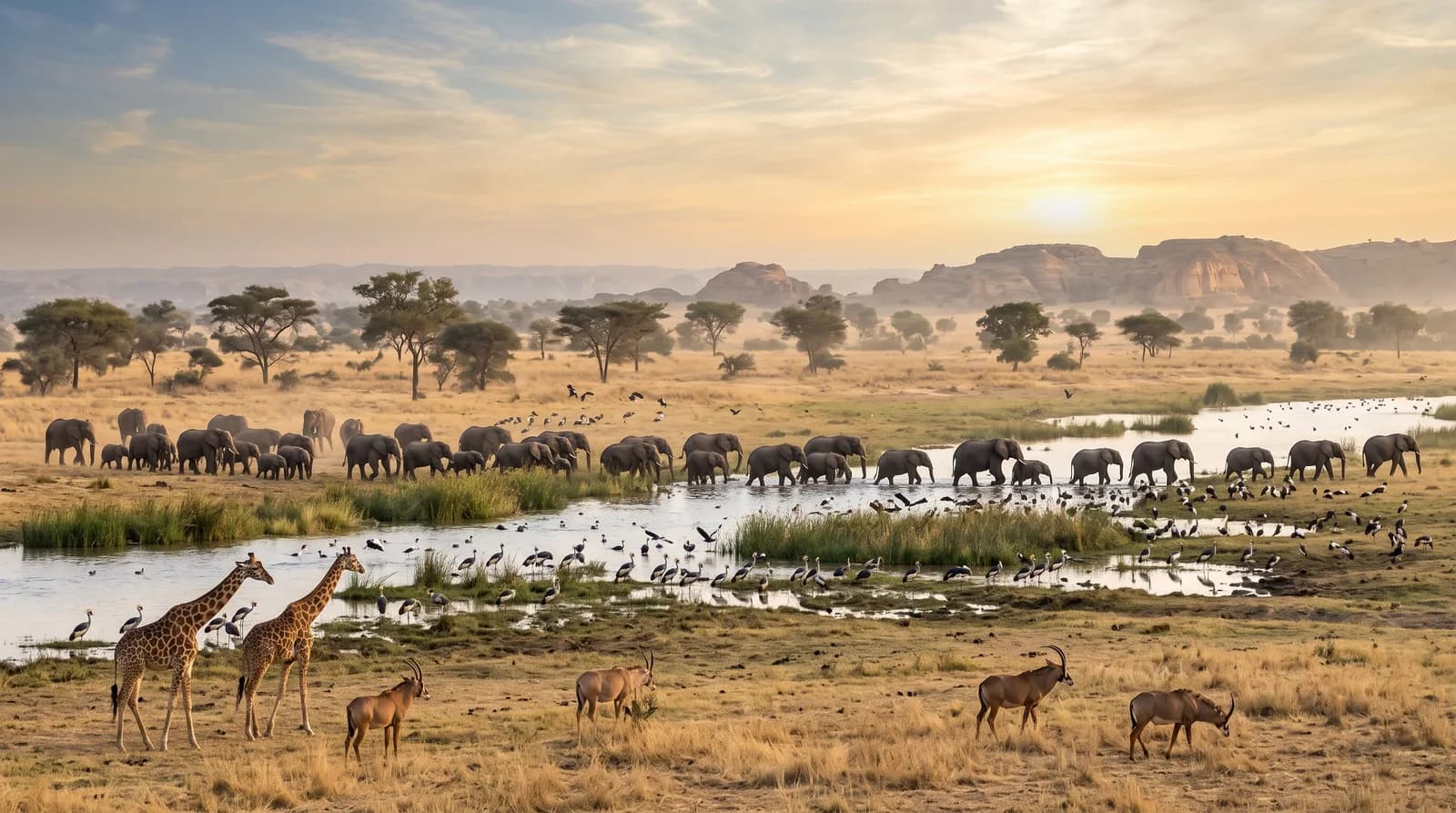
 Chad
 Argentina
 Brazil