Skip to content
WAnimals
  • Map
  • Species
  • Parks
  • Diving
Log inCreate account
WAnimals

The guide for travellers and animal lovers: discover, plan and share your wild adventures around the world.

Discover wildlife

  • Species
  • Ecosystems
  • Glossary
  • Tags

Explore places

  • Map
  • Countries
  • Parks
  • Diving

Plan experiences

  • Guides

Learn

  • Blog

Resources

  • Help centre
  • Contact
  • Install the app

Follow us

Account

  • Log in
  • Create account

© 2026 WAnimals. All rights reserved.

About usHow we build our profilesTerms of servicePrivacyLegal notice
MapSpeciesParksDiving
  1. Home
  2. Species
  3. Desert Locust

One of the 2 locusts on WAnimals

Desert Locust (Schistocerca gregaria)

Insects · Orthoptera · Acrididae

Desert Locust

Schistocerca gregaria

Not Evaluated

It has not yet been assessed against the IUCN criteria.

Spotted something wrong?

The desert locust is a caeliferan orthopteran whose plagues have threatened agricultural production in Africa, the Middle East and Asia for centuries. The quality of life of at least a tenth of the world's population is affected by this insect plague.

Size

4 cm – 7.5 cm

Life expectancy

1 year

Diet

Herbivore

Feeds mainly on plants.

Activity

Diurnal

Active mainly during the day.

Social structure

Solitary

Lives and hunts alone, joining others only to breed.

Sighting difficulty

Unknown

Desert
71countries29parks2same family

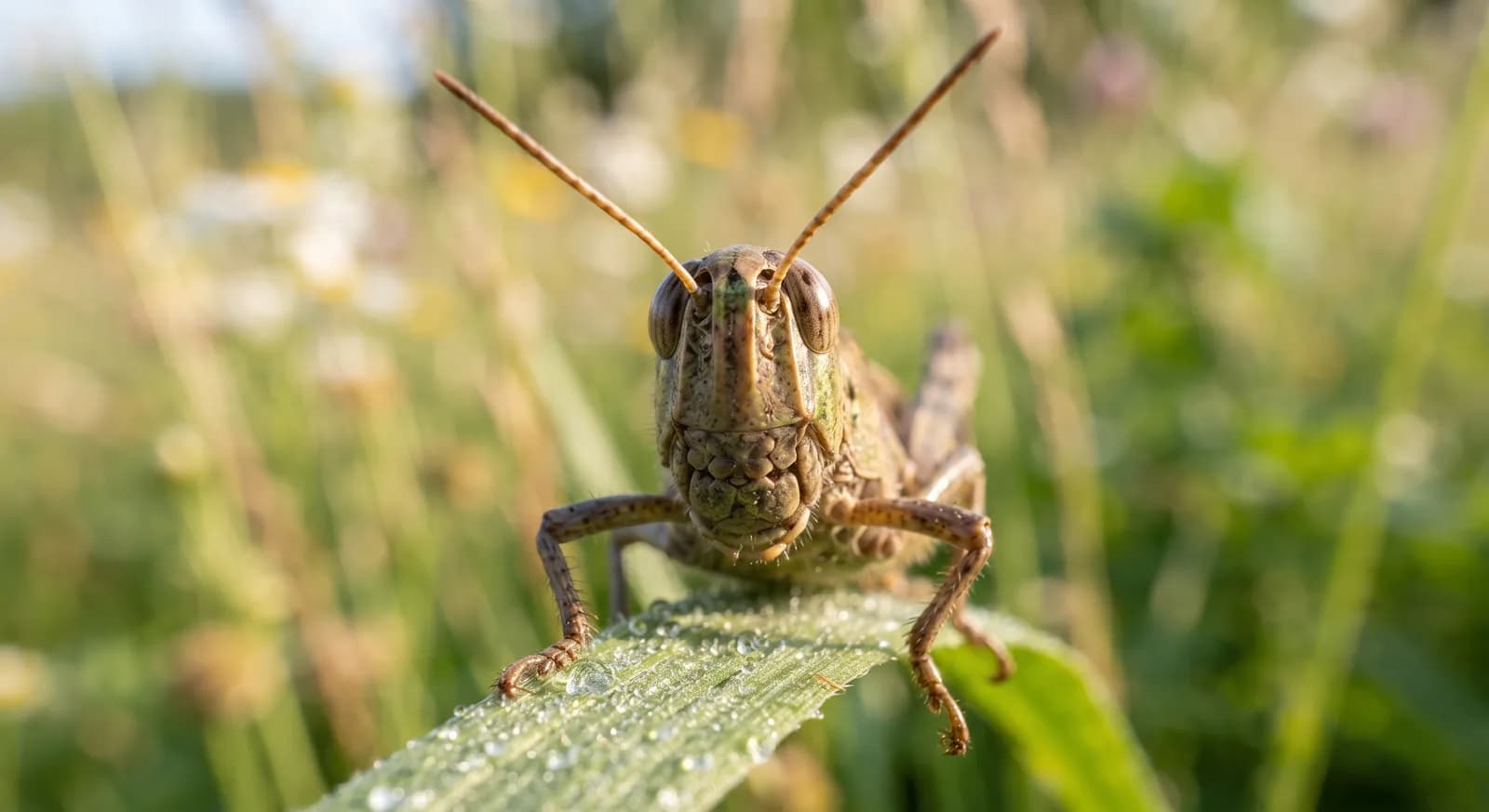
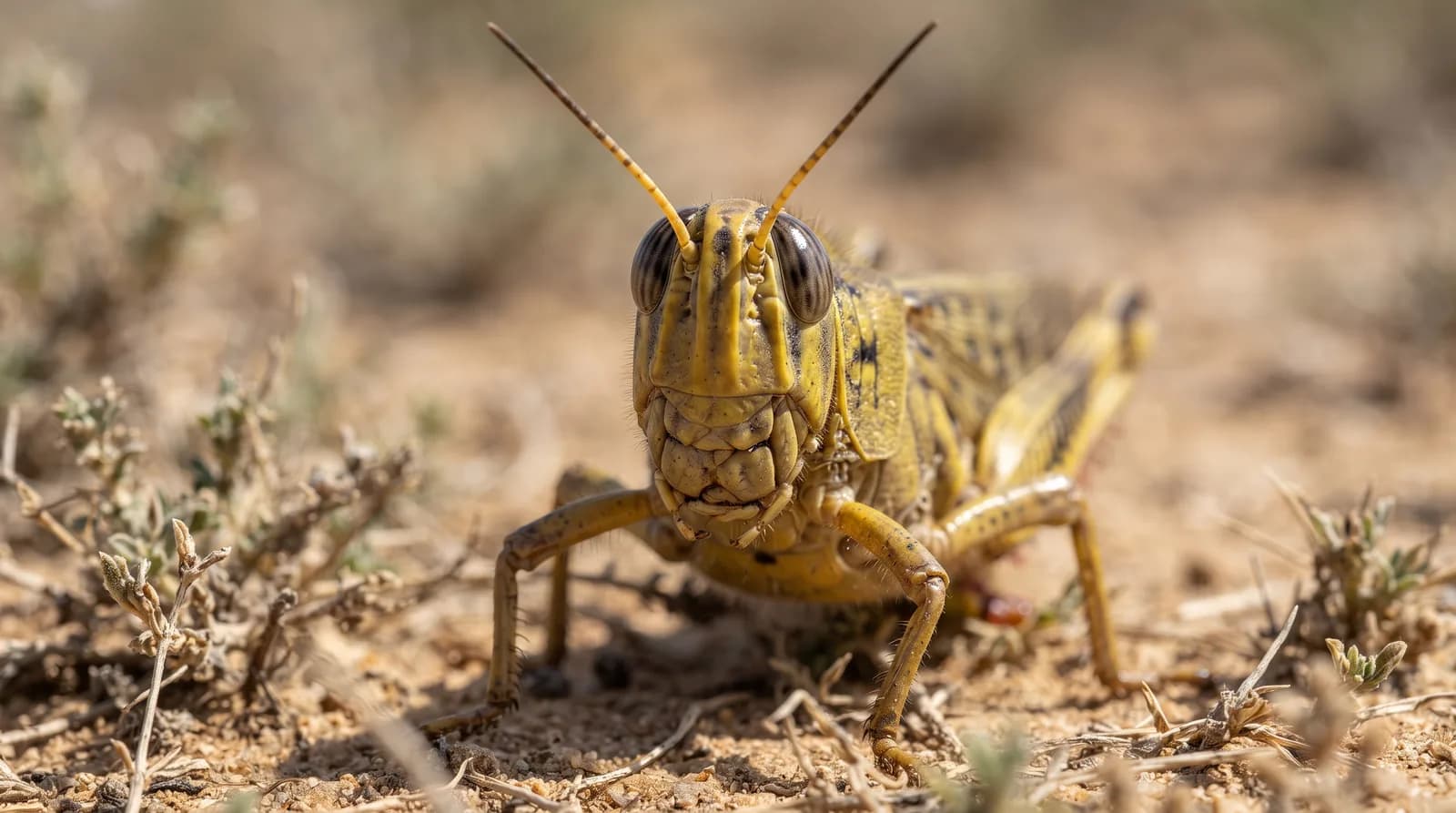
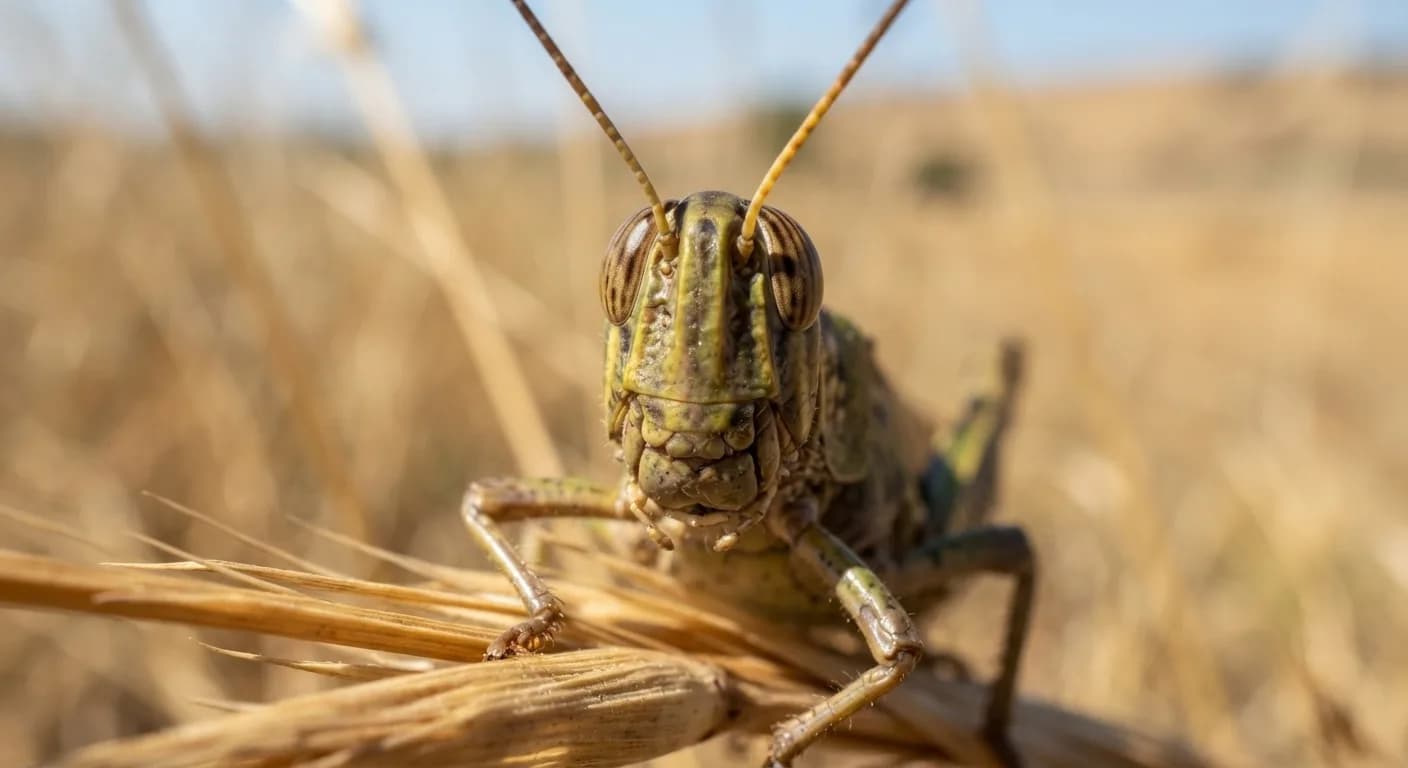
AI-generated images: illustrations, not photographs.

Fun facts

  • The switch from the solitary to the gregarious phase is triggered by repeated physical contact on the hind legs, which sets off a surge of serotonin in the nervous system and completely changes the animal's behaviour within hours.
  • A swarm can cover hundreds of square kilometres, travel more than a hundred kilometres a day and eat as much food in one day as tens of thousands of people.
  • Its plagues are described in texts more than three thousand years old and still cause food emergencies in the Horn of Africa.
  • It changes personality. Under normal conditions it is solitary, green and elusive; when rain concentrates the vegetation and individuals brush against one another, it transforms into the gregarious phase: it changes colour to yellow and black, becomes more active, eats more and seeks company instead of avoiding it.
  • The trigger has been pinpointed precisely: repeated rubbing of the hind legs sets off a serotonin cascade that brings on the transformation in a matter of hours.
  • A swarm can cover hundreds of square kilometres and contain tens of billions of individuals; a swarm of one square kilometre eats as much in a day as 35,000 people.
  • The 2019-2021 plague in the Horn of Africa was the worst in decades and affected the food security of millions of people.
  • They travel up to 150 km a day riding the winds, and plagues are now tracked with satellites and weather models coordinated by the FAO.
  • It appears in the Book of Exodus as the eighth plague of Egypt, and locust invasions have been documented for millennia.

Life cycle and biology

Skeleton type
Invertebrate - chitin exoskeleton (insect)
Habitat and environment
Arid and semi-arid areas of Africa, the Middle East and southern Asia
Birth weight
The first-instar nymph weighs about 20 mg and reaches close to 1.5 g by the middle of the fifth instar
Sexual maturity
After the final moult the adult needs 2 to 4 weeks to reach sexual maturity depending on temperature and food; 2 to 5 generations are produced a year
Gestation / incubation
The eggs hatch in about two weeks; gregarious nymphs go through five instars and solitary ones through six, with nymphal development of roughly a month
Litter / clutch size
Solitary females lay 60 to 80 eggs per egg pod and gregarious ones 40 to 60; the pods are buried 4 to 15 cm deep in damp soil

Sources consulted: https://es.wikipedia.org/wiki/Schistocerca_gregaria; Hebrew University of Jerusalem; HopperWiki, ficha Desert locust; ScienceDirect (Hughes 1989); Science Advances, How colonial animals evolve; Wikipedia, Zooid; Hebrew University of Jerusalem, ficha Schistocerca gregaria; Schmidt 1994, Journal of Applied Entomology; fichas de especie; Bijlmakers, ficha Schistocerca gregaria; manuales FAO de identificacion; Manuales FAO de identificacion de la langosta del desierto
Where to find it

Best time: Breeding is triggered by desert rains, when ephemeral green vegetation appears; the swarms fly by day and settle to roost in the vegetation at dusk

Loading map…

Where to see it

Parks and dive sites where this species has been documented — showing 10 of 29.

Related species

Other species in the catalogue with the most in common with Desert Locust — same habitat, park, country, tags or family.

Same taxonomic family
Shares a park
Shares a park
Same taxonomic family
Shares a park
Shares a park

Keep exploring

Based on what we already know about desert locust.

Comments

Share an experience, a fun fact or a tip for seeing the desert locust.

Be the first to comment.

See full glossary
This page in other languages: Español · Deutsch · Français · Português · Italiano

The pins mark the parks where its presence is documented.

See its range on the interactive map→
ZakoumaChad
Banc d'ArguinMauritania
Wadi RumJordan
Ein GediIsrael
Tassili n'Ajjer National ParkAlgeria
Sir Bani Yas Wildlife ReserveUnited Arab Emirates
Badhyz Nature ReserveTurkmenistan
WazaCameroon
Dana Biosphere ReserveJordan
DiawlingMauritania
See all 29 parks
Migratory LocustNot Evaluated

Migratory Locust

Locusta migratoria

Least Concern

Bush Hyrax

Heterohyrax brucei

Least Concern

Barbary Ground Squirrel

Atlantoxerus getulus

Field GrasshopperLeast Concern

Field Grasshopper

Chorthippus brunneus

Least Concern

Naked Mole Rat

Heterocephalus glaber

Grevy's ZebraEndangered

Grevy's Zebra

Equus grevyi

CountriesChad
ParksZakoumaChad
TagsHerbivore
Herbivore
Diurnal
Colonial
Insect
Desert

Africa49

Asia22

Chad
Egypt
Jordan
Algeria
Ethiopia
Iran
Algeria
Angola
Benin
Botswana
Burkina Faso
Burundi
Cabo Verde
Cameroon
Central African Republic
Chad
Côte d’Ivoire
Democratic Republic of the Congo
Djibouti
Egypt
Equatorial Guinea
Eritrea
Eswatini
Ethiopia
Gabon
Gambia
Ghana
Guinea
Guinea-Bissau
Kenya
Lesotho
Liberia
Libya
Malawi
Mali
Mauritania
Morocco
Mozambique
Namibia
Niger
Nigeria
Republic of the Congo
Rwanda
Senegal
Sierra Leone
Somalia
South Africa
South Sudan
Sudan
Tanzania
Togo
Tunisia
Uganda
Zambia
Zimbabwe
Afghanistan
Armenia
Azerbaijan
Bahrain
Iran
Iraq
Israel
Jordan
Kuwait
Lebanon
Mongolia
Oman
Pakistan
Palestine
Qatar
Saudi Arabia
Syria
Türkiye
Turkmenistan
United Arab Emirates
Uzbekistan
Yemen