 Vulnerable
Common Tortoise
Testudo graeca
One of the 41 turtles and tortoises on WAnimals
Reptiles · Testudines · Testudinidae
Geochelone elegans
At high risk of extinction in the wild over the medium term.
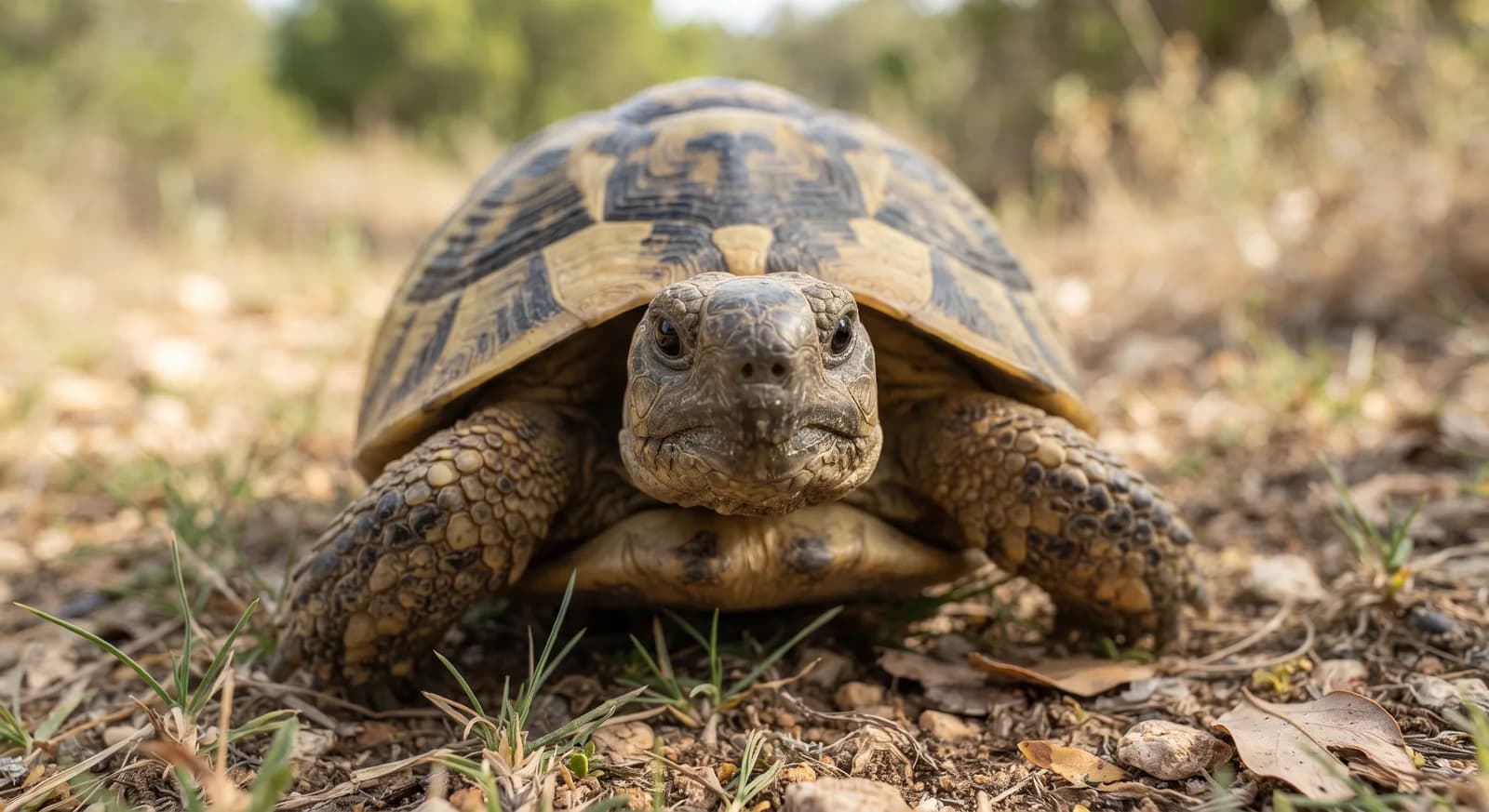
The Indian star tortoise has a strongly domed shell decorated with radiating yellow stars on a black background. That pattern has made it one of the most heavily trafficked tortoises in the world: shipments of more than six thousand live animals have been seized at a single airport. Its domed shell also has a specific use.
Weight
1.3 kg – 7 kg
Size
20 cm – 38 cm
Life expectancy
50 years
Diet
Herbivore
Feeds mainly on plants.
Activity
Diurnal
Active mainly during the day.
Social structure
Solitary
Lives and hunts alone, joining others only to breed.
Sighting difficulty
Moderate
Sources consulted: https://www.iucnredlist.org/ | https://animaldiversity.org/ | https://es.wikipedia.org/
The pins mark the parks where its presence is documented.
Parks and dive sites where this species has been documented — showing 10 of 12.
Other species in the catalogue with the most in common with Indian Star Tortoise — same habitat, park, country, tags or family.
The indian star tortoise is classified as vulnerable. Organisations such as the IUCN, WWF and the Wildlife Conservation Society work specifically on its conservation and that of its habitat; looking into their programmes is a good starting point if you want to get involved.
It's documented in 9 protected areas — one reason why protecting these places matters for its conservation.
Based on what we already know about indian star tortoise.
Share an experience, a fun fact or a tip for seeing the indian star tortoise.
Be the first to comment.