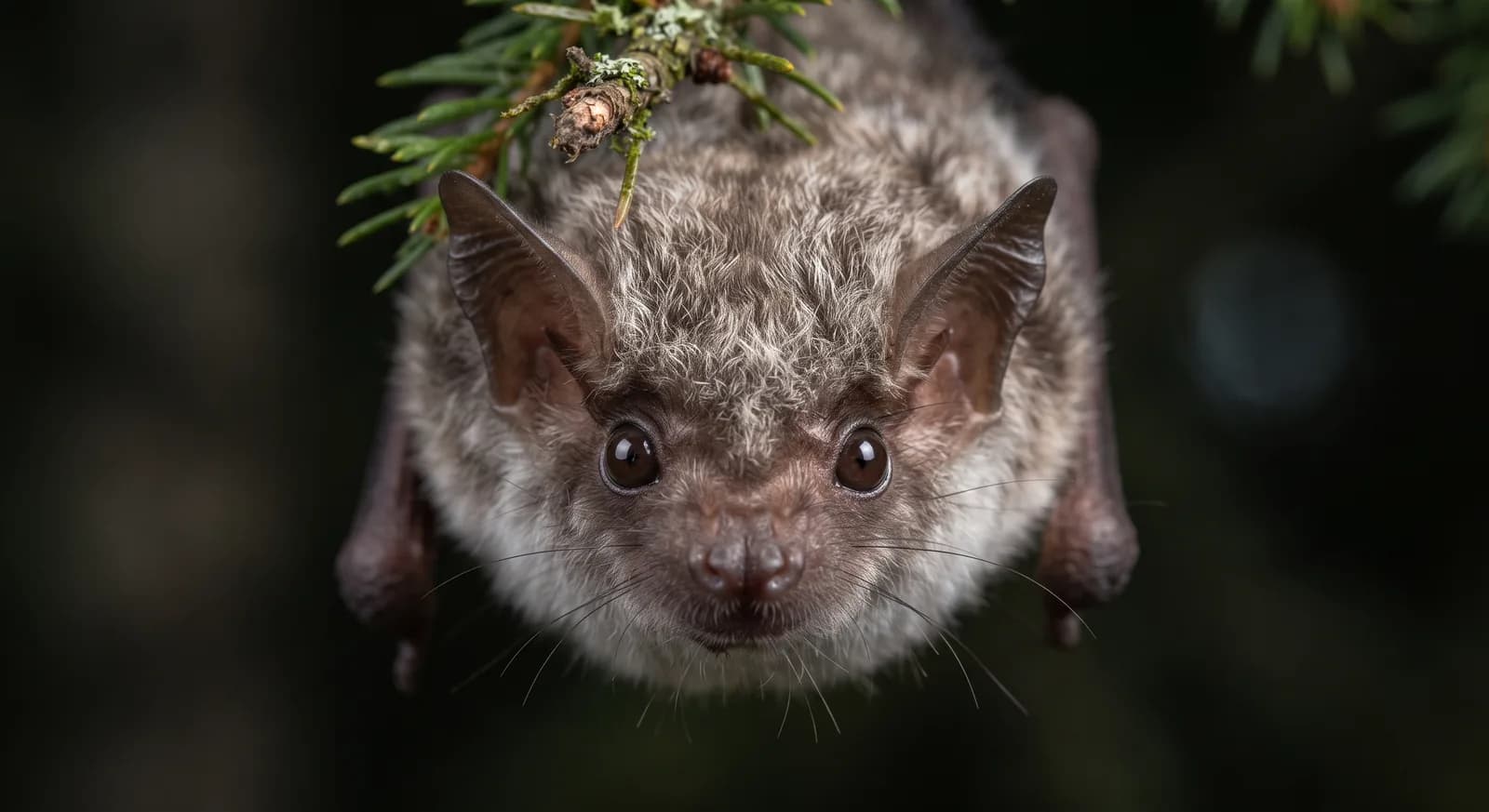
One of the 29 bats on WAnimals
Mammals · Chiroptera · Vespertilionidae
North American Hoary Bat
Lasiurus cinereus
Least Concern
The species is abundant and widely distributed; it faces no significant short-term risk.
The hoary bat is the most widely distributed bat in the Americas and one of the few that roosts in the open among foliage, wrapped in its own wing membrane, rather than in caves or holes. Its brown fur with silver-tipped hairs gives it the frosted look its name comes from. It is migratory: the northern populations travel thousands of kilometres south in autumn. It is the species most affected by collisions with wind turbines in North America.
Weight
20 g – 35 g
Size
8 cm – 11 cm
Life expectancy
7 years