 Least Concern
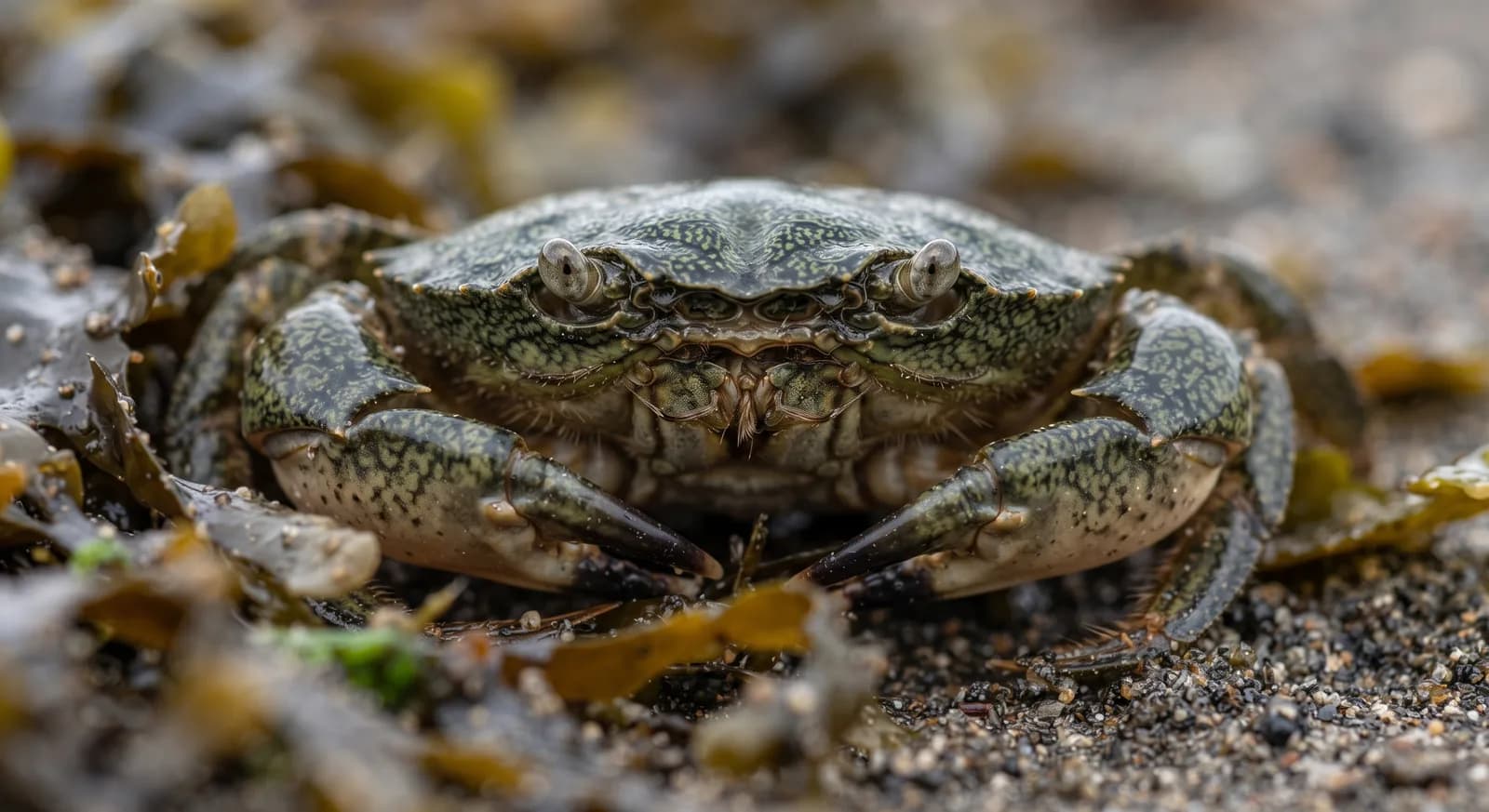
Green Crab
Carcinus maenas
One of the 4 urchins on WAnimals
Sea urchins · Echinoida · Strongylocentrotidae
Strongylocentrotus purpuratus
It has not yet been assessed against the IUCN criteria.
For all that it looks simple, it can live up to 70 years without obvious signs of cellular ageing, which makes it an important biomedical model for longevity research.
Size
up to 10 cm
Life expectancy
20 years
Diet
Omnivore
Combines animal and plant food depending on availability.
Activity
Nocturnal
Active mainly at night.
Social structure
Solitary
Lives and hunts alone, joining others only to breed.
Sighting difficulty
Unknown
Sources consulted: GBIF; National Marine Sanctuary Foundation; AnAge (genomics.senescence.info); Animal Diversity Web; Oregon Coast Aquarium; California Sea Grant; SeaLifeBase; PMC (larval staging study, extracellular vesicles study); ScienceDirect (Hughes 1989); Science Advances, How colonial animals evolve; Wikipedia, Zooid
The pins mark the dive sites where its presence is documented.
Parks and dive sites where this species has been documented — showing 10 of 12.
Other species in the catalogue with the most in common with Purple Sea Urchin — same habitat, park, country, tags or family.
Based on what we already know about purple sea urchin.
Share an experience, a fun fact or a tip for seeing the purple sea urchin.
Be the first to comment.