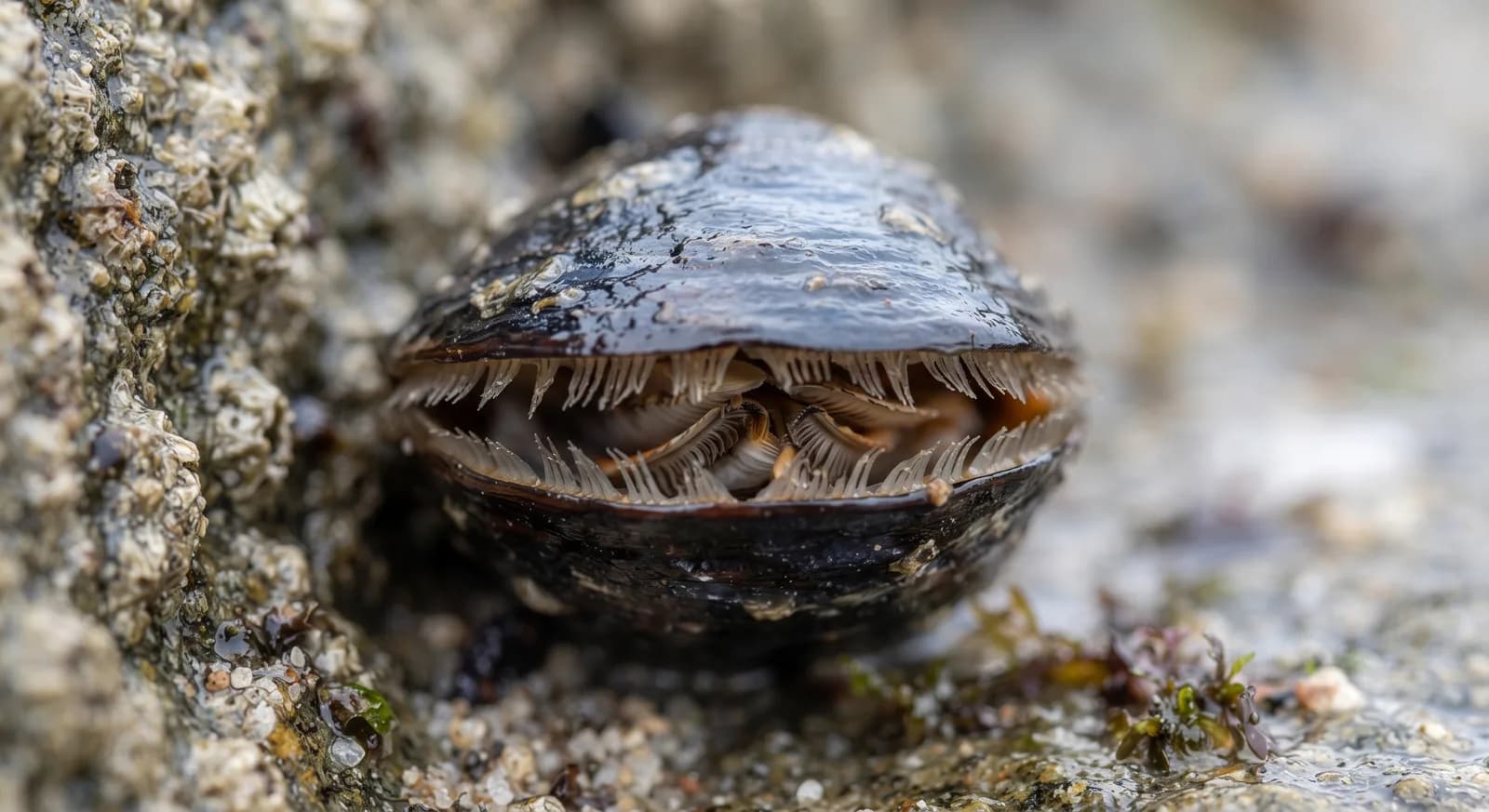
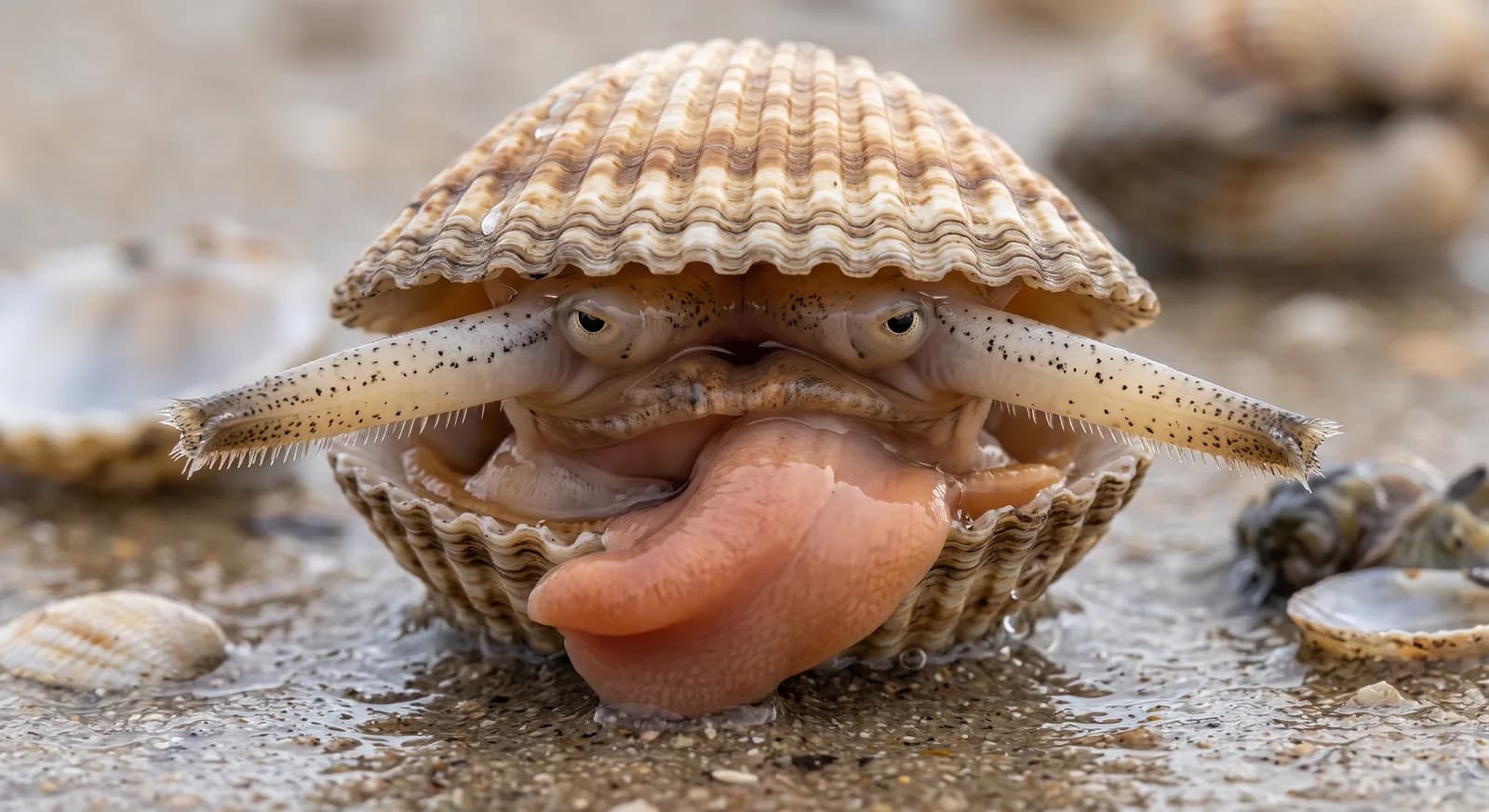
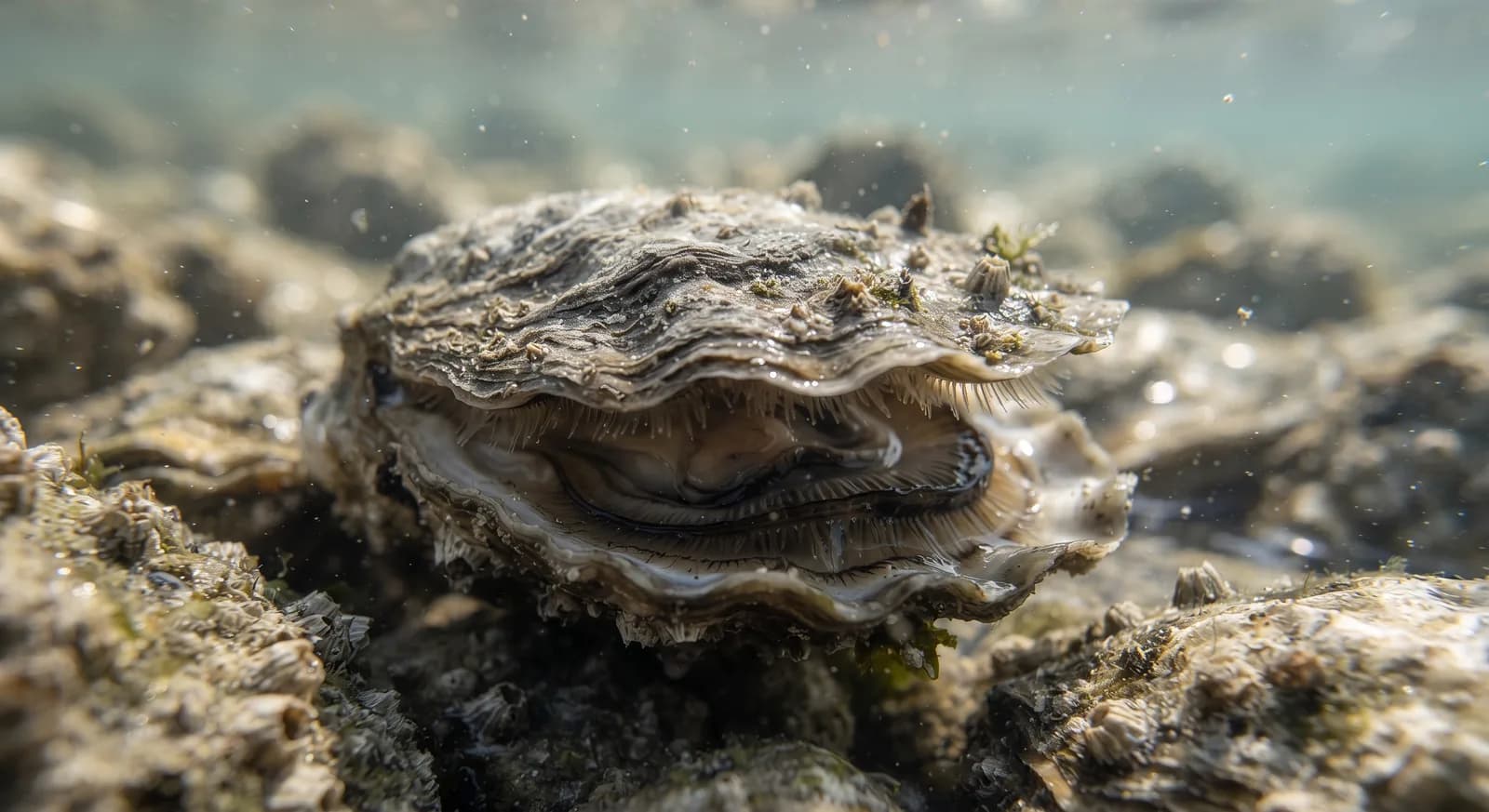
 Not Evaluated
Common Oyster
Ostrea edulis
One of the 4 oysters on WAnimals
Bivalves · Ostreida · Ostreidae
Crassostrea gigas
It has not yet been assessed against the IUCN criteria.
An oyster native to north-east Asia and now the most widely farmed mollusc in the world, present on the coasts of all five continents. It lives cemented to rocks and hard structures, filters phytoplankton and forms dense reefs that reshape the bottom. It is a protandrous hermaphrodite: it matures first as a male and can later change to female. Its current scientific name is Magallana gigas.
Size
8 cm – 30 cm
Life expectancy
30 years
Diet
Omnivore
Combines animal and plant food depending on availability.
Social structure
Solitary
Lives and hunts alone, joining others only to breed.
Sighting difficulty
Unknown
Sources consulted: Thunberg (1793); Ruesink et al. (2005); Reise et al. (2017); ICES Journal of Marine Science (2021); ScienceDirect (Hughes 1989); Science Advances, How colonial animals evolve; Wikipedia, Zooid
Parks and dive sites where this species has been documented — showing 10 of 109.
Other species in the catalogue with the most in common with Pacific Oyster — same habitat, park, country, tags or family.
Based on what we already know about pacific oyster.
Share an experience, a fun fact or a tip for seeing the pacific oyster.
Be the first to comment.
The pins mark the dive sites where its presence is documented.