Skip to content
WAnimals
  • Map
  • Species
  • Parks
  • Diving
Log inCreate account
WAnimals

The guide for travellers and animal lovers: discover, plan and share your wild adventures around the world.

Discover wildlife

  • Species
  • Ecosystems
  • Glossary
  • Tags

Explore places

  • Map
  • Countries
  • Parks
  • Diving

Plan experiences

  • Guides

Learn

  • Blog

Resources

  • About us
  • How we build our profiles
  • Help centre
  • Contact
  • Install the app

Follow us

Account

  • Log in
  • Create account

© 2026 WAnimals. All rights reserved.

Terms of servicePrivacyCookiesLegal notice
MapSpeciesParksDiving
  1. Home
  2. Species
  3. Spotted Lanternfly

One of the 3 cicadas on WAnimals

Insects · Hemiptera · Fulgoridae

Spotted Lanternfly

Lycorma delicatula

Not Evaluated

It has not yet been assessed against the IUCN criteria.

Spotted something wrong?

The spotted lanternfly is a hemipteran of the family Fulgoridae originally from China and South-East Asia. It is an invasive species in Japan, South Korea and the United States.

Size

2 cm – 2.7 cm

Life expectancy

1 year

Diet

Herbivore

Feeds mainly on plants.

Social structure

Solitary

Lives and hunts alone, joining others only to breed.

Temperate forest
7countries

Fun facts

  • Detected in Pennsylvania in 2014, it has become one of the most publicised insect invasions in the United States, with campaigns urging the public to squash any individual they see.
  • Its honeydew coats the ground and the vegetation under infested trees and encourages a black fungus, sooty mould, that blackens leaves, cars and street furniture.
  • It is closely tied to the tree of heaven, itself an invasive tree, whose bitter compounds it accumulates as a chemical defence.
  • It appeared in the United States in Berks County, Pennsylvania, in 2014, and there are now infestations in nineteen states.
  • As it feeds it excretes sugary honeydew that drenches everything beneath the tree; fermenting, it smells of vinegar, and a sooty mould grows on it that smothers the leaves.
  • It lays its egg masses on any hard surface — vehicles, trailers, garden furniture, firewood — and that is how it travels.
  • A 2019 study estimated that, uncontrolled, it could cost Pennsylvania 324 million dollars and more than 2,800 jobs a year.
  • By feeding on plants that produce cytotoxic compounds it becomes toxic itself, and in its invaded range hardly any generalist predator will attack it.

Life cycle and biology

Skeleton type
Invertebrate - chitin exoskeleton (insect)
Habitat and environment
Tree of heaven, vineyards and orchards in temperate regions
Size at birth
First-instar nymphs of 3.6 to 9.4 mm; the egg mass measures about 25 mm
Sexual maturity
Mating takes place shortly after the adults emerge, in mid or late July; laying begins in September
Gestation / incubation
The eggs spend the winter in the egg mass and hatch between late April and June; the hatching rate is 60-90 % depending on the winter temperature
Litter / clutch size
30 to 50 eggs per egg mass, arranged in vertical columns; each female lays one or two egg masses

Sources consulted: Wikipedia (es): Lycorma delicatula · UMass Amherst · UC ANR · USDA CAPS datasheet (Park et al. 2009, Dara et al. 2015) · Animal Diversity Web · UMass Amherst, guia de insectos · Animal Diversity Web, Lycorma delicatula · NCBI PMC10926472 · Connecticut DEEP · USDA CAPS datasheet Lycorma delicatula (Dara et al. 2015)

Where to find it

Best time: Nymphs from late April to August; adults from mid-July until the first frosts

Loading map…

Related species

Other species in the catalogue with the most in common with Spotted Lanternfly — same habitat, park, country, tags or family.

Related to
Related to
Related to
Related to
Related to
Related to

Keep exploring

Based on what we already know about spotted lanternfly.

Share an experience, a fun fact or a tip for seeing the spotted lanternfly.
See full glossary
This page in other languages: Español · Deutsch · Français · Português · Italiano
See its range on the interactive map→
Not Evaluated

North American Luna Moth

Actias luna

Not Evaluated

Golden Buprestid

Buprestis aurulenta

Not Evaluated

Emerald Ash Borer

Agrilus planipennis

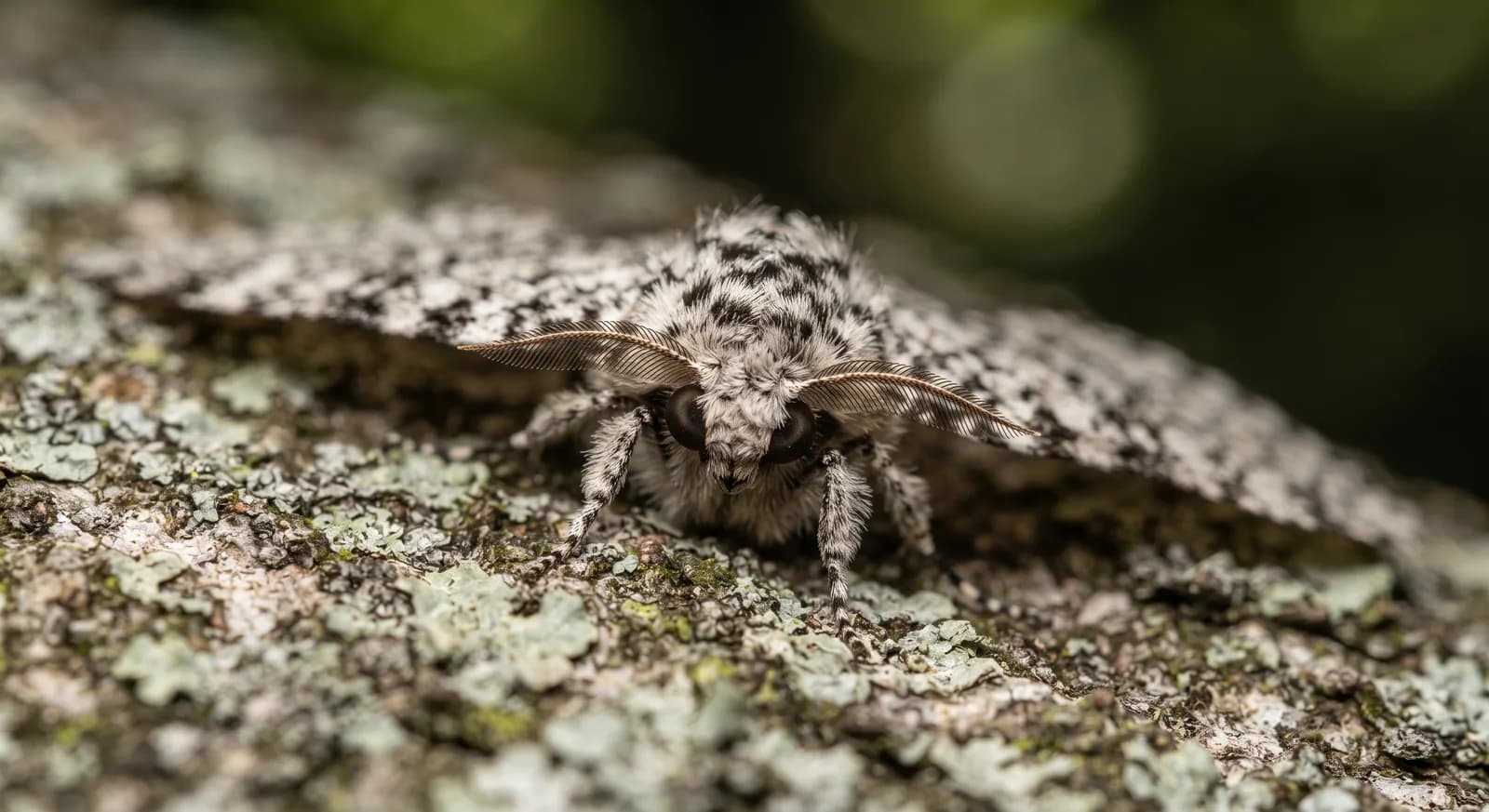
Peppered MothNot Evaluated

Peppered Moth

Biston betularia

Not Evaluated

Western Conifer Seed Bug

Leptoglossus occidentalis

Not Evaluated

Gypsy Moth

Lymantria dispar

CountriesChina
TagsHerbivore
Herbivore
Solitary
Insect
Temperate forest
China
India
Japan
South Korea
Taiwan
United States
Vietnam